Looking for the Kali Chalisa that begins “Jai Jai Jai Kali Kankali”? It is below in full, each verse in Devanagari with a Roman reading under it: an opening doha of two couplets, 54 chaupais and one closing doha, all addressed to Maa Kali.
Two different Kali Chalisas are in circulation, and that is where most of the confusion starts. This is the longer one. The other has 40 chaupais and opens with different lines, and the Mahakali Chalisa is a separate hymn again.
No poet is named in any version we checked, so this page names none.
Jai Jai Jai Kali Kankali: the full text in Hindi and Roman letters
The Devanagari lines were compared with the copies published by Shubh Panchang and Bhakti Bharat and match them, apart from small spelling differences, two of which are explained further down. The Roman lines are this page’s own transliteration. We have not been able to see a printed book of this Chalisa, so if the copy on your shelf at home differs by a letter or two, keep reading from it. (The Roman reading keeps the spelling Kaali wherever the text has it. Everywhere else this page writes Kali.)
दोहा (Doha)
जय काली जगदम्ब जय, हरनि ओघ अघ पुंज,
वास करहु निज दास के, निशदिन हृदय निकुंज।
Jay Kaali Jagadamb Jay, Harani Ogh Agh Punj। Vaas Karahu Nij Daas Ke, Nishdin Hriday Nikunj॥
जयति कपाली कालिका, कंकाली सुख दानि,
कृपा करहु वरदायिनी, निज सेवक अनुमानि।
Jayati Kapali Kaalika, Kankaali Sukh Daani। Kripa Karahu Varadaayini, Nij Sevak Anumaani॥
चौपाई (Chaupai)
जय जय जय काली कंकाली,
जय कपालिनी, जयति कराली।
Jai Jai Jai Kali Kankali। Jai Kapalini, Jayati Karali॥
शंकर प्रिया, अपर्णा, अम्बा,
जय कपर्दिनी, जय जगदम्बा।
Shankar Priya, Aparna, Amba। Jai Kapardini, Jai Jagadamba॥
आर्या, हला, अम्बिका, माया,
कात्यायनी उमा जगजाया।
Aarya, Hala, Ambika, Maya। Katyayani Uma Jagjaya॥
गिरिजा गौरी दुर्गा चण्डी,
दाक्षाणायिनी शाम्भवी प्रचंडी।
Girija Gauri Durga Chandi। Dakshayanayini Shambhavi Prachandi॥
पार्वती मंगला भवानी,
विश्वकारिणी सती मृडानी।
Parvati Mangala Bhavani। Vishwakaarini Sati Mridani॥
सर्वमंगला शैल नन्दिनी,
हेमवती तुम जगत वन्दिनी।
Sarvamangala Shail Nandini। Hemavati Tum Jagat Vandini॥
ब्रह्मचारिणी कालरात्रि जय,
महारात्रि जय मोहरात्रि जय।
Brahmacharini Kalaratri Jai। Maharatri Jai Moharatri Jai॥
तुम त्रिमूर्ति रोहिणी कालिका,
कूष्माण्डा कार्तिका चण्डिका।
Tum Trimurti Rohini Kalika। Kushmanda Kartika Chandika॥
तारा भुवनेश्वरी अनन्या,
तुम्हीं छिन्नमस्ता शुचिधन्या।
Tara Bhuvaneshwari Ananya। Tumhin Chhinnamasta Shuchidhanya॥
धूमावती षोडशी माता,
बगला मातंगी विख्याता।
Dhumavati Shodashi Mata। Bagla Matangi Vikhyata॥
तुम भैरवी मातु तुम कमला,
रक्तदन्तिका कीरति अमला।
Tum Bhairavi Matu Tum Kamala। Raktadantika Kirti Amala॥
शाकम्भरी कौशिकी भीमा,
महातमा अग जग की सीमा।
Shakambhari Kaushiki Bhima। Mahatama Ag Jag Ki Seema॥
चन्द्रघण्टिका तुम सावित्री,
ब्रह्मवादिनी मां गायत्री।
Chandraghantika Tum Savitri। Brahmavadini Maa Gayatri॥
रूद्राणी तुम कृष्ण पिंगला,
अग्निज्वाला तुम सर्वमंगला।
Rudrani Tum Krishna Pingala। Agnijwala Tum Sarvamangala॥
मेघस्वना तपस्विनि योगिनी,
सहस्त्राक्षि तुम अगजग भोगिनी।
Meghaswana Tapaswini Yogini। Sahasrakshi Tum Agajag Bhogini॥
जलोदरी सरस्वती डाकिनी,
त्रिदशेश्वरी अजेय लाकिनी।
Jalodari Saraswati Dakini। Tridasheshwari Ajeya Lakini॥
पुष्टि तुष्टि धृति स्मृति शिव दूती,
कामाक्षी लज्जा आहूती।
Pushti Tushti Dhriti Smriti Shiv Dooti। Kamakshi Lajja Aahuti॥
महोदरी कामाक्षि हारिणी,
विनायकी श्रुति महा शाकिनी।
Mahodari Kamakshi Harini। Vinayaki Shruti Maha Shakini॥
अजा कर्ममोही ब्रह्माणी,
धात्री वाराही शर्वाणी।
Aja Karmamohi Brahmani। Dhatri Varahi Sharvani॥
स्कन्द मातु तुम सिंह वाहिनी,
मातु सुभद्रा रहहु दाहिनी।
Skanda Matu Tum Sinh Vahini। Matu Subhadra Rahahu Dahini॥
नाम रूप गुण अमित तुम्हारे,
शेष शारदा बरणत हारे।
Naam Roop Gun Amit Tumhare। Shesh Sharada Baranat Haare॥
तनु छवि श्यामवर्ण तव माता,
नाम कालिका जग विख्याता।
Tanu Chhavi Shyamvarn Tav Mata। Naam Kalika Jag Vikhyata॥
अष्टादश तब भुजा मनोहर,
तिनमहं अस्त्र विराजत सुन्दर।
Ashtadash Tab Bhuja Manohar। Tinmahan Astra Virajat Sundar॥
शंख चक्र अरू गदा सुहावन,
परिघ भुशण्डी घण्टा पावन।
Shankh Chakra Aru Gada Suhavan। Parigh Bhushundi Ghanta Pawan॥
शूल बज्र धनुबाण उठाए,
निशिचर कुल सब मारि गिराए।
Shool Vajra Dhanubaan Uthaye। Nishichar Kul Sab Maari Giraye॥
शुंभ निशुंभ दैत्य संहारे,
रक्तबीज के प्राण निकारे।
Shumbh Nishumbh Daitya Sanhare। Raktabeej Ke Praan Nikare॥
चौंसठ योगिनी नाचत संगा,
मद्यपान कीन्हैउ रण गंगा।
Chaunsath Yogini Naachat Sanga। Madyapan Kinhaiu Ran Ganga॥
कटि किंकिणी मधुर नूपुर धुनि,
दैत्यवंश कांपत जेहि सुनिसुनि।
Kati Kinkini Madhur Nupur Dhuni। Daityavansh Kanpat Jehi SuniSuni॥
कर खप्पर त्रिशूल भयकारी,
अहै सदा सन्तन सुखकारी।
Kar Khappar Trishool Bhaykari। Ahai Sada Santan Sukhkari॥
शव आरूढ़ नृत्य तुम साजा,
बजत मृदंग भेरी के बाजा।
Shav Aarudh Nritya Tum Saaja। Bajat Mridang Bheri Ke Baaja॥
रक्त पान अरिदल को कीन्हा,
प्राण तजेउ जो तुम्हिं न चीन्हा।
Rakt Paan Aridal Ko Kinha। Praan Tajeyu Jo Tumhin Na Chinha॥
लपलपाति जिव्हा तव माता,
भक्तन सुख दुष्टन दु:ख दाता।
Lapalapati Jivha Tav Mata। Bhaktan Sukh Dushtan Dukh Daata॥
लसत भाल सेंदुर को टीको,
बिखरे केश रूप अति नीको।
Lasat Bhaal Sendur Ko Teeko। Bikhre Kesh Roop Ati Neeko॥
मुंडमाल गल अतिशय सोहत,
भुजामल किंकण मनमोहन।
Mundmaal Gal Atishay Sohat। Bhujamal Kinkan Manmohan॥
प्रलय नृत्य तुम करहु भवानी,
जगदम्बा कहि वेद बखानी।
Pralay Nritya Tum Karahu Bhavani। Jagadamba Kahi Ved Bakhani॥
तुम मशान वासिनी कराला,
भजत तुरत काटहु भवजाला।
Tum Mashan Vasini Karala। Bhajat Turat Kaatahu Bhavajaala॥
बावन शक्ति पीठ तव सुन्दर,
जहां बिराजत विविध रूप धर।
Bawan Shakti Peeth Tav Sundar। Jahan Birajat Vividh Roop Dhar॥
विन्धवासिनी कहूं बड़ाई,
कहं कालिका रूप सुहाई।
Vindhyavasini Kahun Badaayi। Kahan Kalika Roop Suhaayi॥
शाकम्भरी बनी कहं ज्वाला,
महिषासुर मर्दिनी कराला।
Shakambhari Bani Kahan Jwala। Mahishasur Mardini Karala॥
कामाख्या तव नाम मनोहर,
पुजवहिं मनोकामना द्रुततर।
Kamakshya Tav Naam Manohar। Pujavahin Manokamna Druttar॥
चंड मुंड वध छिन महं करेउ,
देवन के उर आनन्द भरेउ।
Chand Mund Vadh Chhin Mahan Kareu। Devan Ke Ur Anand Bhareu॥
सर्व व्यापिनी तुम मां तारा,
अरिदल दलन लेहु अवतारा।
Sarv Vyapini Tum Maa Tara। Aridal Dalan Lehu Avtara॥
खलबल मचत सुनत हुंकारी,
अगजग व्यापक देह तुम्हारी।
Khalbal Machat Sunat Hunkari। Agajag Vyapak Deh Tumhari॥
तुम विराट रूपा गुणखानी,
विश्व स्वरूपा तुम महारानी।
Tum Virat Roopa Gunkhani। Vishva Swaroopa Tum Maharani॥
उत्पत्ति स्थिति लय तुम्हरे कारण,
करहु दास के दोष निवारण।
Utpatti Sthiti Lay Tumhare Karan। Karahu Daas Ke Dosh Nivaran॥
मां उर वास करहू तुम अंबा,
सदा दीन जन की अवलंबा।
Maa Ur Vaas Karahu Tum Amba। Sada Deen Jan Ki Avalamba॥
तुम्हारो ध्यान धरै जो कोई,
ता कहं भीति कतहुं नहिं होई।
Tumharo Dhyan Dharai Jo Koi। Ta Kahan Bhiti Katahun Nahin Hoi॥
विश्वरूप तुम आदि भवानी,
महिमा वेद पुराण बखानी।
Vishwaroop Tum Aadi Bhavani। Mahima Ved Puran Bakhani॥
अति अपार तव नाम प्रभावा,
जपत न रहन रंच दु:ख दावा।
Ati Apaar Tav Naam Prabhava। Japat Na Rahan Ranch Dukh Dawa॥
महाकालिका जय कल्याणी,
जयति सदा सेवक सुखदानी।
Mahakalika Jai Kalyani। Jayati Sada Sevak Sukhdaani॥
तुम अनन्त औदार्य विभूषण,
कीजिए कृपा क्षमिये सब दूषण।
Tum Anant Audarya Vibhushan। Kijiye Kripa Kshamiye Sab Dooshan॥
दास जानि निज दया दिखावहु,
सुत अनुमानित सहित अपनावहु।
Daas Jani Nij Daya Dikhavahu। Sut Anumanit Sahit Apnavahu॥
जननी तुम सेवक प्रति पाली,
करहु कृपा सब विधि मां काली।
Janani Tum Sevak Prati Paali। Karahu Kripa Sab Vidhi Maa Kaali॥
पाठ करै चालीसा जोई,
तापर कृपा तुम्हारी होई।
Paath Karai Chalisa Joi। Taapar Kripa Tumhari Hoi॥
दोहा (Closing doha)
जय तारा, जय दक्षिणा, कलावती सुखमूल,
शरणागत ‘भक्त ’ है, रहहु सदा अनुकूल।
Jai Taara, Jai Dakshina, Kalavati Sukhmool। Sharanagat ‘Bhakt’ Hai, Rahahu Sada Anukool॥
Which Kali Chalisa is this, and why do some pages say 40 verses?
It is the 54-chaupai text. Count the verses above and you reach 57 (each Roman reading ends in a double danda, ॥), which is two for the opening doha, 54 for the chaupais and one for the closing doha that begins “Jai Taara, Jai Dakshina”. Shubh Panchang prints the same text in 27 stanzas of four lines each and gives the count as 54 in its own answers to readers.
Bhakti Bharat carries this text too. Its introduction says 40 verses, though the 54 lines printed just below that introduction do not bear the number out.
The figure 40 does belong to the other Kali Chalisa, which Bhakti Bharat lists under its line “Arimad Man Mitawan Hari” and which Shlokam gives as “Sri Kali Chalisa” with its own opening and closing doha. Neither of those copies opens with Jai Jai Jai Kali Kankali, and that is the quickest way to tell the two hymns apart when a family member hands you a booklet and asks whether it is the same one. (Check the opening, not the ending: the 40-chaupai text closes on a similar line, Jayati jayati Kali Kankali.)
Small spellings also drift between copies. In the last chaupai this page keeps करै (karai), as Bhakti Bharat does, where Shubh Panchang prints करे. In the chaupai that begins Mundmaal Gal Atishay Sohat, this page has भुजामल and Shubh Panchang has भुजामाल. Read whichever your own copy has.
What the 54 chaupais name, from Kapalini to the Shakti Peeths
The opening chaupais are almost all names of the Goddess. Kankali, Kapalini, Karali, Aparna, Amba, Uma, Gauri, Durga, Chandi, Tara, Bhuvaneshwari, Chhinnamasta etc. come one after another, with very little else between them.
Three of the opening names are Sanskrit words with entries in the Monier-Williams Sanskrit-English Dictionary.
| Name in the Chalisa | Sanskrit stem | Sense given by Monier-Williams |
|---|---|---|
| Kapalini (Jai Kapalini) | kapalin | Furnished with or bearing skulls; also a name of Shiva |
| Karali (Jayati Karali) | karala | Having a gaping mouth and projecting teeth; formidable, dreadful, terrible |
| Kapardini (Jai Kapardini) | kapardin | Wearing braided and knotted hair; kapardini is given as a name of a goddess |
The Chalisa uses feminine forms while the dictionary lists the stem, so read the table as the sense of the root word. The other names are left without a gloss here rather than given a meaning that could not be checked against a dictionary.
After the names come the lines on her appearance and the weapons in her hands, which the text lists as shankh, chakra, gada, parigh, bhushundi, ghanta, shool, vajra etc.
Four episodes are named outright. Shumbh and Nishumbh are destroyed, Raktabeej’s life is taken, Chand and Mund are slain, and she is hailed as Mahishasur Mardini, the slayer of Mahishasur.
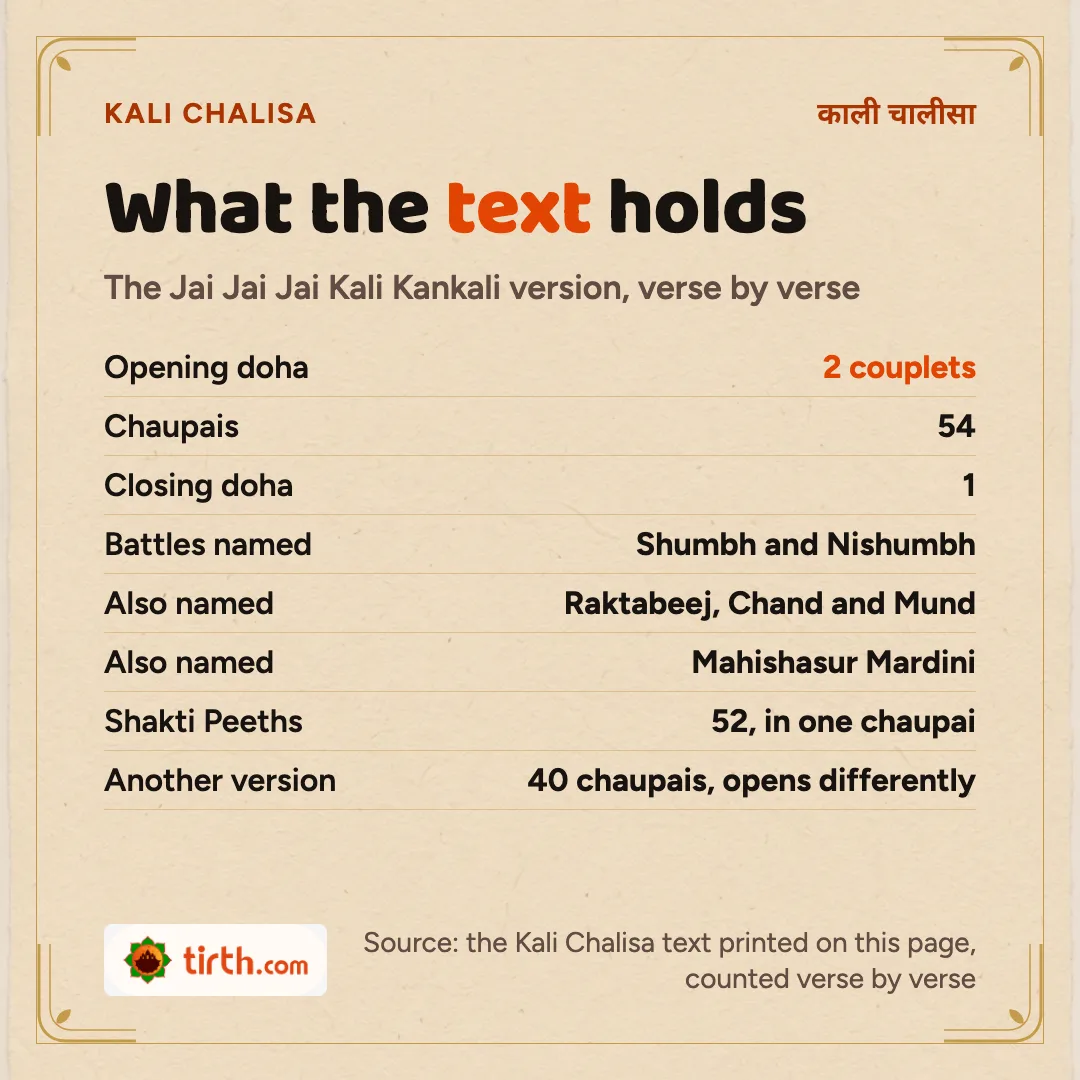
One chaupai, Bawan Shakti Peeth Tav Sundar, speaks of the 52 Shakti Peeths. The lines after it bring in Vindhyavasini, Kalika, Shakambhari, Jwala and Kamakshya. The closing chaupais turn to the reader’s own prayer, and the last of them, Paath Karai Chalisa Joi, is about reciting the Chalisa itself.
Which day to read the Kali Chalisa, and how many times?
There is no single rule.
Shubh Panchang names Tuesdays and Amavasya as favourable days and other pages name other days, so your own family’s custom decides. Some families read it 11 times, some 21, some more, and none of these numbers is fixed by the text (a pencil tally beside the book is easier than counting in your head).
If you are new to it, we would rather you read it once, slowly, Hindi line and then Roman line, than race through eleven rounds you cannot follow. Fifty-four chaupais is long enough for speed to swallow the words.
Reading it aloud for a parent who finds small Devanagari hard? Use the Roman line.
Whether to light a lamp, sit facing a particular way or take a vow for a set number of days are questions of family custom, and your family priest is the right person to ask. For a shorter prayer to the same goddess, Tirth has the Kaali Aarti and a page on the Maa Kali mantra.
The full set of chalisas is gathered in the chalisa section of the Tirth blog. For other hymns to the Goddess and those around her, see the Durga Chalisa, the Chamunda Chalisa, the Bhairav Chalisa and the page of Shakti mantras. And if you would like a priest to perform a puja for your family, you can look through the pujas on Tirth.
Frequently asked questions
What is the Kali Chalisa and how many verses does it have?
It is a Hindi hymn to Maa Kali. The version on this page has an opening doha of two couplets, 54 chaupais and one closing doha.
Is the Kali Chalisa the same as the Mahakali Chalisa?
No. Shubh Panchang lists the Mahakali Chalisa as a separate hymn. There is also a second Kali Chalisa of 40 chaupais, and it does not contain the line Jai Jai Jai Kali Kankali.
Which day is right for reciting the Kali Chalisa?
Shubh Panchang names Tuesdays and Amavasya. Other pages name other days, so follow your family’s custom.
How many times should the Kali Chalisa be recited?
There is no fixed number. Counts such as 11 or 21 are custom, not rule, and a single unhurried reading is a sound place to begin.
What are the benefits of reciting the Kali Chalisa?
That is a matter of faith. People recite it as devotion to Maa Kali, and this page does not promise any result from it.
Who wrote the Kali Chalisa?
None of the versions checked for this page names an author or an edition. It is kept here as a traditional text, without a poet’s name.
Leave a Reply