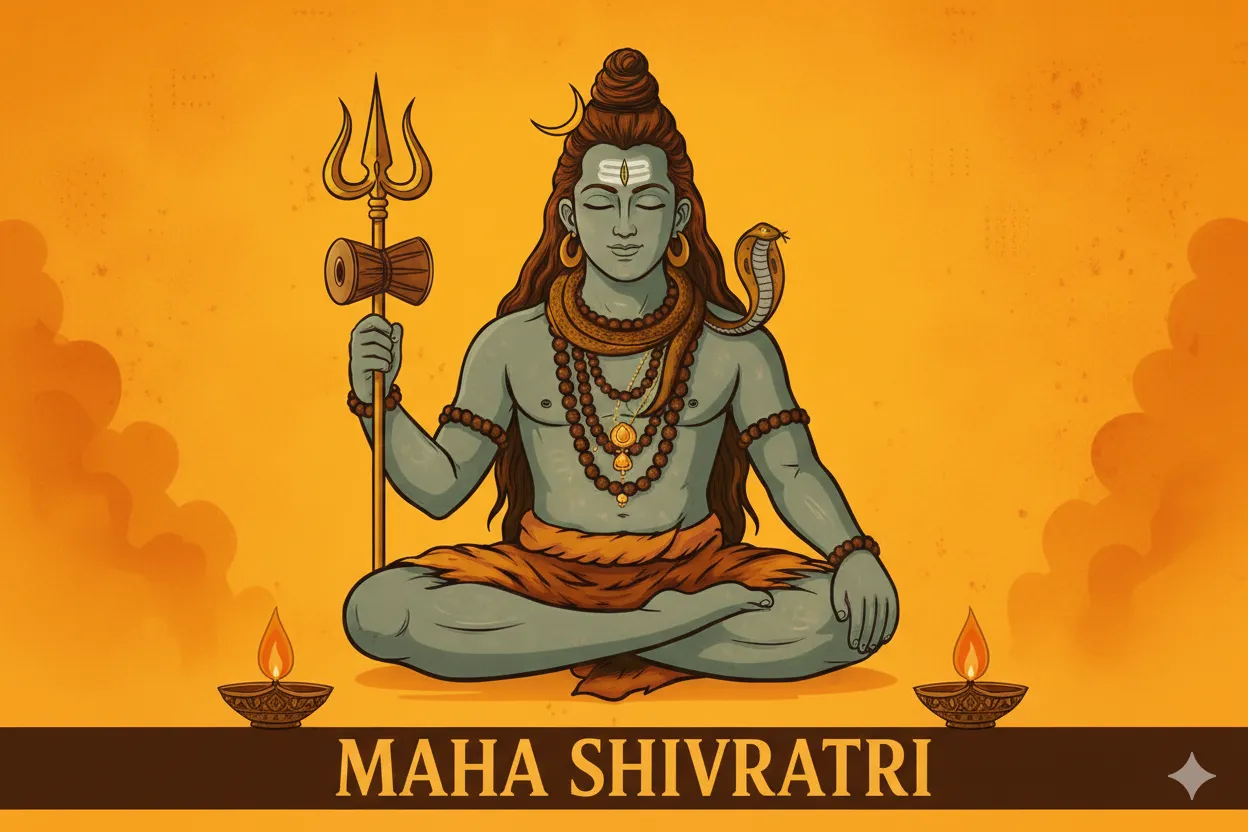
A new sacred night comes every year inviting introspection, discipline, and looking inwards. For many devotees, Maha Shivratri is a combination of mystique and trepidation. The questions people have include, what is the purport of this night, what is the history and how should this night be properly celebrated? Some are looking for a spiritually centered experience, while others are looking for emotional balance. For some, it is enough to observe the night to reduce the stress of looking for answers and the strain of active participation in the celebration. The night of Maha Shivratri is primarily a night of silence and meditation, and is, therefore, also a night of great self discipline and high awareness.
Maha Shivratri is the Celebration of the Night when Shiva is believed to have Created the Universe
The night of Maha Shivratri is celebrated to adore and soliloquy the grace of the Lord Shiva, the God of Creation believed to have created the Universe. The night symbolizes self control and awareness of the Universe. The experience of Maha Shivratri is, therefore, not to be perceived in a mechanistic way to be an order of a single celebration.
The night of Maha Shivratri is celebrated to adore and soliloquy the grace of the Lord Shiva, the God of Creation believed to have created the Universe. The night symbolizes self control and awareness of the Universe. The experience of Maha Shivratri is, therefore, not to be perceived in a mechanistic way to be an order of a single celebration.
The Celebration of Maha Shivratri is celebrated to adore the night saviors of the devotees as the night is believed to be the creation night when the Lord Shiva, the Universe’s creator, created the Universe. The night of Maha Shivratri is also symbolic as it symbolizes the self discipline and the awareness of the Universe. The experience of Maha Shivratri should not only be imagined as a one time celebration.
There is a strong belief that Lord Shiva entered a state of deep yogic absorption on this night, a state that represents mastery of the mind and the body. A complete inward focus, away from sensory distractions, represents the ideal of self control and self awareness.
Another sacred story describes the night of the unification of Shiva and Shakti. This unification represents the balance of the stillness of awareness and the restlessness of the evoked power of the Shakti. This balance of the forces is most constructive when they are in alignment and not in opposition to each other.
This sacred night represents several interrelated themes
• The ability to withdraw from constant external stimuli allows the mind to rest and clarifies the mental state.
• A focus in a calm environment is the result of a reduction of internal turbulence.
• The mental state is not suppressed, and the clarity of the focus is not lost. The awareness is increased, the control is not lost, and the discipline is turned to positive constructive ends.
All of these themes are interrelated and reinforce a common spiritual thread rather than a disparate set of beliefs.
Short Maha Shivratri Quotes
- “Embrace the divine power of Shiva; transform darkness into light.”
- “Om Namah Shivaya: bow to the Supreme Being within.”
- “Let Shiva guide you to the path of righteousness and bliss.”
- “Maha Shivratri: the night of Shiva, the night of awakening.”
- “Find solace in Shiva, the eternal source of peace.”
- “May Shiva’s presence conquer your inner demons.”
Why We Celebrate Maha Shivratri
Devotees ponder why we celebrate Maha Shivratri and how this observance is distinct from to other sacred occasions. This night is devoted to Lord Shiva, The Adi Yogi, the first exponent of the Yogic science and discipline of the mind. The celebration is not about joy, or the attainment of abundance. It is about the mastery of the self.
The observance of Maha Shivratri represents the axial principles of restraint, silence, and mindfulness. Maha Shivratri (literally, ‘The Great Night of Shiva’), invites devotees to stay awake the whole night (‘ratri’), fasting (‘upavasa’), and focused worship (‘upasana’). These align the body, breath, and focus towards balance and poise.
Maha Shivratri is celebrated for its unique inward focus
• Silence embodies the rest and clarity of the mind—mental noise is quieted.
• Stillness embodies the observation of thoughts rather than the impulse to act—constant movement is ceased.
• Simplicity embodies humility and the absence of extravagance—indulgences of the self are curtailed.
The Maha Shivratri observance has the unique quality of providing reassurance to devotees who seek quiet, rather than noise.
Why Do We Celebrate Mahashivratri in Every Generation?
The observance of ‘Why do we celebrate Mahashivratri?’ is pertinent to all ages and walks of life. The elders appreciate the values of self restraint and order, the younger devotees—centers of gravity—tend to aim for emotional harmony and balance, and the families seek collective purpose and coherence.
The night of Maha Shivratri offers observance benefits through life stages
• Mental activity is refreshed through a break
• Rest is provided and clarity is achieved through the activities of the observance.
• Collaborative quietness and focused synchronized chanting foster collective harmony.
These attributes of the Maha Shivratri observance are valuable and meaningful to people of all cultures.
When is Mahashivratri in 2026?
A common concern for those observing the fast, or those who are traveling. ‘When is Mahashivratri in 2026?’ is a question people ask during the fasting and travel preparations.
Maha Shivratri in 2026 will take place in late winter. The season is characterized by external and internal stability and comfort. The coolness of the season aids the fasting and is such that the night vigil wouldn’t be strenuous.
There are many benefits of planning Maha Shivratri in 2026
• Planning in advance creates the opportunity to make health conscious choices when fasting.
• Planning in advance allows for travel to be stress free and time pressures to be alleviated.
• Preparation for the ritual is calm instead of frantic.
All of the above support emotional ease and confidence in observance.
Maha Shivratri and Rituals
Maha Shivratri is not just about the rituals. The observance of the night is meant to address the emotional state of the participants. The emotional states that Shivratri seeks to address are the anxious and overwhelmed from mental noise and emotional burnout.
• The silent period of the ritual serves to filter the mental noise.
• Chanting serves to bring emotional stability.
• The control and clarity comes from not partaking in the distractions of the modern word.
These are the effects of the rituals.
Maha Shivratri and the Services for the Participants
Almost every community or household has the same feelings when it comes the night vigil. The feelings are of concern and anxiety. Relieving the concerns helps the participants to feel engaged and less anxious.
The concerns are as follows
• Not knowing the rituals, how to perform them, and being uncertain of the right order is an anxiety for many.
• Those who are older in age often feel the stress of fasting during the night.
Gentle reassurance continues to remain central. Intention absolutely outweighs accuracy. Simple attendance may convey meaning that is unequaled by an elaborate performance.
Practical Instruction for Observing Maha Shivratri
Observance is effective when initiated with simple instructions.
Helpful Guidelines include
• Selecting a fasting method that is in accordance with your health needs. Fasting options may include a fruit fast, water fast, or a fast consisting of a light meal.
• Taking naps during the day to preserve calm energy for the night.
• Selecting a singe, dominant practice such as chanting or meditation. Practicing consistency fosters focus.
These steps align bodily ease with spiritual objectives.
Understanding the Purpose of the Rituals
Rituals may feel unwelcoming when purpose is not evident, but the presence of a reason helps to restore the meaning.
The main ritual activities include
• Completion of Abhishek of the Shivling. This consists of water, milk or the bel patra and is meant to exemplify the values of surrender, humility, and purity of intention.
• Repetition of Shaiva mantras. This practice is said to help with the stabilizing of one’s energy, mental balance, and emotional positivity.
• Practicing silence with the awareness of your breath. Stillness encourages unstrained observation.
Each of these practices strengthens awareness and discipline when approached with consistency.
Spiritual Themes that Shape the Night
The Maha Shivratri blends together a few themes that reinforce one another.
Main themes include
• The presence of Alert awareness as a result of conscious wakefulness.
- Self discipline illustrated by food and activity moderation
- Silence as an entry point for inner contemplation
These are not disparate acts, but rather individual elements of a cohesive whole.
Observing Maha Shivratri at home
While visiting temples is always special, for some devotees, the calm of a home observance is more suitable.
Benefits of home observance
Less crowding and noise
Flexible timimg based on your energy
Participation of family members, including the elderly
Home observance tips
- A worship area that is clean, quiet and visually uncluttered.
- A soft light to reduce eye fatigue.
- Brief breaks between chanting or meditation.
This method allows for uninterrupted observance.
Health Informed Observance
Health is always a consideration when it comes to fasting and staying vigilant.
Some methods are
- drinking water or permitted liquids during a fast.
- gentle stretching if sitting for a long times
- Listening to your body without feeling bad for not pushing yourself
This kind of care allows for more focus and safety.
Long Term Effects of Observing Maha Shivratri
The sacred night is not just about the night itself. It is about the changes that happen during the night, the practices that are brought into the night and carried on beyond. The observance of Maha Shivratri brings about new patterns, such as:
- Daily meditation practices of a few minutes
- Eating mindfully or practicing fasting
There are “routines” for integration of mindful pauses during the day.
The mere practice of these breaks supports equilibrium and clear thinking beyond the moments of the breaks.
Observing Emotions Support for New Observers
New observers typically feel some kind of worry or confusion. This leads us to the need for reassurance.
Notes of reminder are
• It’s ok to be wrong. What matters is that it was done honestly.
• Depth and complexity are fine, but simplicity is also good. Only one mindful practice is valuable.
• You are allowed to stop. The spirit functions better when the body is healthy.
All support your confidence and reduce the amount of worry you feel.
The Impact of Preparing Planning and Guidance
Planning is the second support of guidance. Planning and guidance combine.
What kind of support are we talking about here
• The person should know in advance the order of the rituals.
• The person should know in advance the order of the fasts.
• The person should prepare in advance the order of the rest and practice.
Emotional balance is created through these.
The Importance of Supportive Preparation and What is Next
Like many other fasts, Maha Shivratri encourages you to be mindful, but does not force it. The night encourages clarity and offers the chance to be disciplined and practice restraint. With good preparation, the observance can be simple and even centering.
At Tirth, for these reasons we practice, with love and care, guiding those who desire to have a good experience in Maha Shivratri 2026. We invite the devotees who want to know the rituals, organize the Shiv puja, or prepare for a gentle participation, to ask, to guide, and to use the services of the night to help them during the sacred night.
Readers can find contextual information about Maha Shivratri traditions across India on Tirth.com
Leave a Reply