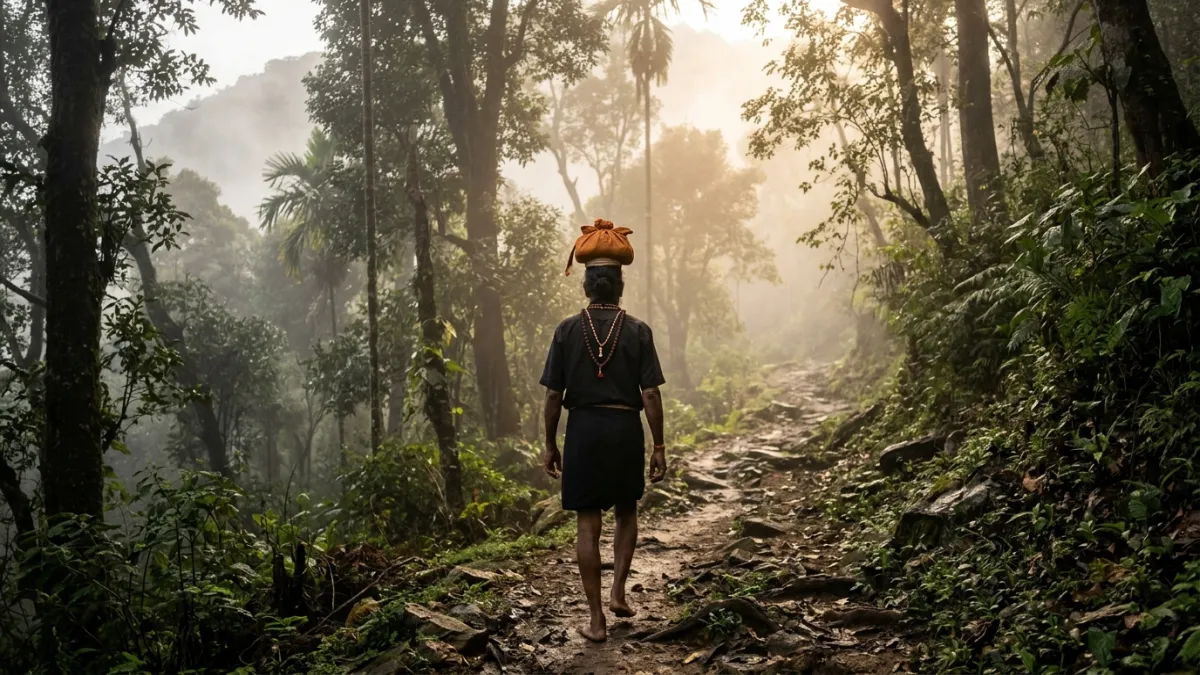
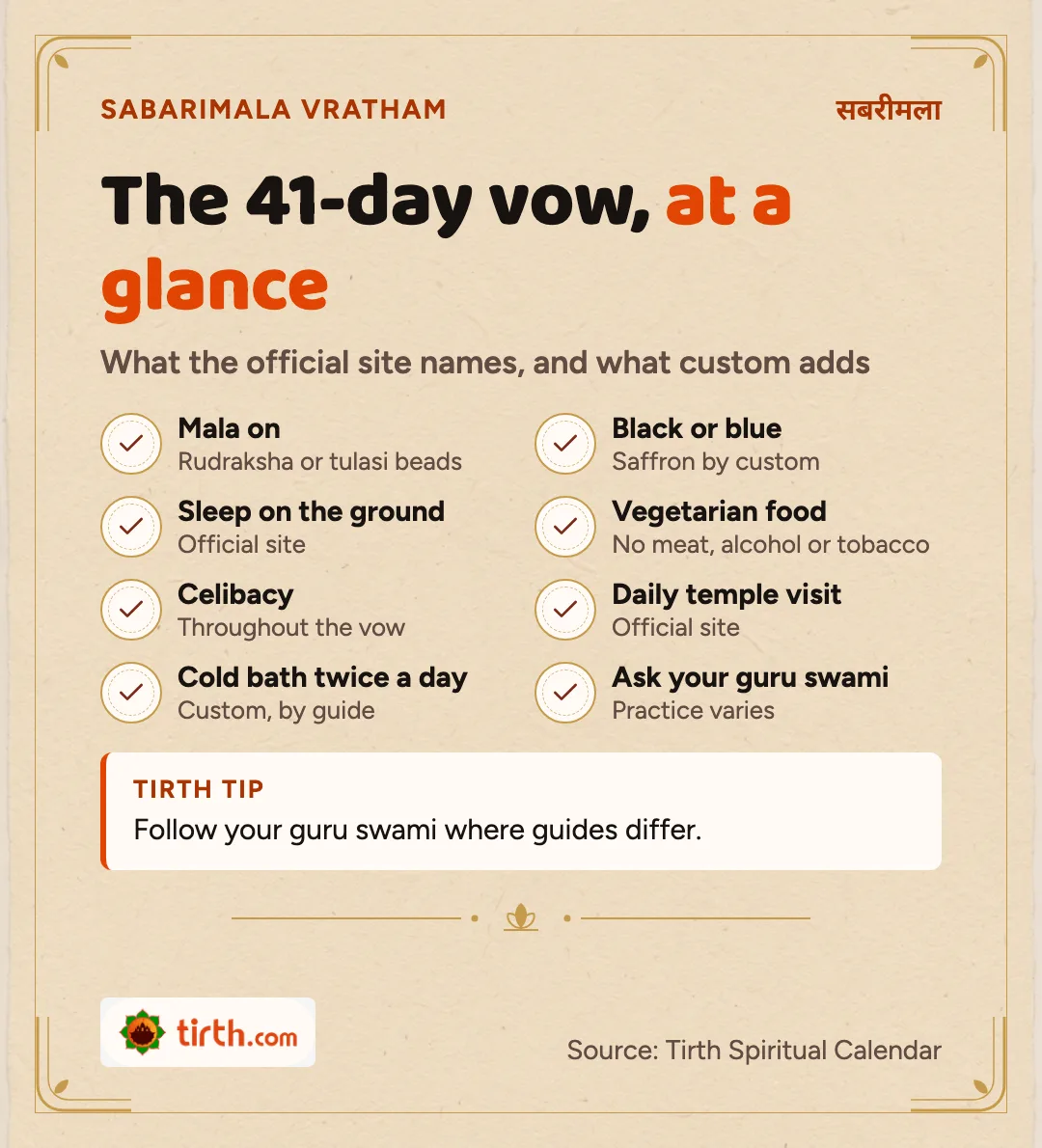
Sabarimala rules begin 41 days before the climb: the vow, the mandala vratham, is what allows a pilgrim to carry the irumudi up the hill and climb the eighteen steps. For those 41 days a pilgrim wears black or blue, keeps celibacy, and takes no meat, alcohol or tobacco, with a mala put on under a guru swami.
Picture that pilgrim bathing in cold water before dawn, then tying on a string of tulasi or rudraksha beads. This season the classic count starts on 17 November 2026 (Vrischikam 1), though many start on the day the mala is worn, and it ends around 27 December.
First-timers, the kanni swamis, mostly want to know what they actually have to keep. The honest answer depends on whom you ask. The temple’s official site gives a short list, and custom adds a good deal more. And the families and gurus who hand that custom down do not all keep it the same way.
What you keep for 41 days, and who says so
Each row of the table below is one part of the vow. The second column is what the Sabarimala temple’s official site names for the 41 days, the third is what devotional guides add, and the fourth is where you should ask your own guru swami.
| Part of the vow | Official site says | Custom and guides add | Varies, so ask |
|---|---|---|---|
| Length | A strict 41-day vow | Starts the day the mala is worn | Ask your guru swami |
| Dress | Black or blue | Saffron is also worn | Shoes, silk and perfume are avoided by many |
| Sleep | On the ground | Wake before dawn | Ask your guru swami |
| Food | No non-vegetarian food | Sattvic meals, no garlic, ginger or onion, finished by 3 PM, eaten after bath and prayer | Meal hours differ by guru and family |
| Conduct | Celibacy, no alcohol, no tobacco | No smoking or intoxicants, no shaving or haircuts | How strictly each is kept |
| Daily routine | A visit to the temple each day | Cold bath twice a day, morning and evening prayer, bhajans | Prayer times |
If your family keeps the vow differently from a friend’s, that is normal. Guides themselves say practice varies by guru swami, family and region, so a single guide’s rulebook is one voice among several. If you can settle only one thing before you start, settle who your guru swami is, because the last column of the table and the removal of the mala all lead back to him.
Swamiye Saranam Ayyappa is the chant that holds the 41 days together, and it doubles as a greeting. Vow-keepers say “Swamiye Saranam” to each other when they meet, and chant the same words at prayer all through the 41 days.
Getting the mala on, and taking it off
A guru swami usually puts the mala on you. It is a string of rudraksha or tulasi beads, and the guru is often someone who has made the climb many times (one guide puts it at 18 or more visits). Guides describe three days of purification before the day itself in some cases, and both your parents and your guru are expected to give their permission.
No guru swami yet? Your local Ayyappa temple is a good first door to knock on, as is any family that goes every year.
Guides disagree on removal. Once you are back, a short ceremony (visarjana) takes the mala off, before the guru swami or before one’s mother. Ideally, says one article, this happens at the spot where the mala was first worn, yet the same article’s FAQ says at home. A close relative’s death is another reason the mala comes off, according to one guide.
Your 41 days, counted from 17 November
Opening evening for the 2026-27 season is 16 November 2026. The next day, 17 November, is Vrischikam 1, the usual first day of the classic mandala vow, so the table below treats it as day 1. The day count is worked out on the Tirth Spiritual Calendar; the opening and booking dates are the Board’s own notices.
| Day of the vow | Date |
|---|---|
| Day 1 | 17 November 2026 |
| Day 7 | 23 November |
| Day 14 | 30 November |
| Day 21 | 7 December |
| Day 28 | 14 December |
| Day 35 | 21 December |
| Day 41 | Around 27 December |
The classic count ends around 27 December, and some calendars give 26 December for Mandala Pooja. Check the Board’s own notice.
If you start late or cannot keep every rule, do not invent an exemption; ask your guru swami. On Tirth, see also the Kartik Mahatmya stories and the Ekadashi fasting guide.
The irumudi kettu and its two pouches
Pilgrims carry the irumudi kettu, a sacred bundle, on the head up the hill. The official site describes a preparation ceremony called kettu nirakkal, and says only pilgrims who have completed the vratham may carry it. While the guru guides, it is often the first-timer who leads the tying.
Two compartments make up the bundle. In the front pouch (munmudi) go the offerings, namely a coconut filled with ghee (nei thenga), camphor, rice, betel and jaggery. Your own things for the walk go in the rear pouch (pinmudi). Custom keeps it off the ground. A Himalayan packing list sits in the Kedarnath yatra checklist, if you want one to compare.
Plastic is the one thing to settle before you pack. Around 2018 a Kerala High Court order was reported that bans plastic in and around Sabarimala, the irumudi among it, so wrap offerings in cloth, paper or natural material. Over the years the rules on what may go inside have changed, so read the latest Board notice first.
Who climbs the eighteen steps
The eighteen holy steps, the pathinettam padi, lead to the Sannidhanam. Custom allows only a pilgrim who has kept the vow, with the irumudi on the head, to climb them.
Other pilgrims use a separate path; check the Board’s latest notice for it.
Devotional readings often split the number as 18 = 5 + 8 + 3 + 2, giving the first five steps to the senses, the next eight to the inner enemies, three to the gunas, and the last two to knowledge and ignorance. Other readings tie the number to the Gita’s chapters, the Puranas or eighteen hills. No meaning is fixed, so take the one your guru gives you.
The route from Pamba to the Sannidhanam
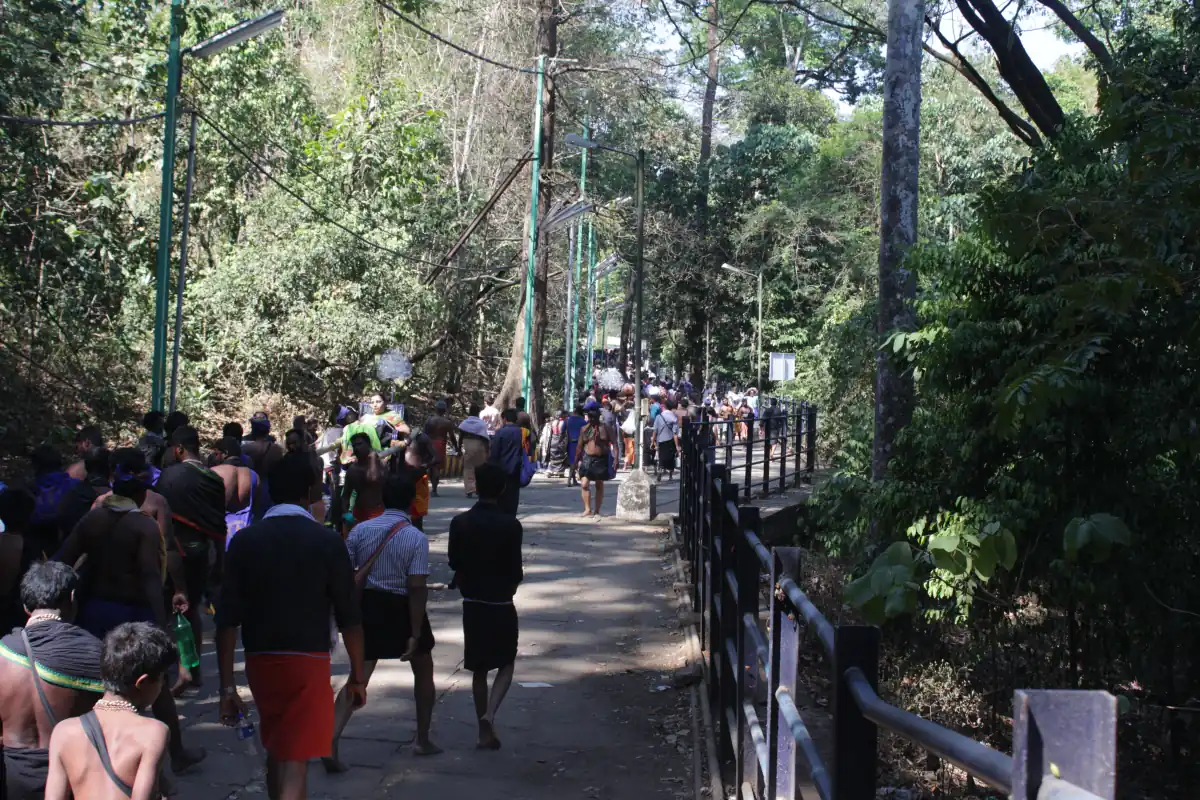
Pilgrims bathe first in the Pamba river, the Dakshina Ganga. Erumeli, Petta Thullal and the Vavar shrine mark the point where the traditional forest route begins. On the official site, Pamba is the last motorable point, and from there pilgrims trek up to the Sannidhanam. For current road and trek arrangements, check the Board’s site.
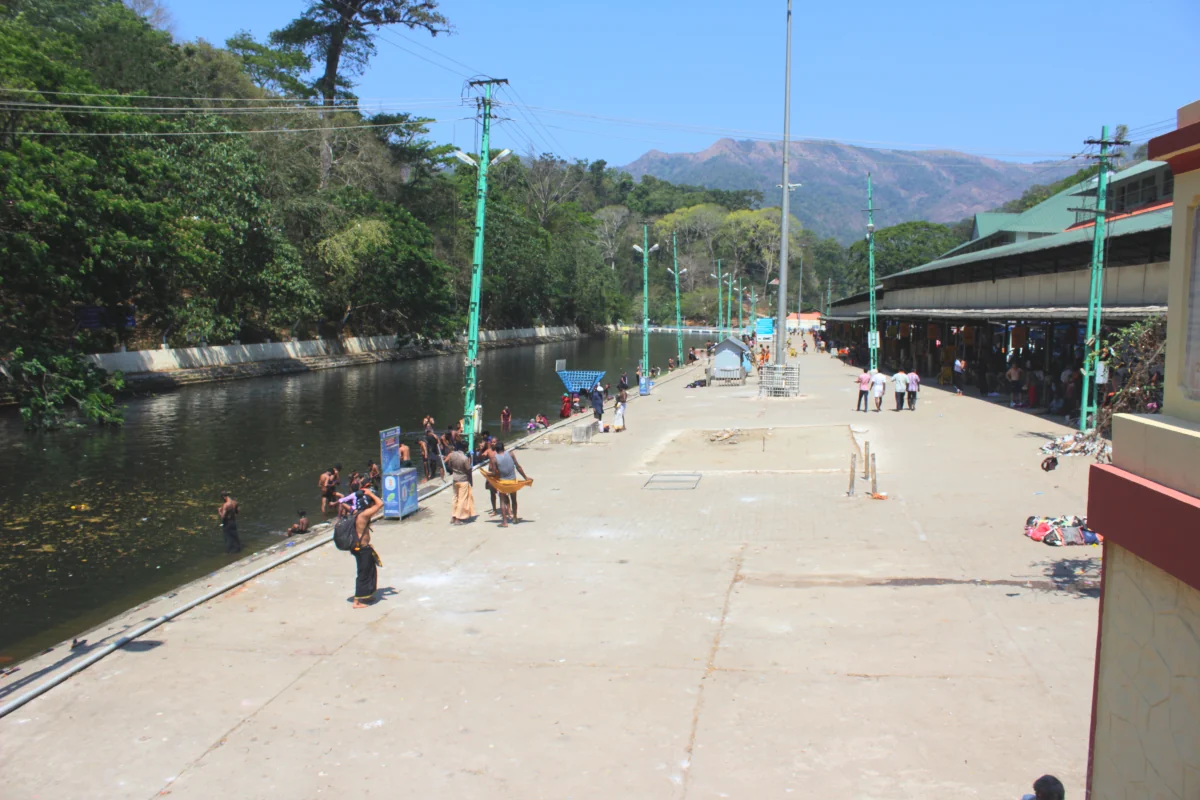
Meals, drinking water, toilets and rest stops are listed on the official site; the Sabarimala destination page has the place facts.
Booking a slot for this season
The Board announced that the 2026-27 virtual queue opened on 29 October 2026. Check the official portal, and see the Sabarimala temple page for entry details.
Browse the Tirth yatra packages if you want help with the trip.
Women and the vow
Checked on 14 November 2026: the Supreme Court’s 2018 judgment allows women of all ages, with the review before a larger bench. That nine-judge bench took up the reference and reserved judgment on 14 May 2026. At the time of writing no verdict had been reported. A customary view, in one vow guide, still has only girls under 10 and women over 50 taking the deeksha. Check where things stand before you plan.
Frequently asked questions
What are the rules of the 41-day vratham?
Per the official site, the vow runs a strict 41 days, with the mala, black or blue clothes, sleep on the ground, a visit to the temple each day, celibacy, and no non-vegetarian food, alcohol or tobacco. Sattvic food, cold baths and more come from custom.
Can I go to Sabarimala without the 41-day vratham?
The irumudi and the eighteen steps belong only to pilgrims who completed the vow. For any other way of going, your guru swami and the Board’s notice are the two places to ask.
What goes into the irumudi kettu?
A coconut with ghee, camphor and other offerings go in. The offerings sit in the front pouch and your own things in the rear one. Plastic is out, so look at the latest Board notice.
What do the eighteen steps mean?
One common reading counts five senses, eight inner enemies, three gunas, then knowledge and ignorance. Nobody fixes a single meaning for them.
Do I need a guru swami to wear the mala?
Custom says yes. Ideally the guru swami is someone who has made the climb many times, and your parents’ permission is expected too.
When does the mala come off?
It comes off after the return, in front of the guru swami or one’s mother. Sources differ on where, so follow your guru.
Continue on Tirth
- See the Tirth Spiritual Calendar for the dates of the season.
- Read the Sabarimala temple page for darshan details.
- Read the traditional Erumeli trek route page for the old forest path.
- Open the Sabarimala destination page for the place and how to reach it.
Leave a Reply