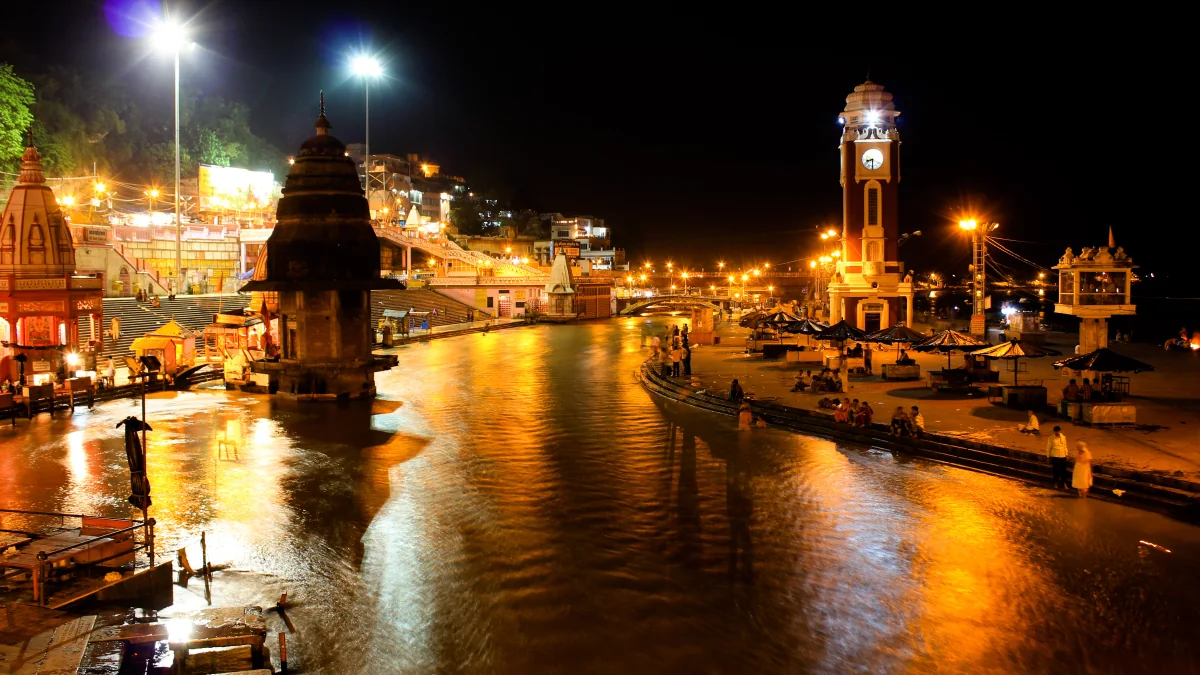
What is the Kumbh Mela? At its heart, a Hindu pilgrimage built around a single bath in a sacred river, taken at Haridwar, Prayagraj, Nashik or Ujjain, whichever city’s turn it is.
And the next one is nearly here. Haridwar’s Kumbh opens on 14 January 2027 and closes on 20 April 2027, the window the mela administration has announced.
What happens at a Kumbh, in plain words
UNESCO describes it as the largest peaceful congregation of pilgrims on earth, and in 2017 put it on its Representative List of the Intangible Cultural Heritage of Humanity. Set the scale aside and the act is small. You walk into the river on the day fixed for it, and you bathe.
On the big bathing days people speak of Amrit Snan, from amrit, the nectar of immortality, and snan, a ritual bath. Older accounts use another name for those days, Shahi Snan.
A mela, for its part, is a fair or large gathering, and this one goes on for weeks. Haridwar’s in 2027 lasts about four months, with eleven bathing days in all, every one still provisional.
Nobody needs all four months. You plan around one bathing day, which also makes it easier to fit a trip around parents or work.
Where is the Kumbh held? Four cities, each on its own river
The river you step into depends on the year. Each row below gives a city, its river, what its mela is called and when the latest or next one falls.
| City | River | Name used | Latest or next |
|---|---|---|---|
| Prayagraj | Ganga and Yamuna, with the Saraswati by tradition | Maha Kumbh (2025) | 13 January to 26 February 2025, ending on Maha Shivaratri |
| Haridwar | Ganga | Kumbh | 14 January to 20 April 2027 |
| Nashik and Trimbakeshwar | Godavari | Simhastha | 2027, with Amrit Snans on 2 August, 31 August and 11 September (12 September at Trimbakeshwar) |
| Ujjain | Shipra | Simhastha | 2028, no official dates or bathing days announced yet |
Two rivers, the Ganga and the Yamuna, join at Prayagraj, and tradition adds the Saraswati. Why that meeting point holds a special place among the four is told in why Prayagraj is a Kumbh city.
Each city is also tied to its own placing of Jupiter and the Sun, and Haridwar’s, as commonly given, puts Jupiter in Kumbha (Aquarius) and the Sun in Mesha (Aries). Sources do not agree on every pairing, and one district page has the Sun in Kumbha for Haridwar, so we treat the scheme as the tradition’s account and nothing firmer. The 2027 dates below rest on the mela’s own provisional bathing list instead.
Why twelve years? Jupiter’s circuit and the pot of nectar
The sky first. Jupiter needs approximately 12 years for one trip round the zodiac, and the cycle is anchored to that.
The story is the churning of the ocean. Gods and demons churned the sea for amrita, and Bhagwan Dhanvantari rose holding the pot. One widely told version has Jayant, son of Indra Dev, making off with it, Surya Dev, Chandra Dev, Brihaspati Dev and Shani Dev guarding it, and drops falling at Haridwar, Prayagraj, Ujjain and Nashik-Trimbakeshwar.
The chase went on for twelve divine days, and one divine day counts as one human year. Hence a Kumbh every twelve years.
Hold the story loosely, though. The drops at four places are a later extension of the churning story, missing from its earliest versions, and who carried the pot changes from one account to the next.
Nor is there a fixed gap between cities, whatever some summaries say about a Kumbh every three years.
Any one city sees a full Kumbh about once in twelve years. Count every mela, whatever it is called, and the spacing is plainly uneven: Prayagraj (2025), Haridwar and Nashik-Trimbakeshwar (both 2027), then Ujjain, reported for 2028.
Ardh, Purna or Maha Kumbh? Sorting out the three names
Ardh means half. The Ardh Kumbh comes round roughly every six years and is held at Haridwar and Prayagraj alone, while Purna (full) Kumbh is the twelve-year one. Prayagraj’s twelve-year gathering goes by Maha Kumbh, the name it carried in 2025. Authorities are loose with all three. In practice Uttarakhand calls the 2027 Haridwar mela plain “Kumbh Mela 2027”, and the press agency PTI calls the same mela Ardh Kumbh. The post Ardh Kumbh versus Maha Kumbh goes through them one by one.
How the cycle plays out at Haridwar in 2027
Whatever you call it, Haridwar’s mela is the easiest to look at closely, because its dates are out. It opens on 14 January 2027. It ends on 20 April 2027. Between those two dates sit four Amrit Snans, provisional for now: 6 March, 8 March, 15 March (Dev Doli) and 14 April, the main one. The festivals behind them are on Tirth’s Spiritual Calendar, and all eleven bathing days are on the Haridwar 2027 dates page at KumbhMela.info, Tirth’s own Kumbh reference site.

For Haridwar itself, its rites and how its Kumbh names are used, read our longer guide to the Haridwar mela of 2027.
There is one wrinkle with the first bathing day. 14 January is listed as the opening bathing day, but the Sun does not reach Makara (Capricorn) until late that evening, which is why the Spiritual Calendar keeps the observance on 15 January.
Watch the Sun and the word Kumbha appears again. For Haridwar the Sun enters Kumbha (Aquarius) on 13 February 2027, partway through the mela, and then Mesha (Aries) on 14 April 2027, the same day as the main Amrit Snan.
Next in line is the Nashik Simhastha, its Amrit Snans falling on 2 August, 31 August and 11 September 2027. Ujjain follows in 2028, with no official dates or bathing days announced yet. Past 2028, nothing at all has been announced, and our guide to the next Kumbh Mela lays out what is expected after that. Kumbh Mela 2027 covers the year as a whole.
Planning a Kumbh yatra, date first
Our pick, if you can go to just one, is Haridwar in 2027, because its bathing days come first and are already listed. Fix the bathing day first. The leave, the travel and who goes with whom all follow from that one date.
Nothing should be paid for until you have read the mela administration’s notices. And when you want a hand with the trip itself, start at the Tirth yatra packages page.
Frequently asked questions
What is the Kumbh Mela?
At the centre of this Hindu pilgrimage is one act, a ritual bath in a sacred river. The mela rotates between Haridwar, Prayagraj, Nashik and Ujjain. UNESCO describes it as the largest peaceful congregation of pilgrims on earth.
Why is the Kumbh Mela held every twelve years?
Each of the four cities gets a full Kumbh about once in twelve years. Two things sit behind that number, Jupiter’s circuit of the zodiac, which takes about 12 years, and the legend of the nectar pot, where the chase lasts twelve divine days and each divine day equals one human year.
Where is the Kumbh Mela held and on which river?
Haridwar is on the Ganga. Prayagraj sits where the Ganga and Yamuna meet, with the Saraswati joining them by tradition, and Nashik, together with Trimbakeshwar, is on the Godavari. Ujjain is on the Shipra.
What is the difference between Ardh Kumbh and Maha Kumbh?
The half Kumbh, roughly every six years and only at Haridwar and Prayagraj, is the Ardh Kumbh. Maha Kumbh is the name given to Prayagraj’s twelve-year gathering. Ardh Kumbh versus Maha Kumbh gives the longer version, with each name taken in turn.
Is the Kumbh Mela only a bath?
The bath is the heart of it. But a Kumbh is a mela too, which means a fair or large gathering, and it stays on for weeks (Haridwar’s in 2027 runs about four months).
When is the next Kumbh Mela?
Next comes Haridwar, 14 January 2027 to 20 April 2027. Later the same year it is Nashik-Trimbakeshwar’s turn, with the first Amrit Snan on 2 August, and Ujjain follows in 2028, with no official dates announced yet.
Continue on Tirth
- Kumbh Mela 2027 on Tirth for the year’s Kumbh dates in one place.
- Haridwar on Tirth for the city that opens the cycle in 2027.
- The Tirth Spiritual Calendar for festival dates by city.
- The story of the churning for the full telling of the nectar pot.
Leave a Reply