Category: Mantra Collection

Explore a sacred collection of Hindu mantras with meaning, benefits, and chanting method. Find Surya, Shiva, Hanuman, Gayatri, and Devi mantras for daily prayer on Tirth.

  • The Grace of the Krishna Mantra

    The Grace of the Krishna Mantra

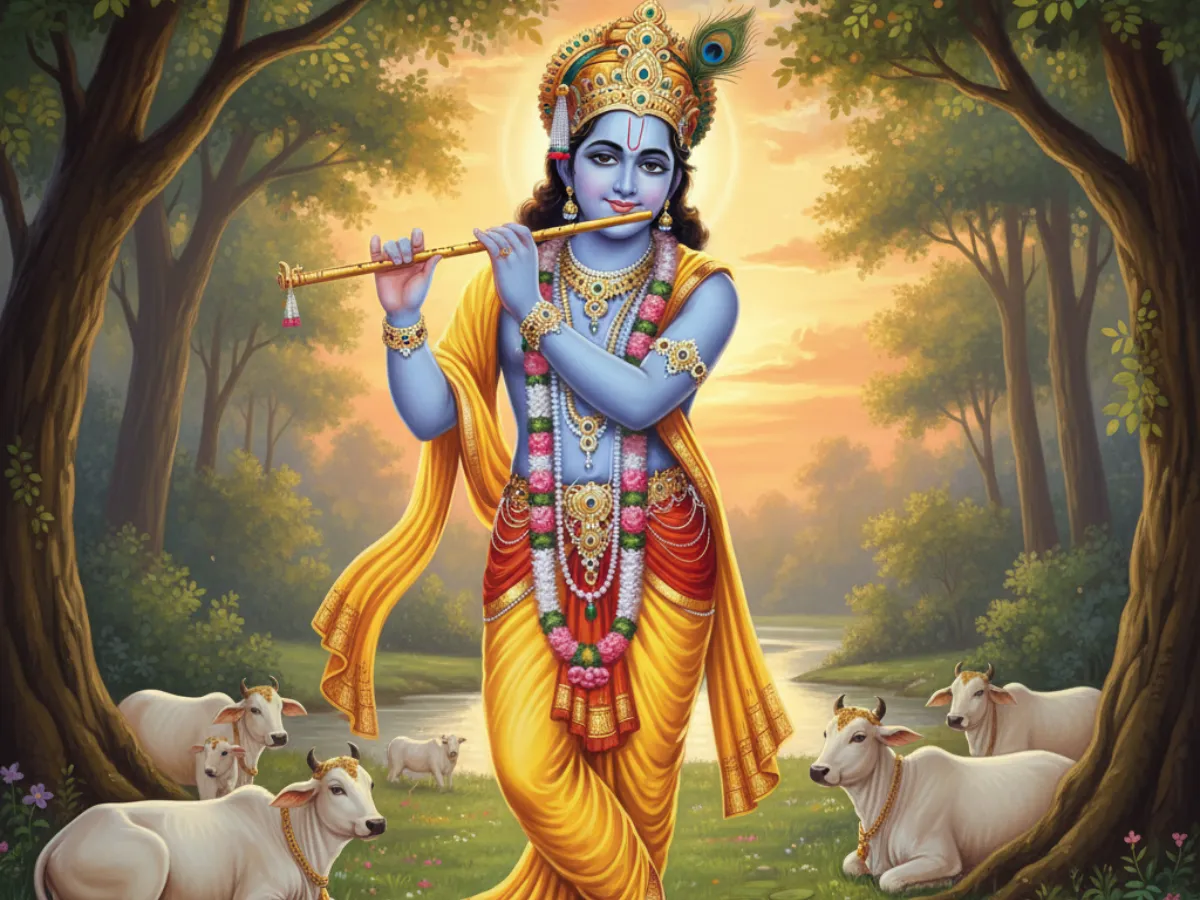
    There’s something almost magical about saying his name — Krishna. Even quietly, it feels like music: the kind that doesn’t just reach your ears but seeps right into your heart.

    For centuries, devotees have whispered his mantras to find calm, purpose, and a love that asks for nothing in return. Chanting his name is less about ritual and more about remembering — that soft, eternal presence of peace that lives inside all of us when we turn inward.

    Sacred Krishna Mantras

    Every mantra of Lord Krishna vibrates with his joy, compassion, and divine wisdom.

    Krishna Gayatri Mantra

    Om Devakinandanaya Vidmahe  
    Vasudevaya Dhimahi  
    Tanno Krishnah Prachodayat.

    Meaning:

    Let us meditate upon Lord Krishna, son of Devaki and Vasudeva. May that Supreme Divinity guide our thoughts, intentions, and lives toward light and wisdom.

    This mantra shifts something in you — as if your heart, for a moment, moves to his rhythm.

    Hare Krishna Maha Mantra

    Hare Krishna, Hare Krishna, Krishna Krishna, Hare Hare  
    Hare Rama, Hare Rama, Rama Rama, Hare Hare

    Meaning:

    A call to the divine essence of Lord Krishna and Lord Rama — a song of surrender, joy, and liberation.

    Chanted in temples, streets, and quiet hearts worldwide, this mantra is the timeless melody of devotion. It doesn’t need translation; your spirit already understands it.

    Mantras of Protection and Devotion

    Om Shri Krishnah Sharanam Mama

    Meaning:

    O Lord Krishna, I surrender to you. Protect me, guide me, let me rest at your lotus feet. (A mantra of trust — for when life feels uncertain.)

    Om Radhe Krishnaya Namah

    Meaning:

    My salutations to Radha and Krishna, the symbol of divine love — pure, eternal, and free from conditions. (Often recited together to invoke harmony and devotion in relationships.)

    Om Namah Shivaya Vasudevaya

    Meaning:

    I bow to Vasudeva — Krishna — the same truth that shines as Lord Shiva. There is only one consciousness flowing through all forms.

    Om Govindaya Namah

    Meaning:

    O Govinda, beloved of all beings, remover of sorrow — please accept my humble greeting. May remembering you bring peace to every corner of my life.

    Om Krishnaya Vasudevaya Haraye Paramatmane  
    Pranatah Klesha Nashaya Govindaya Namo Namah

    Meaning:

    I bow to Lord Krishna, Vasudeva, the Supreme Soul who dissolves all suffering and hardship. To Govinda, I offer my heart again and again.

    Om Kleem Krishnaya Namah

    Meaning:

    O Krishna, source of attraction and harmony, bless me with strength to overcome obstacles and draw goodness into my life.

    Om Krishnaya Namah

    Meaning:

    I bow to Lord Krishna — the eternal friend, the keeper of truth, the joy that never fades.

    Om Govallabhaya Swaha

    Meaning:

    O beloved Lord of the Gopis, accept my devotion and pour your love through my heart.

    Who Is Shri Krishna?

    To speak of Krishna is to speak of love in its purest form. Born in Mathura as the eighth incarnation of Lord Vishnu, he entered this world not with thunder but with music — the sound of a flute that could stop rivers and soften hearts.

    He was everything at once — a mischievous child, a cosmic teacher, a warrior, a friend, a guide. They call him Kanhaiya, Gopal, Shyam, Vasudev, Dwarkadhish, Jagatguru. Each name tells a different story, but all point to one truth: Krishna lived as love made visible.

    In the Mahabharata, he didn’t rule a kingdom — he chose to drive a chariot. Through his words to Arjuna, the Bhagavad Gita was born — a timeless guide for the soul. And even today, thousands of years later, his voice still echoes between our doubts and our courage: “Do your duty. Offer the fruits. And remember me.”

    The Importance of Krishna Mantras

    Among all his mantras, one stands quietly at the center —

    Om Namo Bhagavate Vasudevaya

    A timeless invocation of surrender and protection. It frees the mind from worry, fills the heart with peace, and pulls us closer to devotion.

    Chanting any Krishna mantra daily — especially 108 times — isn’t about superstition; it’s about rhythm. It’s aligning your breath with the vibration of love itself.

    Benefits of Chanting Krishna Mantras

    Peace of Mind: His name has a cooling energy — it softens anger, reduces anxiety, and restores clarity.

    Spiritual Growth: Each chant opens another layer of understanding. Over time, you stop seeking Krishna outside — you start sensing him in your own awareness.

    Love and Devotion: His mantra burns ego and lights devotion. Chant long enough, and you’ll find compassion becoming effortless — towards others, and yourself.

    How to Chant Krishna Mantras

    To chant sincerely, treat it not as a task but as a quiet offering.

    1. Begin fresh: Bathe and wear clean clothes. Light a lamp or incense before Krishna’s photo or idol.
    2. Offer simple love: Bathe the deity symbolically with water, yogurt, and ghee. Then offer Tulsi leaves, fruits, butter, or panjiri.
    3. Sit on a mat — preferably of kusha grass facing east.
    4. Use a Tulsi mala. Chant 108 times, turning the beads softly with the thumb and ring finger.
    5. Stay present. Don’t rush. Between chants, pause and listen to the silence — Krishna often speaks there.
    6. Close with gratitude. End with a small prayer, or simply say, “Thank you.”

    Important Reminders

    • Purity matters — body, mind, and emotion.
    • Chant daily at the same time; dawn is ideal.
    • Pronounce the words slowly, clearly, from the heart.
    • Avoid tamasic (heavy, dull) food before practice.
    • Let your thoughts be gentle — no grudges, no arrogance.

    It’s not about performing perfectly. It’s about feeling perfectly sincere.

    In the End

    To chant Krishna’s name is to drink from your own heart and taste peace again. The world may still spin the same way after you finish — but something in you stills.

    That’s his gift.

    He doesn’t promise to remove every storm — only to sit beside you in the boat, flute in hand, smiling as you learn to row through it.

    So sit, breathe, whisper his name… and watch your world turn lighter:

    “Om Shri Krishnaya Namah.” May his sweetness fill your voice, and his grace fill your life.

    Recommended Mantras:

    Hanuman Moola Mantra , Shakti Mantra , Maha Rudrabhishek Mantra
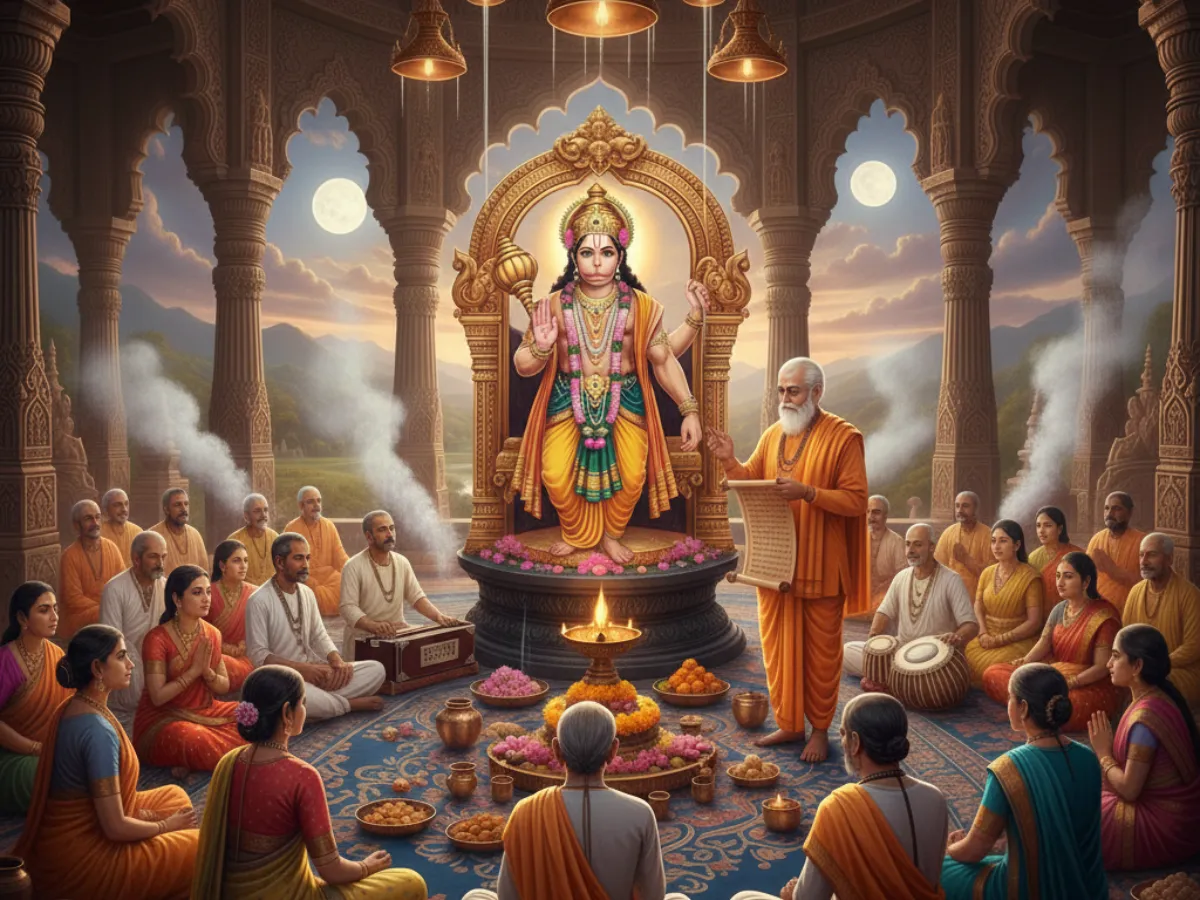
  • Hanuman Moola Mantra

    Hanuman Moola Mantra

    The Call of Strength and Devotion

    There’s a particular calm that comes with saying his name Hanuman. Call it courage, call it clarity, or just the feeling of having someone unshakable on your side.

    He has always been that the steady guardian, the fearless warrior whose faith could move mountains (literally). In every temple, you’ll see him chest open, heart shining with the image of Rama inside. That’s Hanuman Ji: strength wrapped in surrender.

    And his Moola Mantra? It’s simple. Yet every syllable feels like armor.

    Hanuman Moola Mantra

    Om Shri Hanumate Namah

    Meaning:

    “I bow to Lord Hanuman.”

    Just that — but it carries a world of power.

    When you chant it, the noise of the world quiets. Worry loses its grip. It’s said that even the thought of Hanuman can dissolve fear, but repeating his mantra fills you with something steadier a kind of inner steel.

    How to Chant the Mantra

    Early morning, when the first light touches the sky that’s the hour of pure focus. Sit facing the east, spine straight, and softly begin.

    Use a Rudraksha mala if you can, and let the mantra flow 108 times. Don’t rush it; let it echo naturally. Some people light a lamp or incense, others just fold their hands either way, what matters most is humility and attention.

    You’re not summoning him he’s always listening. You’re just tuning your heart to his frequency.

    The Spirit Behind the Moola Mantra

    Hanuman Ji is the embodiment of strength, courage, and unfaltering devotion. They call him Bajrangbali, Sankatmochan, Pawanputra names that describe what he does: burn away trouble, lift burdens, and infuse his devotees with unstoppable faith.

    In this age this restless, noisy Kaliyuga people say Hanuman is the quickest responder among all deities. He doesn’t ask for elaborate rituals. Sincerity is enough.

    And through his mantra, that sincerity takes form.

    The Blessings of the Hanuman Moola Mantra

    1. Removes Difficulties Whether it’s money worries, relationship tensions, illness, or inner chaos this mantra works like a flame through fog. Problems don’t disappear overnight, but your courage to face them grows so large they begin to shrink.

    2. Builds Courage and Strength Hanuman Ji is courage made divine. Chanting his name stirs that same energy in you: sharper focus, calmer nerves, more faith in your own steps. People who feel anxious or hesitant often find a quiet steadiness return after a few days of regular chanting.

    3. Brings Success and Victory It’s called a Siddhi Mantra for a reason it channels achievement. Whether you’re studying, preparing for an exam, chasing a promotion, or handling setbacks, this mantra reminds you that no obstacle is permanent.

    4. Heals Family and Relationship Strains Hanuman’s essence is loyalty and love. His mantra infuses the home with patience and balance. Many couples chant it together to soften misunderstandings and restore warmth to their relationships.

    5. Brings Peace to the Mind and Heart If your thoughts keep spinning at night guilt, stress, fear just close your eyes and softly repeat Om Shri Hanumate Namah. There’s something about the vibration of that sound that grounds you. It’s the soul’s exhale after holding too much for too long.

    Why It Works

    Hanuman represents bhakti in its purest form — love without ego. He never saw himself as divine; he saw only his devotion to Rama. That is his greatest strength — and it’s also what transforms those who remember him.

    When we chant his mantra, we’re not just praying to Hanuman. We’re awakening the Hanuman within — that fearless, compassionate part of us that can face the world, protect others, and stay devoted to what’s right.

    A Gentle Reminder

    • Always chant with a calm, clean body and a sincere heart.
    • Avoid negative or harmful thoughts before or after your practice.
    • Even one repetition said well means more than a rushed hundred.
    • And don’t worry about perfection — Hanuman listens to emotion, not grammar.

    In the End

    Chanting Om Shri Hanumate Namah isn’t superstition. It’s connection.

    When you speak his name, your spirit straightens — like a flag catching wind. You remember what it feels like to be unbreakable, not because you’re perfect, but because something vast and kind is carrying you.

    Every time you bow to Hanuman, your fear bows with you — and stays down.

    Recommended Mantras:

    Kali Beej Mantra , Narayan Mantra , Radha Mantra

  • Shakti Mantra

    Shakti Mantra

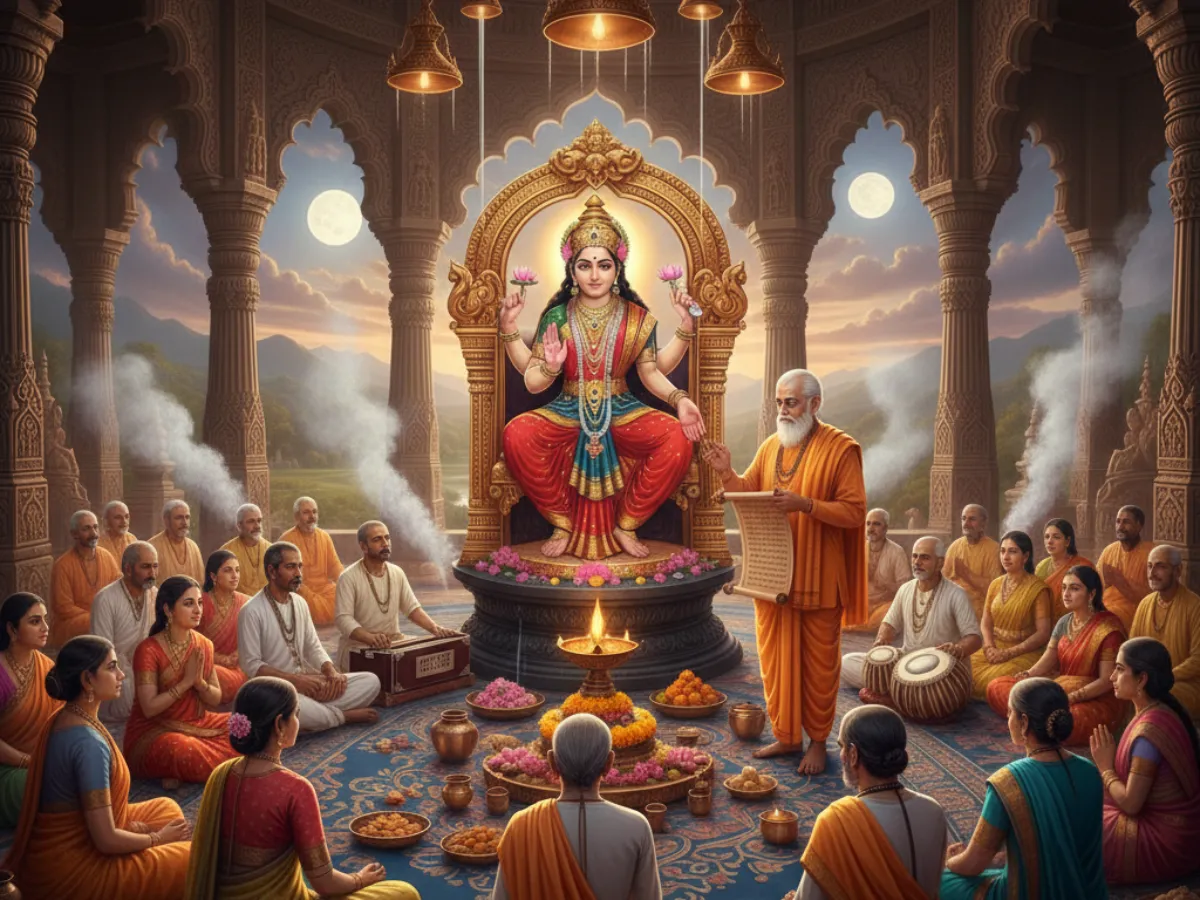
    When you whisper her name Shakti the air seems to pause. It’s not a small word. It’s the pulse of creation itself. She is the current that spins galaxies, the strength behind breath, the quiet fire moving through every living thing.

    For those who feel drawn to her energy, chanting Shakti Mantras isn’t just prayer it’s participation in that power. It’s the moment when devotion turns into transformation, when you don’t just call out to the divine you begin to feel her rising inside you.

    Sarva Badha Mukti Mantra

    Sarvabadha-vinirmukto dhan-dhanya-sutanvitah |  
    Manushyo mat-prasaden bhavishyati na sanshayah ||

    Meaning:

    May the Divine Mother, Shakti, remove every obstacle from my path and bless me with abundance, prosperity, and the joy of family life.

    This mantra clears the invisible clutter the delays, doubts, and heaviness that sit in the corners of life. Each recitation feels like a gentle sweep of light through the dark.

    Adi Shakti Mantra

    Adi Shakti, Adi Shakti, Adi Shakti, Namo Namo |  
    Sarab Shakti, Sarab Shakti, Sarab Shakti, Namo Namo |  
    Kundalini Mata Shakti, Mata Shakti, Namo Namo ||

    Meaning:

    I bow to the primal energy the first creative force that gave birth to all things. I bow to the Kundalini power, the divine feminine rising within.

    This mantra is almost musical rhythmic, grounding, and deeply healing when chanted slowly. It’s often used in meditation to awaken and balance the dormant life force that rests at the base of the spine Kundalini Shakti.

    Shakti Prapti Mantra

    Srishti-sthiti-vinashanam shakti-bhute sanātani |  
    Gunashraye gunamaye narayani namostute ||

    Meaning:

    Salutations to you, eternal energy power behind creation, preservation, and dissolution. You are Narayani, the mother of all qualities and the essence behind every virtue.

    Chanting this one feels like acknowledging truth itself that behind all actions, all cycles, and all beings stands Shakti, silent and unbroken.

    Health and Good Fortune Mantra

    Dehi saubhagyamārogyam dehi me paramam sukham |  
    Rupam dehi, jayam dehi, yasho dehi, dvisho jahi ||

    Meaning:

    O radiant Goddess, grant good health, beauty, happiness, victory, and fame and may all hatred and negativity dissolve from my life.

    This is the chant of wholeness of wanting nothing but harmony between inner and outer worlds.

    Pandemic Destruction (Protection) Mantra

    Jayanti Mangala Kali Bhadrakali Kapalini |  
    Durga Kshama Shiva Dhatri Swaha Swadha Namo’stu te ||

    Meaning:

    Salutations to Goddess Kali fierce, compassionate, unstoppable. Protector of the helpless, destroyer of evil, she is the final refuge when darkness rises.

    This mantra is often recited during times of fear, collective unrest, or disease. It carries a fiery vibration raw but strangely reassuring, like a storm clearing the air.

    What is a Shakti Mantra?

    To worship Shakti is to worship energy itself the breath of everything living. Followers of the Shakta tradition see her as the supreme reality the one from whom even the gods draw their essence.

    While Vishnu preserves and Shiva dissolves, it is She who gives both purpose. Durga, Parvati, Lakshmi, Kali all are her faces, different moods of the same primal power.

    Ancient yogis and sages meditated on Shakti not to control her, but to synchronize with her. They said the body and mind are capable of infinite potential if awakened through sound, breath, and awareness. And that awakening begins with mantra.

    Why Chant the Shakti Mantras?

    Because every repetition is like striking a spark of your own inner power. These mantras:

    • Focus the mind and strengthen clarity.
    • Awaken self-awareness and courage.
    • Remove stagnation and fear.
    • Connect you directly to divine feminine grace.
    • Lead slowly but surely toward Moksha, liberation.

    Chanting daily builds something subtle yet unshakable confidence without ego, power without aggression, purpose without restlessness.

    How to Chant the Shakti Mantra

    If you wish to invite the Divine Mother’s presence sincerely, here’s a simple way:

    1. Cleanse yourself. Bathe and wear fresh, preferably red or yellow clothes colors dear to her.
    2. Prepare the space. Spread a clean cloth where you’ll sit; face east and place her image or idol before you.
    3. Offerings: Red flowers, sweets, and fruits simple symbols of love and devotion.
    4. Seat: Sit on a kusha (grass) or wool mat to keep your energy steady.
    5. Begin quietly. Take a few deep breaths. Let the mind rest.
    6. Chant with awareness. Focus on her name, feeling each vibration rise and settle in your chest.

    The key isn’t mechanical repetition it’s tenderness.

    Benefits of Regular Chanting

    • Deepens concentration and focus
    • Increases confidence and emotional balance
    • Reduces anxiety, sadness, and fatigue
    • Brings success in career, relationships, and life decisions
    • Invites good fortune and cleanses negative energies
    • Brings mental peace and spiritual clarity

    Regular practice isn’t about exact numbers it’s about consistency. In time, you’ll notice not just outer changes but inner quiet the kind that doesn’t fade easily.

    Things to Keep in Mind

    • Pronounce clearly but don’t let perfection block purity.
    • Keep your thoughts kind and intentions clean.
    • Avoid tamasic foods (heavily processed, or non-vegetarian) before chanting.
    • Maintain simple self-discipline Brahmacharya in thoughts and actions helps keep your energy focused.
    • And above all, chant from the heart not for display, not for reward. Just out of love.

    In the End

    To say a Shakti Mantra is to remember the force that already lives inside you.

    She does not appear in temples first she wakes in the spine, in breath, in courage. Her blessing isn’t granted; it’s recognized. And once you feel her presence, life feels different. Stronger. Lighter. Alive.

    Om Shakti, Shakti, Shaktiye Namah. May the Mother move through you fierce and gentle, silent and shining.

    Invoke the power within through Divine Shakti’s grace. Explore authentic Shakti mantra and puja on Tirth.com.

    Recommended Mantras:

    Kali Beej Mantra , Narayan Mantra , Radha Mantra

  • Maha Rudrabhishek

    Maha Rudrabhishek

    There are certain sounds ancient, thunderous, healing that never lose their strength no matter how many centuries pass. The Maha Rudrabhishek is one such moment of sound and surrender.

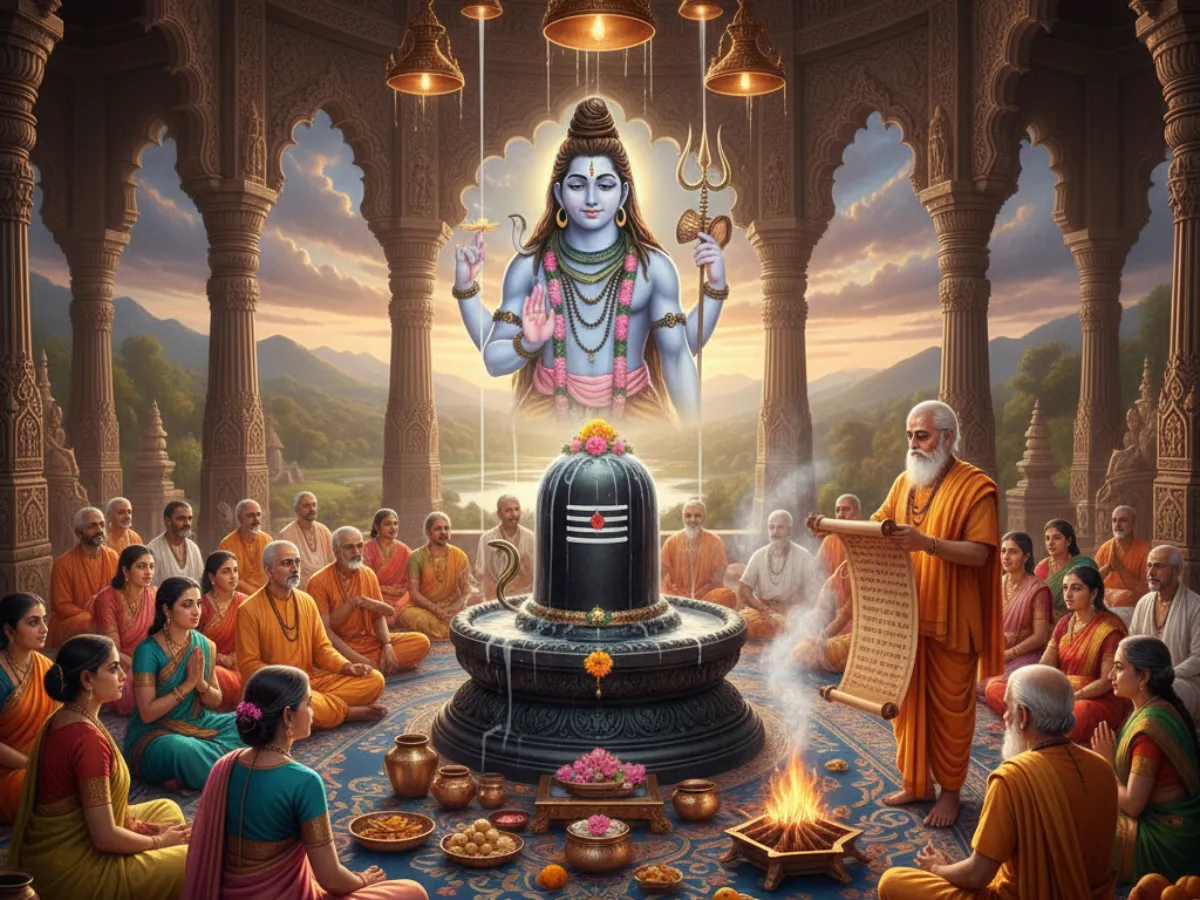
    It’s not just a ritual; it’s one of the most powerful ways to connect with Lord Shiva, the cosmic destroyer of negativity and the eternal stillness at the heart of all movement. When the chants begin, when the milk and honey flow over the Shiva Lingam, when the air thickens with “Om Namah Shivaya,” something indescribable happens the atmosphere itself seems to breathe.

    Maha Rudrabhishek Mantra

    Om Namah Shivaya

    Meaning:

    Salutations to Lord Shiva the pure, infinite consciousness beyond birth and death.

    This simple mantra, repeated through every stage of the Rudrabhishek, anchors the ritual in devotion. Every “Om” feels like the universe bowing; every “Namah Shivaya” sounds like the soul remembering where it belongs.

    What is Maha Rudrabhishek?

    The word Rudrabhishek combines two Sanskrit roots Rudra (a fierce, benevolent aspect of Shiva) and Abhishek (an offering or ceremonial bathing). So, Maha Rudrabhishek means the great bathing ceremony of Shiva.

    It’s one of the most auspicious and transformative Vedic rituals. The Shiva Lingam symbol of the infinite is anointed with water, milk, curd, honey, ghee, sugar, and sacred herbs, each poured with a specific mantra.

    Every element you offer carries meaning: Milk for purity, honey for sweetness in speech, ghee for spiritual power, Gangajal for cosmic cleansing.

    And all throughout, the soundscape of Shiva’s name vibrates through the room like steady rain on dry earth.

    How the Maha Rudrabhishek Puja is Performed

    Before You Begin

    Pick a quiet, clean place ideally a temple or a sanctified space at home. You’ll need:

    • Fresh milk, curd, ghee, honey, sugar
    • Flowers, fruits, sandalwood, betel leaves, incense
    • Copper or brass pot (for offering and pouring)
    • Gangajal (holy water)
    • And a patient, open heart.

    During the Puja

    1. Place the Shiva Lingam in a silver, copper, or stone vessel.
    2. Sprinkle Gangajal to purify the space.
    3. Invoke Lord Shiva, saying: Om Namah Shivaya again and again, until you feel the calm settle in.
    4. Begin the Abhishek bathe the Lingam slowly with each substance while reciting its mantra.
      • Milk for peace.
      • Yogurt for prosperity.
      • Honey for sweetness and harmony.
      • Ghee for strength.
      • Sugar for happiness.
    5. Offer flowers, lamps, incense, and fruits.
    6. Chant sacred verses Rudrashtadhyayi, the Maha Mrityunjaya Mantra, or the Shiva Tandav Stotra each calling forth a different vibration of divine strength.
    7. End with an Aarti and share prasad, sealing the act of offering with gratitude.

    The Sacred Materials of Maha Rudrabhishek

    For the Shiva Lingam:

    • Lingam of stone, mercury, or crystal
    • A copper or brass vessel (Abhishek Patra)
    • A Kalash filled with sanctified water

    For Abhishek:

    • Milk, curd, ghee, honey, and sugar
    • Bilva leaves, Jasmine, Datura
    • Fruits like banana, apple, and grapes
    • Sandalwood paste and vermilion (kumkum)
    • Rudraksha or Tulsi mala for mantra repetitions

    Each item has symbolic weight together they represent earth, water, fire, air, and ether the five elements returning to their source.

    The Spiritual Meaning

    Maha Rudrabhishek isn’t done for Shiva. It’s done through him a ritual that reflects cleansing inside and out. As water flows over the Lingam, so do our impurities and karmic residues wash away. As the fire of incense rises, so does intention. It’s less a ritual of worship and more a state of humility: a soul remembering its place before the infinite.

    When and Why to Perform the Ritual

    The most auspicious times are:

    • Mondays – the day devoted to Lord Shiva
    • Maha Shivaratri – the night when creation pauses
    • Shravan month – when Shiva’s energy fills the air

    It can also be performed on occasions like birthdays, anniversaries, or to overcome specific difficulties illness, karmic blocks, or emotional heaviness.

    In some temples and households, the ritual lasts eleven days, with eleven priests chanting continuously a sound current that never drops. The energy builds, echoing through body and spirit like a sacred drumbeat.

    Benefits of Performing Maha Rudrabhishek

    • Invokes Shiva’s grace, bringing peace and protection
    • Cleanses negativity and resolves planetary afflictions (graha doshas)
    • Removes financial difficulties and stabilizes family life
    • Promotes health, clarity, and deep inner balance
    • Strengthens spiritual resolve and awakens higher awareness
    • Brings rainfall, prosperity, harmony, and fulfillment

    Each element used in the Abhishek connects to a blessing:

    • Water: purification
    • Milk: long life and knowledge
    • Honey: sweetness and joy
    • Ghee: strength
    • Sugar: contentment
    • Bilva leaves: surrender and devotion

    The Inner Offering

    To perform Rudrabhishek properly is to bow beyond the spoken prayer. When the hands pour milk and the mouth chants “Om Namah Shivaya,” the heart too begins to cleanse itself. Shiva doesn’t need flowers or ghee what he accepts most quietly is sincerity.

    The ritual ends outwardly with fire and aarti, but inwardly, something new begins a stillness, a spaciousness, a kind of strength that doesn’t shout.

    That is the real Rudrabhishek not the pouring of liquids, but the emptying of ego.

    In truth, when you chant “Om Namah Shivaya,” you’re not asking Shiva to come closer. You’re simply waking up to the fact that he was never far. He was the sound inside you all along.

    Invoke Lord Shiva’s highest grace through Maha Rudrabhishek. Perform authentic Rudrabhishek and Shiva puja with Tirth.com.

    Recommended Mantras:

    Kali Beej Mantra , Narayan Mantra , Radha Mantra

  • Agni Mantra

    Agni Mantra

    There’s a reason every ritual in Sanatan Dharma begins and ends with fire. Not candlelight fire the living fire, Agni. It eats, it breathes, it moves like language older than sound.

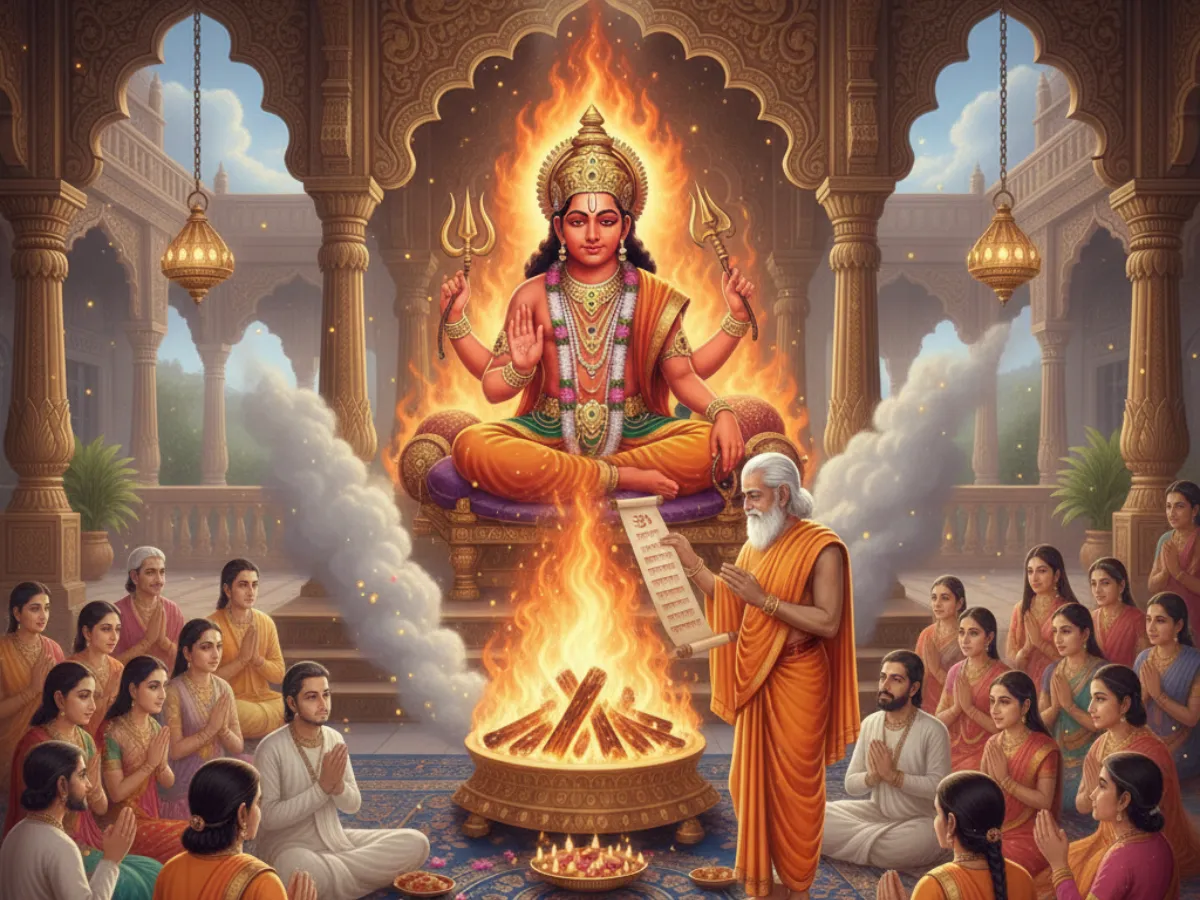
    Agni isn’t just a flame in a havan kund he’s the messenger, the witness, the bridge between human prayer and divine ear. He carries every whispered wish upward, turning ghee and mantra into light.

    To call him through mantra is to invite both cleansing and power. Agni doesn’t hide what he touches he transforms it.

    Agni Aavahan Mantra

    Om Agnaye Swaha.  
    Idam Agnaye Idam Na Mama.

    Meaning:

    O Agni Dev, I offer this to you. Please accept my humble salutations and bless this ritual with success.

    This is the mantra of invocation the moment you light the fire and whisper, “Please, be here.”

    Agni Gayatri Mantra

    Om Mahajwalaya Vidmahe  
    Agni Madhyaya Dhimahi  
    Tanno Agni Prachodayat.

    Meaning:

    O divine flame, we meditate upon your vast radiance. May your light guide our wisdom and illuminate our future.

    This one feels like sunrise. It’s chanted for clarity when your inner world feels dim, and you want that spark of direction back.

    Mantra of Surrender to Fire

    Om Vahni Tubhyam Namah.

    Meaning:

    O Agni, life itself depends on you. You sustain all beings. Bless me and dissolve my troubles.

    This mantra reminds you that fire isn’t something outside it’s in your breath, your will, your longing to grow brighter every day.

    Bhupataye Swaha

    Om Bhupataye Swaha, Om Bhuvanap,  
    Om Bhuvanapataye Swaha,  
    Om Bhutaanam Pataye Swaha.

    Meaning:

    The Supreme Lord ruler of all beings across the fourteen worlds becomes pleased when this mantra is chanted. It brings fulfillment, nourishment, and gratitude, especially before meals or sacred offerings.

    Om Namo Narayanaya

    Meaning:

    I bow to the infinite one the supreme truth, Narayan, of whom Agni is but a reflection.

    The Significance of Shree Agni Mantra

    In every sacred ceremony from the smallest household puja to grand Vedic rituals there lies a moment when silence ends and fire begins. The priest whispers the Agni mantra, the flame flickers, and it’s said the gods turn their eyes toward us.

    Fire isn’t symbolic it’s the first messenger. Agni carries the prayers of earth to heaven, the viscerality of offering to the stillness of the divine.

    He is light made alive, the sacred breath of every Havan.

    According to the Vedas, Agni radiates in seven tongues Kaali, Karali, Manojva, Sulohita, Dhoomravarni, Sphulingi, and Vishvaruchi each one a stream of divine energy, each one representing a facet of transformation.

    He rides a ram, and in some depictions, a chariot drawn by goats and parrots symbols of vitality and swiftness. His direction is south, where endings burn into beginnings.

    Agni is the heat in life itself in hunger, love, thought, and death. He is the fire that never stops consuming because he is the consumption that turns matter into spirit.

    The Story of Agni Dev

    Long ago, Agni was born of Brahma and Saraswati, twin to Indra both radiant and powerful. His wife, Goddess Swaha, embodies devotion; through her, rituals complete their purpose. Their three sons Pavak, Pavman, and Shuchi represent the purities of fire itself: cleansing, purifying, sustaining.

    The scriptures say Agni has been present in every form of existence. He stands within a child’s warmth at birth and watches over the same body at cremation. Even in marriage, the seven steps we take Saat Phere circle him, sealing human promise in divine witness.

    From birth to liberation, Agni is there silent but glowing, devouring ignorance and carrying every act of faith toward completion.

    How to Chant the Shree Agni Mantra

    Before you begin, remember fire demands both purity and presence.

    1. Cleanse yourself. Take a bath and wear red the color of strength and devotion.
    2. Prepare the space. Sit on a red mat facing east. Place an image or idol of Agni before you.
    3. Offer Achaman (water). Light incense and a ghee lamp before the flame is kindled.
    4. Present red cloth and a janeu (sacred thread) to Agni Dev.
    5. Offerings: milk, kheer, fruits, and sweets he is pleased by nourishment, by warmth shared.
    6. Use sacred woods like Peepal, Palash, Banyan, or Bael for your Havan. Chant the Shree Agni Mantra with each offering.

    When you call him properly, the air itself feels denser as if your words have weight again.

    Why We Chant the Shree Agni Mantra

    Agni is the humble mediator he doesn’t judge, doesn’t choose sides. Whether rich or poor, every offering burns the same. He asks for nothing but sincerity.

    Through him, prayers find motion. Through him, the gods respond.

    Every flame you light is a quiet contract “I will give, and through that giving, I will grow.”

    Regular chanting of the Agni Mantra draws down not just blessings but energy the kind that sits deep, steady, and luminous.

    Benefits of Chanting the Shree Agni Mantra

    • Fills your home with warmth, peace, and prosperity.
    • Brings stability in finances and career.
    • Helps remove debts, delays, and unseen obstacles.
    • Opens the path to government jobs or success in ventures.
    • Clears conflicts in marriage, bringing harmony and understanding.
    • Attracts wealth and protects from negativity because no darkness can stand where Agni dwells.

    Things to Keep in Mind

    • Always bathe before beginning the chant purity of body mirrors purity of prayer.
    • Pronounce each syllable with care; these sounds are ancient bridges, not mere words.
    • Avoid tamasic foods or intoxicants; they dim the inner fire.
    • Keep your mind clean no malice, no ego. Fire doesn’t tolerate deceit.
    • Observe moderation and discipline during the practice.

    In Closing

    Agni isn’t just sacred fire he’s the heartbeat of transformation itself.

    When you chant his name “Om Agnaye Swaha” you’re not offering something to be consumed. You’re offering everything that no longer serves you: doubt, fear, stagnation.

    He takes them. He burns them clean. And in their ashes, he leaves behind something simple and beautiful light.

    Offer your intentions into the sacred fire with Agni Dev’s grace. Explore authentic Agni havan and mantra rituals on Tirth.com.

    Recommended Mantras:

    Kali Beej Mantra , Narayan Mantra , Radha Mantra

  • Maa Kali Mantra

    Maa Kali Mantra

    There’s something about Kali that defies definition. She is not gentle in the way we’re used to thinking of goddesses. She is the wild pulse behind creation dark, electric, unstoppable. When fear shuts you down, she tears it open. When negativity clings to your thoughts, she burns it to ash.

    To chant her name is to stand before the fire that doesn’t destroy you it frees you.

    Her mantras are ancient sound currents, little lightning bolts of devotion. And when you call her sincerely, not timidly she answers, not in whispers, but in clarity.

    Kali Beej Mantra

    Om Kreem Kali

    Meaning:

    O fierce mother Kali, end my suffering. Strip away illusion. Bless me with peace and purpose.

    This is the seed mantra short, sharp, pure vibration. You don’t “say” it so much as feel it thunder quietly in your chest.

    Kali Invocation Mantra

    Om Kreem Kalikayai Namah

    Meaning:

    I bow to the goddess Kali, whose energy reignites the spirit.

    This mantra invites her presence into your consciousness. It’s said that regular chanting clears the fog of negative emotions and restores mental strength.

    Maha Kali Mantra

    Om Shri Maha Kalikayai Namah

    Meaning:

    Great Mother Kali, to you I bow. Take my pain, and teach me courage.

    This mantra is for those standing in their own storms seekers who need her fierce compassion to burn away despair. It asks for release and blessings in the same breath.

    Kalika-Yi Mantra

    Om Klim Kalikayei Namah

    Meaning:

    Victory to you, Mother Kali. Make me awake, alert, and wise.

    A practical mantra the one that grounds you when life feels scattered. It combines her wisdom with clarity, making it especially powerful for overcoming confusion or hesitation.

    Who is Maa Kali?

    Kali is often misunderstood called terrifying, dark, even destructive. But her destruction isn’t chaos; it’s liberation.

    She is Shakti in her most unveiled form energy stripped of pretense. Known as the seventh form of the great Goddess, she is the fierce embodiment of Parvati, the consort of Lord Shiva.

    But where Parvati nurtures, Kali transforms. She severs attachments to fear, ego, material greed to make space for truth.

    She is known by countless names: Kalratri, Bhadrakali, Bhairavi, Chamunda, Rudrani, Chandi, Dhumorna. Each one captures a fragment of her essence, but together, they tell one story of power in its purest, compassion in its fiercest form.

    According to ancient belief, she rewards those living by dharma (right action) and destroys those gripped by arrogance and deceit.

    That’s why she is Mahakali the great time itself destroyer, creator, liberator.

    The Legend of Kali’s Birth

    There was once a demon named Daruka, swollen with ego, armed with a boon that no man could destroy him. As his cruelty devoured heaven and earth, the gods turned to Lord Vishnu who told them that only a woman could end this reign of fear.

    So they went to Shiva. And upon hearing their plea, Shiva asked Parvati to awaken her hidden power.

    From her, a shiver of light erupted fierce, black as midnight. From that pulse, Kali was born.

    Her roar split the air. The demon army collapsed in terror. And with one roar, one breath, one flash of fire in her eyes, she reduced Daruka’s arrogance to dust.

    Even Shiva, recognizing his own energy within her, bowed to that unstoppable power.

    And since then, seekers have chanted her name not to escape life but to face it without fear.

    The Two Forms of the Goddess

    1. Four-Armed Kali (Dakshina Kali)

    Her peaceful form after victory. She’s shown with dark skin, untamed hair, a garland of skulls, her tongue unfurled not savage, but alive. In her hands she holds a sword, a trident, a severed head, and a cup of blood reminders that ego, ignorance, and illusion must die for the soul to rise.

    2. Ten-Armed Mahakali

    This is her infinite form, Mahakali, time beyond time. Ten arms, ten faces, three eyes in each every hand carrying a divine symbol. This form represents the totality of divine power she who contains the strength of every god.

    The Power of Her Mantras

    It’s said that chanting Kali’s mantras at night, especially on Amavasya (the new moon), creates a direct connection with her energy.

    And her blessings though they come in fierce disguise always bring renewal.

    The Benefits of Chanting Kali Mantras:

    • Melts away fear and anxiety, leaving behind deep inner confidence.
    • Brings calmness and a focused mind even in chaos.
    • Awakens spiritual awareness and stability.
    • Heals family wounds and restores harmony in relationships.
    • Removes suffering physical, emotional, financial at its root.
    • Protects from negative forces and unseen dangers.
    • Radiates powerful positive energy in your surroundings.

    Kali’s mantras don’t promise gentle comfort they promise transformation. They don’t quiet your chaos they help you walk through it and come out blazing.

    When and How to Chant

    • The ideal time: After sunset, and especially on new moon nights.
    • Place: A quiet corner facing south or east.
    • Preparation: Light a black or red candle or a small ghee lamp. Offer red hibiscus flowers they’re her favorite. Sit calmly, breathe, and begin.
    • Mindset: Don’t chant with fear. Chant with surrender.

    Repeat her mantra slowly, rhythmically like a heartbeat connecting to hers.

    Let her presence move through you.

    In the End

    Calling Kali isn’t about asking for comfort it’s about courage. To look truth in the eye. To cut through anything false. To live raw and real.

    And that’s her blessing.

    When you chant “Om Kreem Kali,” you’re not calling a goddess outside you you’re waking the one within.

    She isn’t the end. She’s the beginning after the end. The stillness after the fire. The power that teaches you were never powerless.

    May Maa Kali protect you and fill your life with strength and fearlessness.
    For Maa Kali Mantra, Kali puja, and Shakti sadhana, visit Tirth.com.

    Recommended Mantras:

    Durga Mantras , Vishnu Mantras , Shiva Mantras

  • The Grace of the Narayan Mantra

    The Grace of the Narayan Mantra

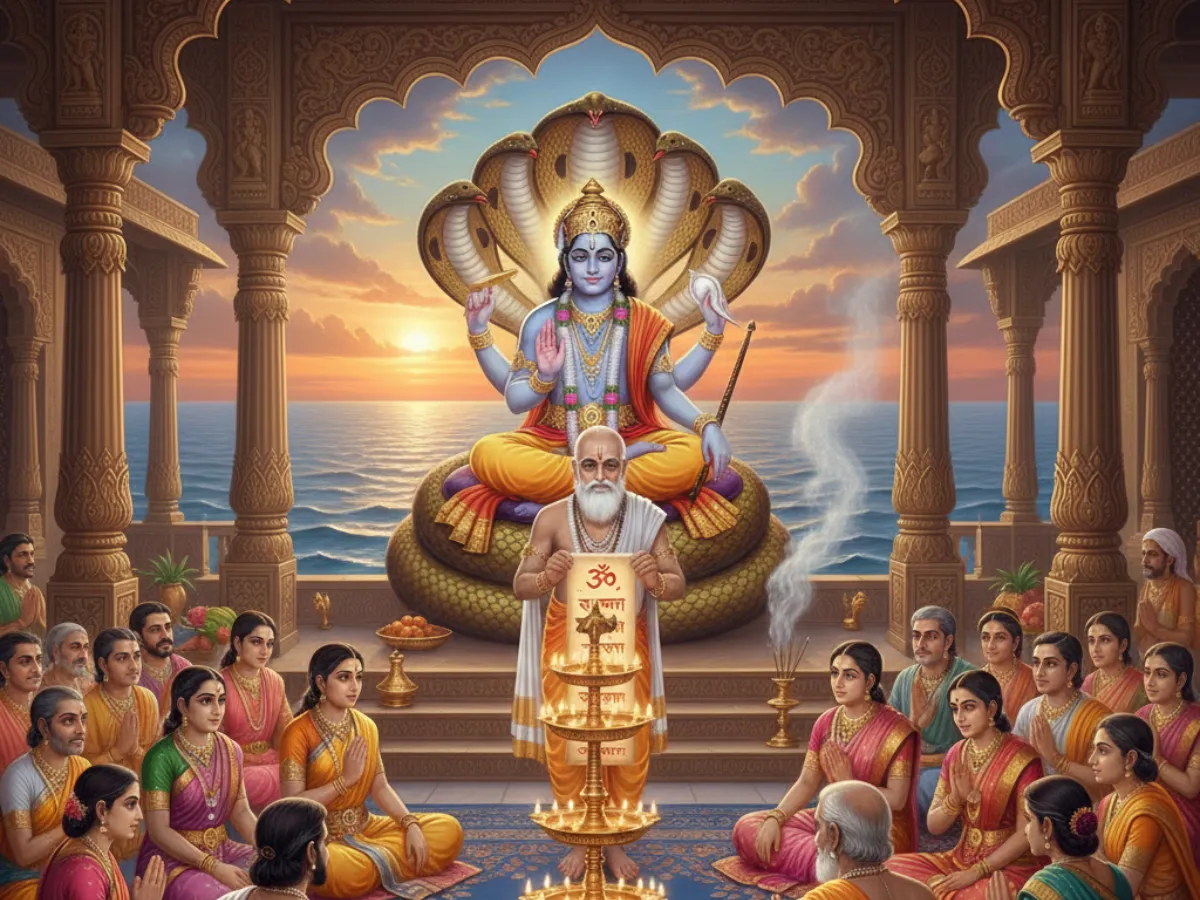
    If you’ve ever whispered the name Narayan, you know there’s a peace in it soft, endless, like water touching stone. Lord Vishnu, the preserver, protector, the one who holds the universe steady when everything else trembles in his aspect as Narayan, becomes the still heart of creation.

    The Narayan mantras aren’t just chants; they’re a calling home. They open something in you a space where blessings, wisdom, and calm start to feel like your natural state again.

    Sacred Narayan Mantras

    1. The Devotional Invocation

    Om Namo Narayan  
    Shri Man Narayan Narayan Hari Hari  
    Shri Krishna Govind Hare Murare  
    Hey Nath Narayan Vasudevay

    Meaning:

    O beloved Lord Krishna, ender of all sorrow grant me your mercy. Wash away my faults, bless me with unwavering devotion, and protect this fragile life of mine, O Narayan Vasudeva.

    This mantra is often chanted when life feels tangled a cry for both humility and guidance.

    2. The Mantra of Surrender

    Krishnaya Vasudevaya Haraye Paramatmane  
    Pranat Klesh Nashaya Govindaya Namo Namah

    Meaning:

    O Krishna, O Vasudeva, Supreme Soul the very thought of you dissolves all conflict. I bow again and again to Govinda, the peace beneath all burdens.

    Each syllable is a soft undoing of ego, of resistance, of fear.

    3. Narayan Gayatri Mantra

    Narayanaya Vidmahe  
    Vasudevaya Dheemahi  
    Tanno Vishnuh Prachodayat

    Meaning:

    We meditate upon Lord Narayan, the eternal truth, the all pervading self. May that sacred presence awaken our understanding and guide us toward light.

    This one is pure meditation steady, ancient, humbling.

    4. Dhanvantari Narayan Mantra (Healing and Protection)

    Om Namo Bhagavate Mahasudarshanay Vasudevay Dhanvantarye  
    Amritkalash Hastay Sarvabhay Vinashay Sarvaroganivaranay Trilokapathay Triloknathay  
    Shri Mahavishnuswaroop Shri Dhanwantari Swaroop  
    Shri Shri Shri Aushadhchakra Narayanay Namah.
    
    Om Namo Bhagavate Dhanvantarye  
    Amrit Kalash Hastay Sarv Amay Vinashanay Triloknathay  
    Shri Mahavishnave Namah.

    Meaning:

    Salutations to Lord Narayan in his form as Dhanvantari the divine healer, destroyer of fear and illness, bearer of the nectar of immortality. Ruler of the three worlds, protector of all beings, embodiment of health and abundance to you, O Mahavishnu, we bow.

    This mantra is often recited during illness or for overall well-being it’s said to bring not just bodily strength, but peace of mind too.

    5. The Eternal Vishnu Stotram

    Shantakaram Bhujagashayanam Padmanabham Suresham  
    Vishwadharam Gaganasadrisham Meghavarnam Shubhangam  
    Lakshmikantham Kamalanayanam Yogibhirdhyana-gamyam  
    Vande Vishnum Bhavabhayaharam Sarvalokaikanatham

    Meaning:

    I bow to Lord Vishnu serene, resting upon the serpent Shesh, lotus-naveled, lord of all gods, whose form holds the entire cosmos, whose complexion mirrors monsoon clouds, whose eyes bloom like lotuses, beloved of Lakshmi, accessible to yogis through meditation.

    To this Vishnu the remover of worldly fear, the one lord of all I bow.

    The Meaning Behind Narayan

    The word Narayan itself comes from two roots: Nar (meaning water or beings) and Ayan (meaning resting place). In essence, Narayan is “the one who resides in all beings and in whom all beings reside.” Beautiful, isn’t it?

    It is said he first appeared over the cosmic waters infinite, timeless and from there, creation unfolded. Every stream of devotion eventually leads back to him.

    Lord Vishnu, or Narayan, is one of the Trimurti:

    • Brahma creates,
    • Vishnu (Narayan) preserves,
    • Shiva dissolves.

    Together they form the pulse of the universe. Among Vishnu’s many incarnations Rama, Krishna, Narasimha Krishna is said to be the full manifestation of that divine energy.

    The Power of Worship and the Thursday Ritual

    Thursday the Guruvara is especially sacred for Narayan devotees. Waking early during Brahma Muhurta (before sunrise), bathing, and chanting his mantras at dawn invites both Vishnu’s protection and Lakshmi’s abundance.

    Even simple lines like “Om Namo Bhagavate Vasudevaya” can shift the energy around your home. It’s not about long rituals it’s about presence. A mind that bows sincerely is already halfway to peace.

    How to Chant the Narayan Mantra

    If you’re planning to chant the mantra formally, here’s a simple way to honor the tradition:

    1. Purify yourself: Take a bath and wear clean yellow clothes.
    2. Offer to the sun: Face east at sunrise. Offer water mixed with a pinch of turmeric while chanting “Om Namo Bhagavate Vasudevaya.”
    3. Prepare the altar: Spread a yellow cloth in the northeast corner (Ishan Kon) of your home.
    4. Invite Narayan: Place his idol or image, bathe it gently, offer yellow flowers, sweets, and sandalwood paste.
    5. Light a ghee lamp and incense.
    6. Chant softly, steadily, using a Tulsi or sandalwood mala each repetition a wave of gratitude rising and falling.

    Benefits of Chanting the Narayan Mantra

    • Invites divine grace, along with Goddess Lakshmi’s prosperity
    • Removes financial hurdles and emotional heaviness
    • Heals marital and relational difficulties
    • Clears negativity and ensures success in endeavors
    • Brings inner balance, devotion, and spiritual strength

    But most importantly, chanting reconnects you to that quiet center that stays unshaken no matter what life brings.

    Gentle Guidelines

    • Avoid heavy or non-vegetarian food before chanting.
    • Don’t offer unsuitable flowers like datura, semal, or akouva.
    • Steer clear of tamasic substances (alcohol, overindulgence, anger).
    • Pronounce the mantra clearly but don’t worry about sounding perfect; sincerity matters more.
    • Maintain purity of mind and speech, and if you can, observe celibacy while in practice.

    In the End

    The name Narayan isn’t just for worship it’s a way of steadying your spirit. Repeat it when life feels uncertain. Whisper it between breaths when the world goes quiet.

    Because in that sound Na-ra-yan lies the promise that you’re never alone.

    Find refuge, peace, and protection in Lord Narayan’s grace. Explore authentic Narayan Mantra and Vishnu puja on Tirth.com.

    Recommended Mantras:

    Durga Mantras , Vishnu Mantras , Shiva Mantras

  • Radha Mantra

    Radha Mantra

    There’s a certain softness, almost a quiet pulse, in the name “Radha.” It feels like a heartbeat that belongs not just to Krishna, but to the universe itself. When people chant her name Radha Rani they aren’t just praying; they’re remembering what pure love sounds like when it turns into a whisper.

    Radha isn’t simply worshipped; she’s felt. She represents that part of us still capable of deep, selfless love the kind that doesn’t ask for anything in return. Maybe that’s why her mantras hold such calm power: they tune the mind toward devotion, harmony, and the kind of peace that makes everything else feel lighter.

    Shadakshar Radha Mantra

    Shri Radhayai Swaha

    Meaning:

    A simple yet radiant prayer to Radha Rani calling for righteousness, prosperity, and spiritual wisdom.

    Belief:

    Chanting this mantra 108 times is said to draw her blessings like sunlight through water gentle but deeply penetrating.

    Saptakshar Radha Mantras

    Om Hreem Radhikayai Namah  
    Om Hreem Shri Radhayai Swaha

    Meaning:

    Two short invocations with long-lasting ripples. These are believed to invite prosperity and security not just material, but emotional too.

    When chanted regularly, they help remove financial burdens, nurture stability, and attract good fortune. But more than wealth, what they really bring is comfort that quiet sense that life is moving in the right direction.

    Ashtakshar Radha Mantras

    Om Hreem Shri Radhikayai Namah  
    Om Hreem Shreem Radhikayai Namah

    Known as “Success Mantras”, these are often recited by seekers who want growth in work, love, or spirit. Ancient texts say that repeating these mantras 1.6 million times brings exceptional success, but devotees often say the transformation begins much sooner the moment the chant becomes sincere.

    Lord Narayan’s Prayer to Shri Radha

    Namaste Parameshani Rasamandalavasini।  
    Raseshwari Namaste’stu Krishna Pranadhik Priye।

    Meaning:

    This verse bows to the eternal queen of love the one who dwells in the divine Ras Mandal, beloved above all to Lord Krishna. Even Vishnu, the protector of worlds, acknowledges that Krishna’s heart finds its light in Radha.

    Brahma and Vishnu’s Prayer to Radha Rani

    Namasttrailokya Janani Praseeda Karunarnave।  
    Brahmavishnavadibhih Devair Vandyamana Padambuje।

    Meaning:

    Salutations to Radha, tender mother of all realms, ocean of compassion. Even the highest gods Brahma, Vishnu, and the rest bow to her lotus feet. Her grace is said to soften fate itself.

    Why chant it: Because every line carries both reverence and relief. People who recite her mantras regularly often describe feeling lighter, happier as if something unseen is quietly looking after them.

    Radha Mantra for a Joyful Marriage and Devotional Love

    When you think of love in its purest form, you think of Radha not as a woman, but as devotion itself. Her love for Krishna wasn’t possession or desire; it was merging. The soul meeting the divine and choosing never to part.

    That’s why people pray to her for harmony in relationships not just between couples, but between hearts, ideas, and the everyday messiness of love. She teaches that the truest bond isn’t perfect; it’s sacred because it endures.

    Radha, believed to be an incarnation of Goddess Lakshmi, shared a connection with Krishna that transcended lifetimes. Just saying her name reminds us that love and faith aren’t separate things they’re two sides of the same breath.

    The Importance of Radha Mantra

    Chanting the name of Radha is said to please Goddess Lakshmi herself, bringing wealth, grace, and contentment into a devotee’s life. According to ancient lore, chanting her 28 names frees one from the endless cycle of birth and death.

    But beyond myth and reward there’s a simple truth: when you chant her mantra, you soften inside. Anxiety dissolves a little. Life feels aligned again.

    It’s also said that even Lord Shiva once asked Krishna how to earn his blessing. Krishna smiled and replied, “If you wish to please me, bow first to my beloved Radha.”

    Because devotion, too, must pass through love.

    How to Chant Radha Mantra-A Simple Ritual

    If you ever decide to chant her mantras sincerely, a few small rituals can make the practice more powerful:

    1. Begin clean bathe, wear fresh clothes, and prepare your space.
    2. Purify your altar. Set up a Kalash (a pot of sanctified water) and spread a red or yellow cloth before it.
    3. Invite the divine. Place a picture or idol of Radha Rani, and gently bathe it with Panchamrit (milk, curd, honey, sugar, and ghee).
    4. Offerings. Adorn her with fresh flowers, sandalwood paste, ornaments, fruits, and sweets.
    5. Include Krishna. Worship Radha and Krishna together they’re never apart.
    6. Perform Aarti with incense and a flame lamp.
    7. Then sit quietly and chant the Radha Mantra with calm focus ideally 108 times or more.

    Benefits of Chanting Radha’s Mantra

    • Brings love and emotional peace into your life
    • Heals mental and physical distress
    • Attracts prosperity and removes financial instability
    • Deepens spiritual awareness and discipline
    • Strengthens harmony and affection in marriage or relationships
    • Fills your heart with faith, calm, and gentle joy

    A Few Gentle Reminders

    • Always offer your respect to Lord Krishna before chanting Radha’s name just as her love always leads back to him.
    • Keep your diet light and pure before prayer. Avoid heavy or non-vegetarian food.
    • Speak her name with warmth not perfection. It’s the feeling, not the phonetic precision, that reaches her first.
    • Use only fresh flowers in your worship.
    • Above all, chant with love for all beings no grudges, no envy, no distraction.

    Let your heart dissolve in divine love with Shri Radha Rani’s grace. Explore authentic Radha–Krishna puja and mantras on Tirth.com.

    Recommended Mantras:

    Durga Mantras , Vishnu Mantras , Shiva Mantras

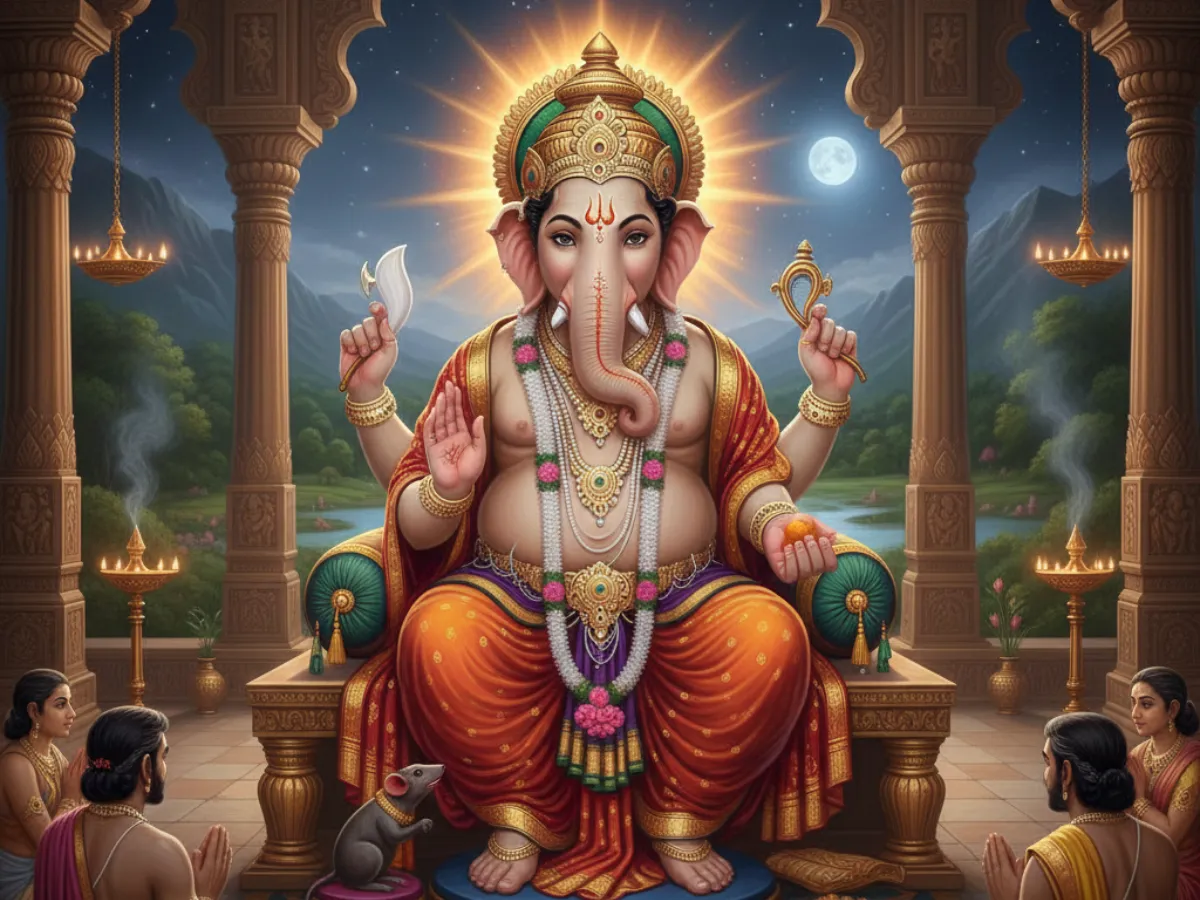
  • Ganesha Mantras

    Ganesha Mantras

    The Calling Upon the Remover of Obstacles

    You know how every ritual, every prayer, somehow begins with Ganesha? There’s a reason for that. He’s the opener of doors the one who makes sure the road ahead doesn’t trip you up before you even start.

    Whether it’s a big life change or something as simple as a new project, you call his name first. Not out of habit, but because it feels right. There’s a sort of grounding in it. The mind slows down. The heart steadies.

    So here are a few of the most sacred chants dedicated to Lord Ganesha each one carrying its own rhythm, its own little spark of power.

    The Most Powerful Ganesha Mantra

    Vakratunda Mahakaya Suryakoti Samaprabha,
    Nirvighnam Kuru Me Deva Sarvakaryeshu Sarvada.

    Meaning:

    O Ganesha, the curved-trunk one with a vast, magnificent form, whose brilliance rivals millions of suns remove every obstacle from my path, in every task, always.

    In essence: it’s not just asking for luck; it’s asking for ease. For flow. For the kind of clarity that keeps your mind from second-guessing itself every five minutes.

    Shri Ganesha Mool Mantra

    Om Gam Ganapataye Namah.

    Meaning:

    Salutations to Lord Ganesha, leader of the celestial beings (Ganas), and remover of obstacles.

    It’s short but powerful one of those mantras you can repeat anytime, anywhere. Between breaths, before an interview, when your thoughts are too cluttered to hear yourself think. “Om Gam Ganapataye Namah” — it cuts through the noise.

    Ganesha Gayatri Mantra

    Om Ekadantaya Vidmahe
    Vakratundaya Dhimahi
    Tanno Danti Prachodayat.

    Meaning:

    We meditate upon Lord Ganesha the one-tusked, wise, and radiant. May that divine presence guide our thoughts toward the right path and fill our minds with understanding.

    There’s something steady about chanting this one. Like tuning your energy to the same calm rhythm that patience beats in.

    Why Ganesha Comes First

    In nearly every Hindu prayer, Lord Ganesha is invoked before any other deity. It’s symbolic before calling on the vast universe, you call on the remover of what blocks you from it.

    He’s not just the god of beginnings or wealth; he’s the god of clarity. Of getting unstuck. Of seeing the road ahead and walking it with an open mind.

    When you chant his name sincerely, not mechanically things seem to shift. Maybe not like lightning from the sky, but subtly: a problem untangles itself, an idea finally clicks, the anxiety eases just enough for you to move forward.

    That’s his blessing not the miracle, but the momentum.

    So the next time you begin something a journey, a task, even just another morning whisper his mantra under your breath. Don’t rush it. Let it hum through you.

    Because when Ganesha walks before you, everything else has a way of falling gently into place.

    Remove obstacles and begin a new with Shri Ganesh’s grace. Explore authentic Ganesh puja and mantras on Tirth.com.

    Recommended Mantras:

    Durga Mantras , Vishnu Mantras , Shiva Mantras

  • Govardhan Mantras -Remembering Krishna’s Mountain of Grace

    Govardhan Mantras -Remembering Krishna’s Mountain of Grace

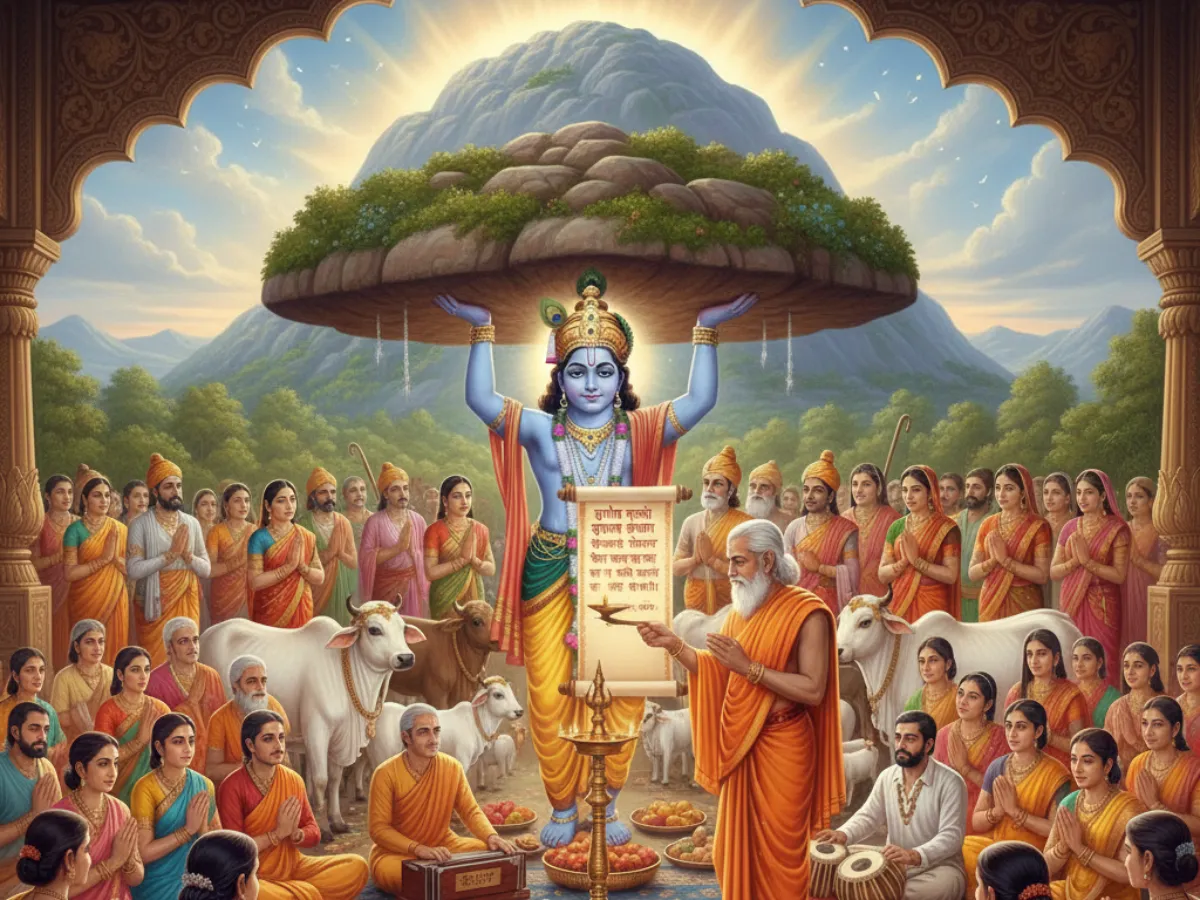
    You know that story, right? The one where little Krishna, barely old enough to hold a flute, lifted an entire mountain on his tiny finger. Govardhan Hill. The image never really gets old this child holding up the world while smiling, like it was no big deal.

    That moment wasn’t about strength, though. It was about faith. About reminding people that sometimes your protection doesn’t come from power or thunder but from devotion, humility, and love.

    So, every year, the day after Diwali, people across India, mostly in Braj and Northern parts, celebrate Govardhan Puja. It’s like the earth’s thanksgiving a festival that bows to nature itself. People decorate small mounds made of cow dung (symbolizing the hill), offer sweets, sing Krishna’s praises, and promise to live in harmony with the world around them.

    Because that’s what the story really means: Let go of pride. Respect nature. See the divine in everything around you the cows, the soil, the rain, the people.

    And if you want to feel that presence, you chant. Softly, from somewhere in your chest.

    Govardhan Puja Mantra

    ।। Govardhan Dharadhar Gokul Tranakaarak ।
    Vishnubahuh Kritochchhraay Gavaan Kotiprabho Bhav ।।

    Meaning:

    A prayer to Lord Krishna the lifter of Govardhan Hill, the savior of Gokul. He who, with his divine arm, sheltered countless beings from Indra’s storm. Through this mantra, devotees seek stability, protection, and the grace to stay humble no matter how high they rise.

    The Powerful Krishna Mantra

    ।। Shri Krishnaya Vayam Numah Sachchidananda Rupaya
    Vishwotpatyadi Hetave ।
    Taapatraya Vinashay Shri Krishnaya Vayam Numah ।।

    Meaning:

    We bow to Lord Krishna the embodiment of truth (Satya), consciousness (Chit), and bliss (Ananda). He is the source of creation, the one who dissolves pain and burns away suffering. Chanting this mantra is like calling light into the dark corners of life it reminds you that joy is your natural state, not something you have to earn.

    Govardhan Gayatri Mantra (Krishna Invocation)

    ।। Om Devikanandanaya Vidmahe
    Vasudevaya Dhimahi
    Tanno Krishna: Prachodayat ।।

    Meaning:

    We meditate on Krishna beloved son of Devaki, born from grace, whose wisdom guides the heart home. May that radiant energy awaken within us, leading our thoughts and actions toward compassion and clarity.

    When you chant these mantras and you don’t even have to know Sanskrit perfectly, just the feeling is enough something shifts. The world quiets down for a moment. The air turns softer. The mountain, the myth, the music of Krishna’s flute they all become part of one simple truth:

    That devotion isn’t about fear or ritual it’s about remembering love in its purest form.

    May Shri Giriraj Govardhan protect you and your family always.
    For Govardhan Mantras, Govardhan puja, and Krishna bhakti, visit Tirth.com.

    Recommended Mantras:

    Durga Mantras , Vishnu Mantras , Shiva Mantras