Category: Mantra Collection

Explore a sacred collection of Hindu mantras with meaning, benefits, and chanting method. Find Surya, Shiva, Hanuman, Gayatri, and Devi mantras for daily prayer on Tirth.

  • Laxmi Mantras-Calling in the Energy of Prosperity

    Laxmi Mantras-Calling in the Energy of Prosperity

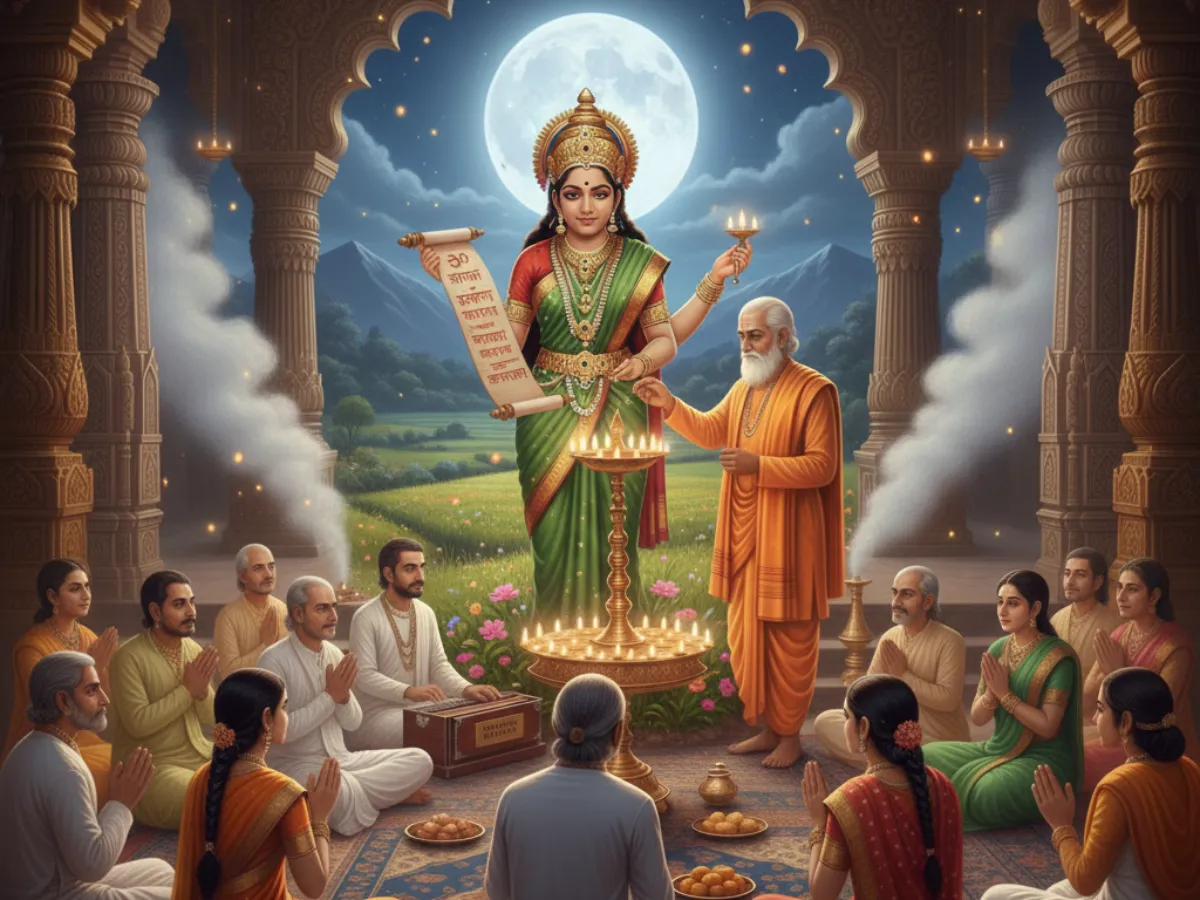
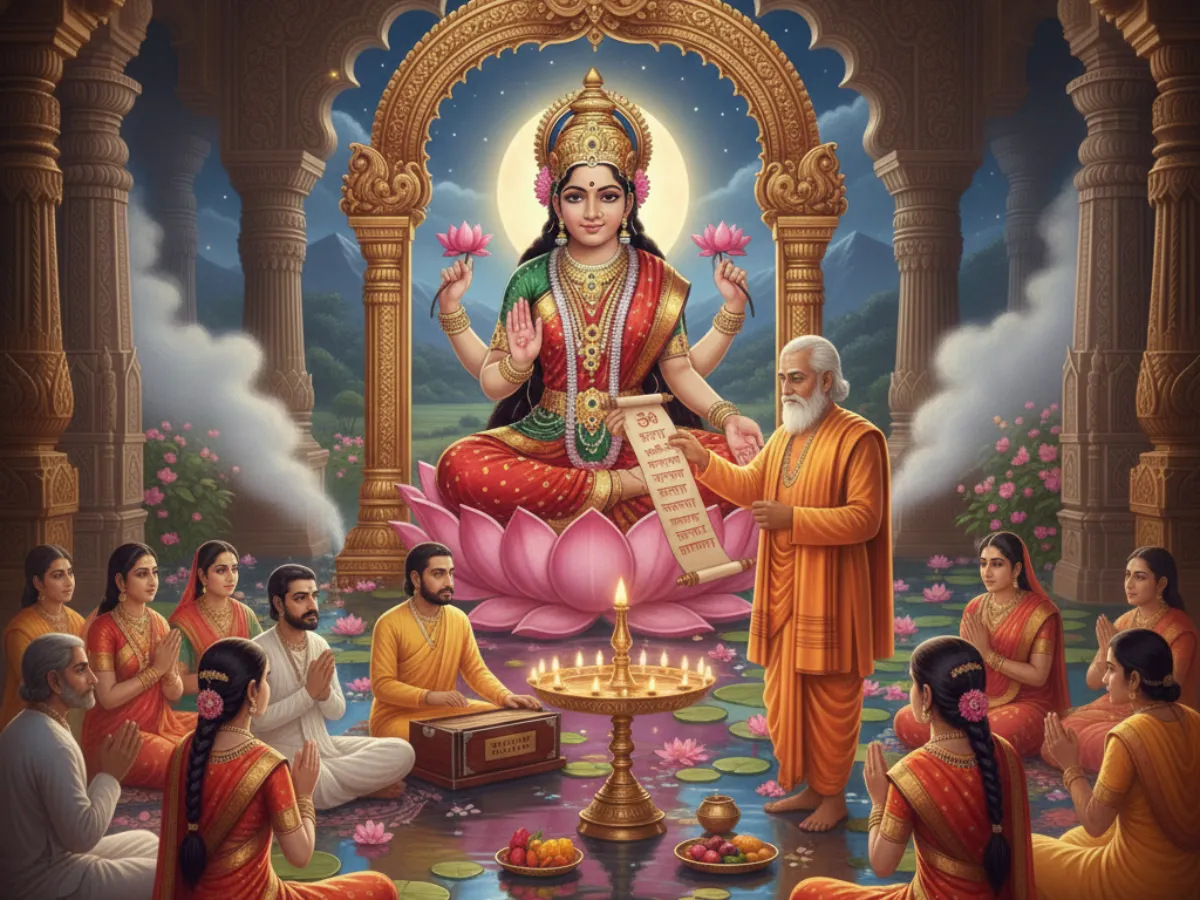
    Ever notice how some words sound like light? The mantras for Goddess Lakshmi the goddess of wealth, grace, and everything that makes life bloom are like that. They’re not just sounds; they vibrate, they soften the air around you.

    People chant these verses when they feel stuck, when money slips through their fingers like water, or simply to invite a little more peace, a little more sweetness, into daily life. It’s more about connection than transaction though, yes, Lakshmi does have her way of turning faith into fortune.

    Lakshmi Moola Mantra

    Om Shreem Hreem Shreem Kamale Kamalalaye Praseed Praseed.
    Shreem Hreem Shreem Om Mahalaxmi Namah.

    Meaning: Salutations to Goddess Mahalaxmi the divine one seated gracefully upon the lotus. Her essence is contained in the sacred syllables Shreem and Hreem, each holding the frequency of abundance and compassion. By remembering her, by simply whispering her name, we welcome blessings that go far beyond money into joy, calm, and a feeling that everything’s going to be alright.

    Benefits:

    • Clears obstacles and debts that feel heavier than they should.
    • Restores balance and attracts prosperity.
    • Brings that quiet happiness you get when life just starts flowing again.

     Kubera Ashta Lakshmi Mantra

    Om Hreem Shreem Kreem Shreem Kuberaaya Ashta-Lakshmi
    Mama Grihe Dhanam Puraya Puraya Namah.

    Meaning: This one’s a joint invocation Lord Kubera (the celestial treasurer, so to speak) and Goddess Ashta Lakshmi, who represents eight forms of divine wealth. You’re basically calling both cosmic accountants and nurturers into your home. It’s a prayer to fill not only your house but your heart with abundance the kind that sustains and doesn’t just shine for a moment.

    Benefits:

    • Strengthens financial stability, status, and success.
    • Brings all eight kinds of wealth not just gold and comfort, but courage, wisdom, and peace.
    • Creates a sense of fullness, where nothing feels missing.

    Lakshmi Gayatri Mantra

    Om Mahalaxmyai Vidmahe Vishnupriyayai Dhimahi.
    Tanno Lakshmi Prachodayat.

    Meaning: A gentle prayer to Lakshmi, the beloved of Lord Vishnu she who lights up both heavens and homes. We meditate upon her shining energy and ask for her guidance, so we may walk paths that lead not only to wealth but to wisdom. Because what’s wealth without clarity, right?

    Benefits:

    • Invites serenity and prosperity into the household.
    • Helps in maintaining harmony between people, money, and purpose.
    • Balances material comfort with spiritual peace.

    There’s something intimate about these mantras. They’re less about asking for riches and more about learning to receive to trust that the universe, in its quiet, patient way, has your back.

    If you ever chant them, try to do it softly at first early morning, maybe near a candle. Not rushing, not expecting. Just listening to how each word settles in your breath.

    That’s where Lakshmi really live in that calm, generous pause between one syllable and the next.

    Invite prosperity and harmony into your life with Maa Lakshmi’s grace. Explore authentic Lakshmi puja and mantras on Tirth.com.
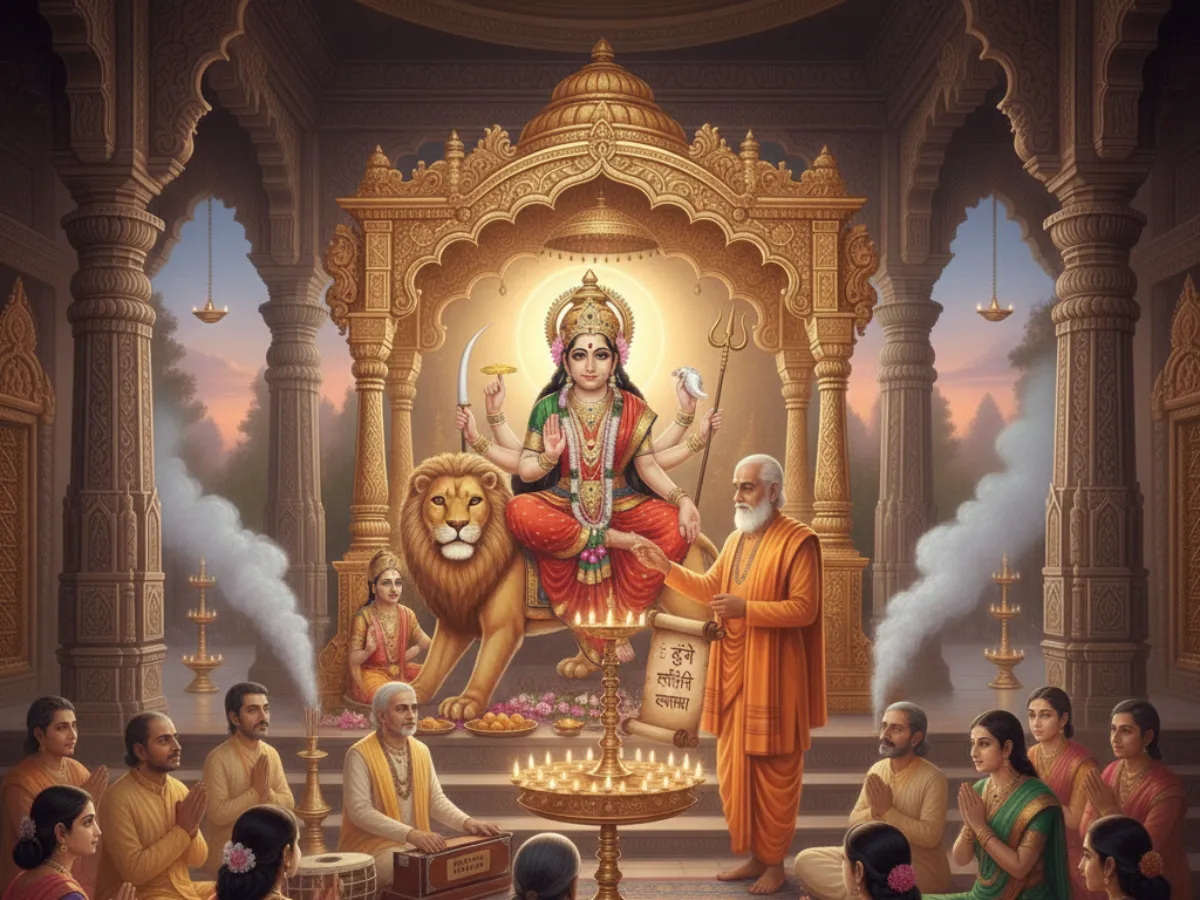
    Recommended Mantras:

    Durga Mantras , Vishnu Mantras , Shiva Mantras

  • The Chhath Puja Mantras

    The Chhath Puja Mantras

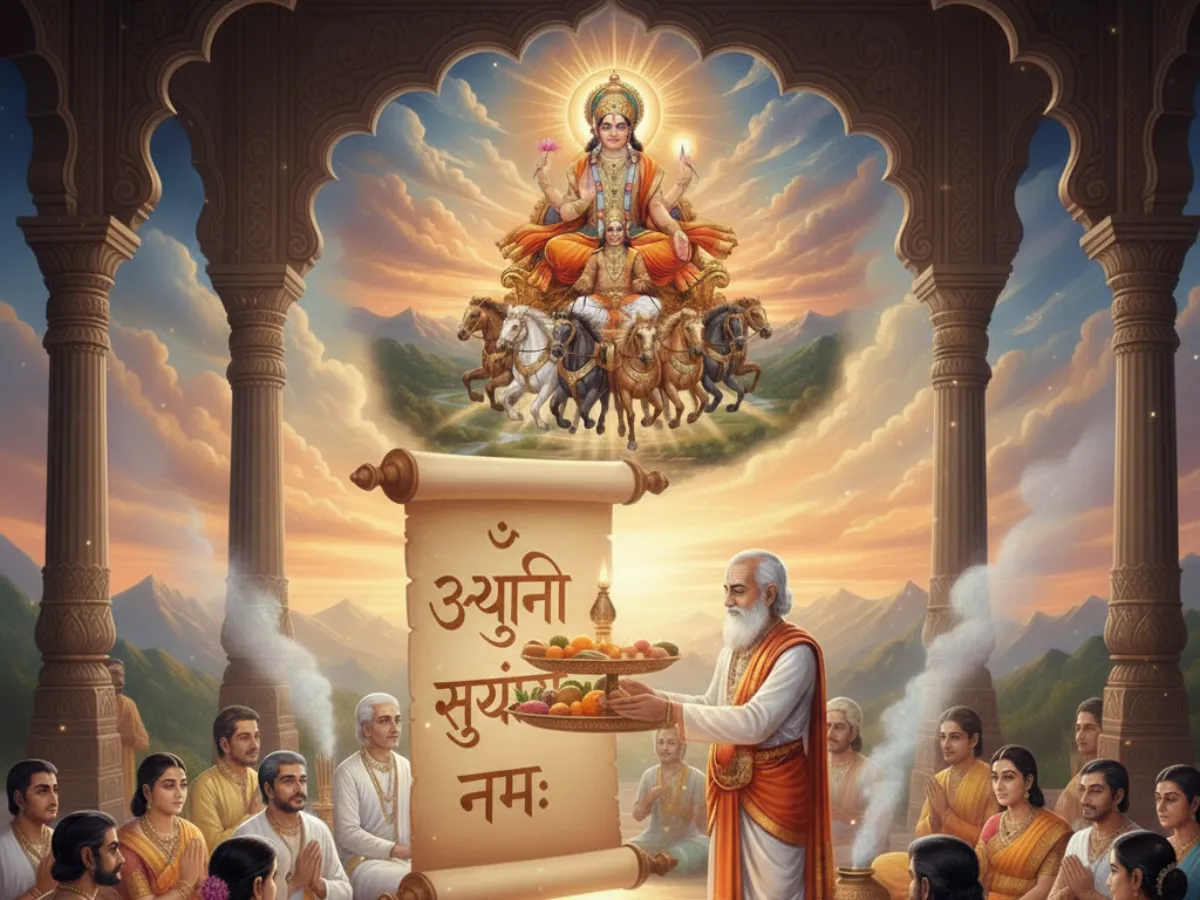
    People recite these while offering arghya that moment when water slips from cupped hands toward the Sun. The belief is simple: gratitude opens doors that even the gods pause to notice.

    Here are some of the revered chants traditionally recited during Chhath Puja:

    Om Ehi Surya Dev Sahasransho Tejo Rashi Jagatpate,
    Anukampaya Maam Bhaktya Grihanardhya Divakarah.
    
    Om Suryaaya Namah.
    Om Aadityaya Namah.
    Om Namo Bhaskaraaya Namah.
    Om Ghrinim Suryah Aadityah.
    
    Om Hreem Hreem Suryaaya Sahasrakiranaya
    Manovanchhit Phalam Dehi Dehi Swaha.

    Each mantra, if you listen closely, carries warmth a sense of respect and surrender to the Sun, the eternal witness of time and effort.

    The Four Days of Chhath: A Journey of Faith

    The festival unfolds slowly, like a story told over four days every sunrise and sunset with its own rhythm.

    Day 1: Nahay Khay (Bath and Eat) It begins with cleansing both body and spirit. Homes are scrubbed spotless, kitchens start anew, and devotees bathe in rivers or ponds, bringing that sacred water home for cooking. The meal is simple: rice and split chickpeas cooked with devotion. Nothing fancy, just pure.

    Day 2: Kharna (Fasting and Evening Meal) Here’s where the real test begins. The entire day goes by without a sip of water or a bite of food imagine that. And yet, there’s a quiet determination in the air. After sunset, people break their fast with kheer made from jaggery and sugarcane juice. It’s not just food; it tastes like relief and gratitude mixed together.

    Day 3: Sandhya Arghya (Offering to the Setting Sun) This one’s special. As the sun dips low, families gather near the riverbank bamboo baskets filled with fruits, coconuts, and Thekua (those warm, sweet wheat snacks that smell like home). Men usually lead the offering, while women pray for strength and prosperity. The whole river shimmers with oil lamps and faith.

    Day 4: Usha Arghya (Morning Offering to the Rising Sun) Before dawn breaks, everyone’s already up sleepy eyed but steady. The morning air bites, but no one complains. As the first light spills across the water, devotees stretch out their hands once again one final offering, one final moment of connection. Afterward, people share prasad sweets, smiles, and maybe a few tears of relief. The festival ends the way it began: full of quiet hope and human warmth.

    There’s a reason Chhath touches people so deeply. It’s about discipline and devotion, sure, but more than that, it’s about acknowledging something bigger the rhythm of light and life itself. And when those mantras echo across the water, it feels less like prayer and more like gratitude finding its voice.

    Get the authentic Chhath Puja Mantras on Tirth.com and celebrate devotion with purity.

    Recommended Mantras:

    Surya Mantra , Maha Kaal Bhairav Beej Mantra

  • Durga Mantras

    Durga Mantras

    They say when the heart trembles, call upon Maa. Among all divine sounds, the mantras of Goddess Durga carry an unmistakable warmth they don’t just protect you, they remind you of who you are when you’ve forgotten your own strength.

    Durga is not only the warrior who rides the lion; she’s also the mother who lifts you up when life has knocked you down too many times. Her mantras reflect both those sides fierce protection and unconditional love.

    Sarva Mangal Mantra

    “Om Sarva Mangala Mangalye Shive Sarvartha Sadhike Sharanye Tryambake Gauri Narayani Namostute”

    Meaning: 

    O Divine Mother Narayani source of all good, who brings auspiciousness and protects her devotees three eyed Gauri, the fulfiller of every wish, we bow before you again and again.

    About this mantra: 

    This is one of the most loved invocations to Maa Durga people recite it at the start of something new: journeys, marriages, ventures, prayers. It calls on her as the giver of well being and the remover of fear. Dedicated especially to Mahagauri, the eighth form of Durga worshipped during Navratri, this mantra blesses the heart with peace, success, and pure confidence.

    To chant it is to feel her hand on your forehead calm, sure, motherly.

    Mangalkari Mahakali Mantra

    “Om Jayanti Mangala Kali Bhadrakali Kapalini Durga Kshama Shiva Dhatri Swaha Swadha Namostute”

    Meaning: 

    Victory to you, O Divine Mother you who are known by countless names: Jayanti, Mangala, Kali, Bhadrakali, Kapalini, Durga, Kshama, Shiva, and Dhatri. Source of creation and destruction, I bow to you.

    About this mantra: 

    This one trembles with power. It’s an invocation to Maa Kali the unstoppable force of transformation. People chant it to dissolve fear, to strengthen willpower, and to free themselves from the cycle of limitation.

    They say even a few sincere repetitions can drive away weakness, enemies, and dark energy. It’s like armor made of devotion steady, glowing, protective.

    Chant it when courage fades. It’ll remind you that the lion heart you seek is already inside you.

    Durga Gayatri Mantra

    “Om Girijaya Cha Vidmahe Shivapriyaya Cha Dhimahi Tanno Durga Prachodayat”

    Meaning:

     We meditate on Goddess Durga daughter of the Himalayas, beloved of Lord Shiva. May she guide our minds toward wisdom and right action.

    About this mantra:

    This is Durga in her purest, most peaceful form the wise, gentle mother who teaches patience. It’s a mantra for inner grace for keeping calm in the storm, standing upright when everything else crumbles.

    Regular chanting is said to increase self belief, remove confusion, and bring clarity to choices when the road splits in two.

    Chant it softly. Let her name fill the space between your breaths and you’ll realize: the noise of the world fades when you remember the Divine Mother’s sound.

    Durga’s mantras work not through magic, but through memory your own memory of strength, of purity, of love. When you speak her name with faith, something fierce and kind awakens inside you

    She’s the calm in the fire, the stillness in motion, the mother in all forms of power.

    So when fear grips tight, just whisper: Om Sarva Mangala Mangalye… And for that moment maybe just a heartbeat you’ll remember that nothing truly breaks under a mother’s watch.

    Recommended Mantras:

    Surya Mantra , Maha Kaal Bhairav Beej Mantra

    Explore Durga Mantras and their spiritual impact at Tirth.com to empower your path.

  • Vishnu Mantras

    Vishnu Mantras

    There’s a steady stillness that comes when you call Lord Vishnu’s name. He’s the quiet heartbeat of the universe the sustainer, the one who keeps everything balanced when life feels chaotic. His mantras are like rivers: soft, flowing, gentle on the surface but carrying immense strength underneath.

    Each one is a way to bring peace, clarity, and a kind of inner harmony that feels almost like being held.

    Shri Vishnu Mool Mantra

    ” Om Namo Bhagavate Vasudevaya “

    It’s one of the oldest and most sacred mantras in all of Hinduism. “I bow to Lord Vasudeva” that’s all it means, yet it’s enough to transform the heart. People say this mantra can be chanted by anyone, regardless of background, at any time of day. Chant it a few times, and the noise in your chest starts to settle. It’s the sound of surrender not weakness, but peace.

    Klesh Nashak Vishnu Mantra

    “Krishnaya Vasudevaya Haraye Paramatmane, Pranata Klesha Nashaya Govindaya Namo Namah”

    “O Krishna, beloved son of Vasudeva, O Supreme One simply by remembering You, all troubles fade.”

    It’s the mantra for those moments when you feel tangled in emotion, in circumstance, in confusion. You say His name Krishna, Govinda and suddenly life feels lighter. It’s a call of love, and Vishnu always responds to love.

    Vishnu Gayatri Mantra

    “Narayanaaya Vidmahe, Vasudevaya Dhimahi, Tanno Vishnuh Prachodayat”

    “I meditate on Lord Narayan, whose face shines like truth itself. May Lord Vasudeva enlighten and guide me.”

    The Vishnu Gayatri is pure meditation in sound form a prayer to open the mind, sharpen wisdom, and cleanse the heart of worry. It’s often recited quietly at dawn when the air feels soft, and the world hasn’t yet started demanding things of you.

    Shri Vishnu Roopam Mantra

    “Shantaakaaram Bhujagashayanam Padmanabham Suresham, Vishwaadharam Gaganasadrisham Meghavarnam Shubhaangam, Lakshmikantam Kamalanayanam Yogibhirdhyanagamyam, Vande Vishnum Bhavabhayaharam Sarvalokaikanatham”

    This is how the great sages described Him peaceful, ocean deep, resting upon the serpent of infinity, with a lotus blooming from His navel. The one who sustains all that exists, whose skin is like monsoon clouds, whose eyes are like fresh lotuses, and whose gentle smile holds the entire cosmos in calm.

    Chanting this verse feels like stepping into a temple made of silence. It’s said to remove fear, invite auspiciousness, and fill the mind with serenity. When you repeat it enough times, your heart starts to match His stillness.

    Dhanvantari Mantra

    “Om Namo Bhagavate MahaSudarshanaya Vasudevaya Dhanvantaraye, Amritakalash Hastaya Sarvabhaya Vinashaya Sarvaroga Nivaranaya, Trilokapathaya Trilokanathaya Shri MahaVishnu Swaroopa, Shri Dhanvantari Swaroopa Shri Shri Shri Aushadhachakra Narayanaya Namah. Om Namo Bhagavate Dhanvantaraye Amrita Kalasha Hastaya, Sarva Amaya Vinashanaya Trilokanathaya Shri MahaVishnave Namah.”

    This mantra hails Lord Vishnu in the form of Dhanvantari the divine healer, holding a pot of nectar in his hand. He is the physician of gods, the one who erased disease and fear during the great churning of the ocean.

    Chanting the Dhanvantari mantra is said to invoke health, vitality, and rejuvenation not just of the body, but of the spirit. Even listening to it softly can make one feel lighter, cleaner, as if every breath were washing away heaviness.

    When you sit quietly and chant these mantras slowly, from the heart you begin to sense what Vishnu really represents. He steadies the waves, both in the world and inside you. He protects without pride, listens without judgment, and gives without counting.

    Sometimes His blessings arrive as fortune, sometimes as lessons, but always as mercy. A single sincere “Om Namo Bhagavate Vasudevaya” can change the tone of your day the same way sunlight can change the color of water.

    That’s the grace of Vishnu gentle, hidden, but always there, holding everything together.

    Learn about the Vishnu Mantra on Tirth.com and invite divine protection into your life.

  • Shiva Mantras

    Shiva Mantras

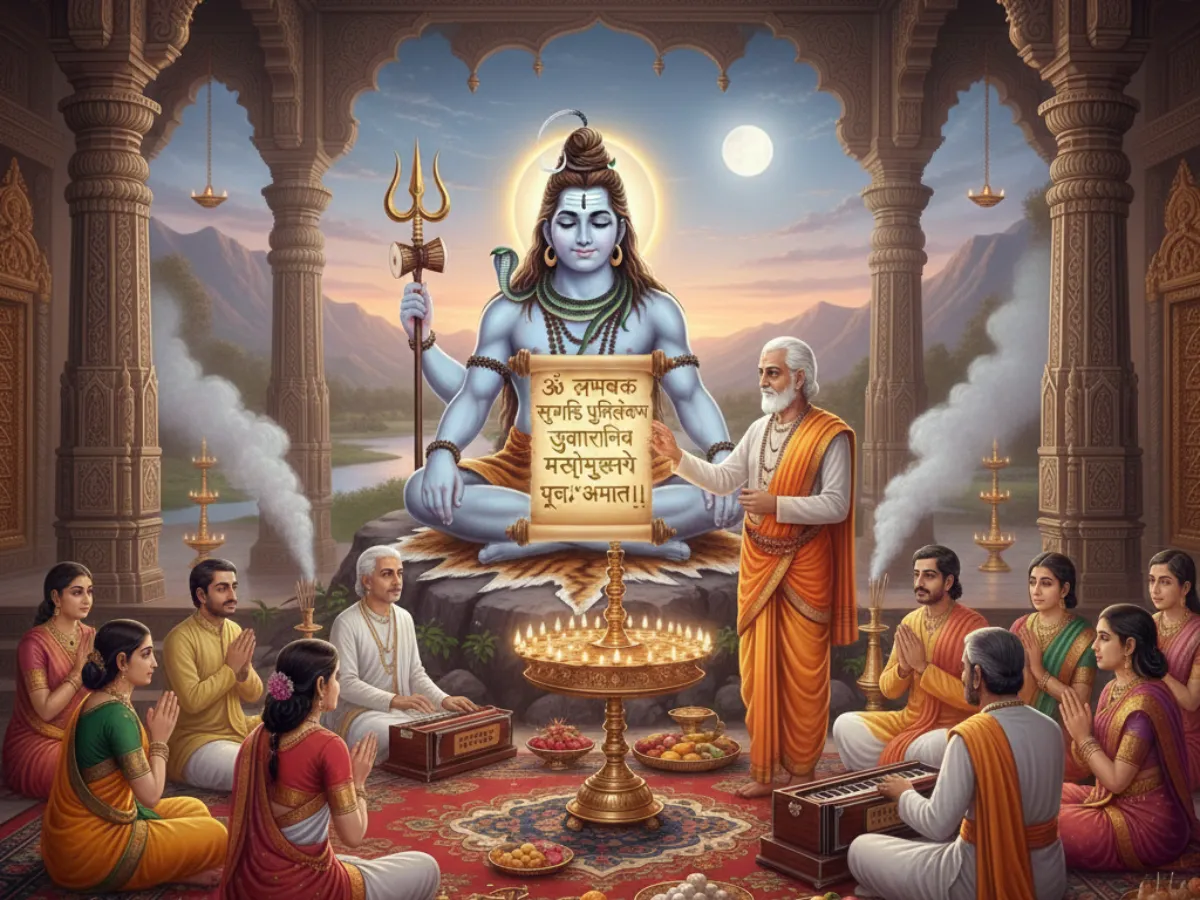
    There’s no sound in the world quite like Om Namah Shivaya.” Even when whispered, it feels alive heavy with devotion, light with peace. Lord Shiva is the formless, eternal consciousness behind everything. Chanting his mantras isn’t just prayer it’s remembering that quiet space within yourself that never shakes, no matter what life brings.

    Shiva Shadakshari Mantra

    Om Namah Shivaya

    It’s the most complete prayer in just five syllables. I bow to Lord Shiva the one who is both creation and destruction, stillness and motion. The sound itself holds the rhythm of the universe.

    People say this mantra clears the mind, balances energy, and keeps the body healthy. It’s also the easiest to chant anywhere, anytime, at any age. You don’t need perfection you only need sincerity.

    Maha Mrityunjaya Mantra

    ” Om Tryambakam Yajamahe Sugandhim Pushtivardhanam Urvarukamiva Bandhanan Mrityor Mukshiya Maamritat “

    This is the great mantra for life and healing. It calls to Shiva as the three eyed one the source of fragrance, strength, and ultimate freedom. Just as a fruit breaks free from the stem when it ripens, we ask to be freed from the bondage of fear and mortality.

    People chant this mantra for recovery, health, and peace of mind. It protects from danger and untimely death, but more than that, it teaches the soul not to be afraid of change.

    Shiva Gayatri Mantra

    Om Tatpurushaya Vidmahe Mahadevaya Dhimahi Tanno Rudrah Prachodayat

    In this mantra, we meditate on Shiva as the Supreme Being the pure consciousness that guides all minds. “May Rudra, the Great Lord, inspire us toward divine wisdom.”

    It’s a prayer for light the kind that shines not outside, but inside the heart. Regular recitation brings calm, clears past karma, and strengthens spiritual focus.

    When you chant Shiva’s name, it’s not about asking for things. It’s about allowing silence to speak.

    The sound of Om Namah Shivaya can quiet storms inside you that words can’t touch. Chant long enough, and even your heartbeat begins to echo it.

    Discover powerful Shiv Mantras on Tirth.com and connect with the divine energy of Lord Shiva.

    Recommended Mantras:

    Surya Mantra , Maha Kaal Bhairav Beej Mantra

  • Shani Dev Mantras

    Shani Dev Mantras

    There’s a weight, a gravity, to the name Shani Dev. He isn’t the light, playful lord people call on for easy blessings; he’s the slow, watchful one, the keeper of karma, the one who makes sure we learn what we came here to learn.

    To some, his name brings fear, but the wise know that Shani’s discipline is love in disguise. He teaches endurance, fairness, and the beauty of honest work. When he’s pleased, he gifts you strength that lasts lifetimes.

    Shani Dev Mool Mantra

    “Om Sham Shanaishcharaya Namah”

    Meaning:

    O Lord Shani Dev, the stern yet merciful giver of karmic fruit, remove our sorrows, ease our burdens, and bless us with patience and righteousness. We bow at your feet with devotion.

    Benefits:

    Regular chanting of this mantra calms Shani’s energy and balances karma. Those struggling under Sade Sati or tough Saturn periods often find unexpected relief, stability, and insight when they chant it with faith, not to avoid karma, but to understand it.

    Shri Shani Dev Grah Shanti Mantra

    “Om Neelanjana Samabhasam Ravi Putram Yamagrajam। Chhaya Martanda Sambhootam Tam Namami Shanaishcharam॥ “

    Meaning:

    I bow again and again to Lord Shani, dark as the indigo sky, radiant with quiet power, son of Surya (the Sun God) and Chhaya, elder brother of Yama, and the stern guardian of cosmic justice.

    Benefits:

    It’s believed that reciting this mantra 23,000 times, yes, exactly twenty three thousand, brings peace to those suffering from Shani Dosha. The vibrations reduce the harsh impact of Sade Sati, open closed paths, and slowly replace fear with faith.

    Because once you understand Shani, you stop seeing him as punishment, and start seeing him as purification.

    Shani Dev Gayatri Mantra

    “Om Kakadhwajaya Vidmahe, Khadhgahastaya Dheemahi, Tanno Mandah Prachodayat”

    Meaning:

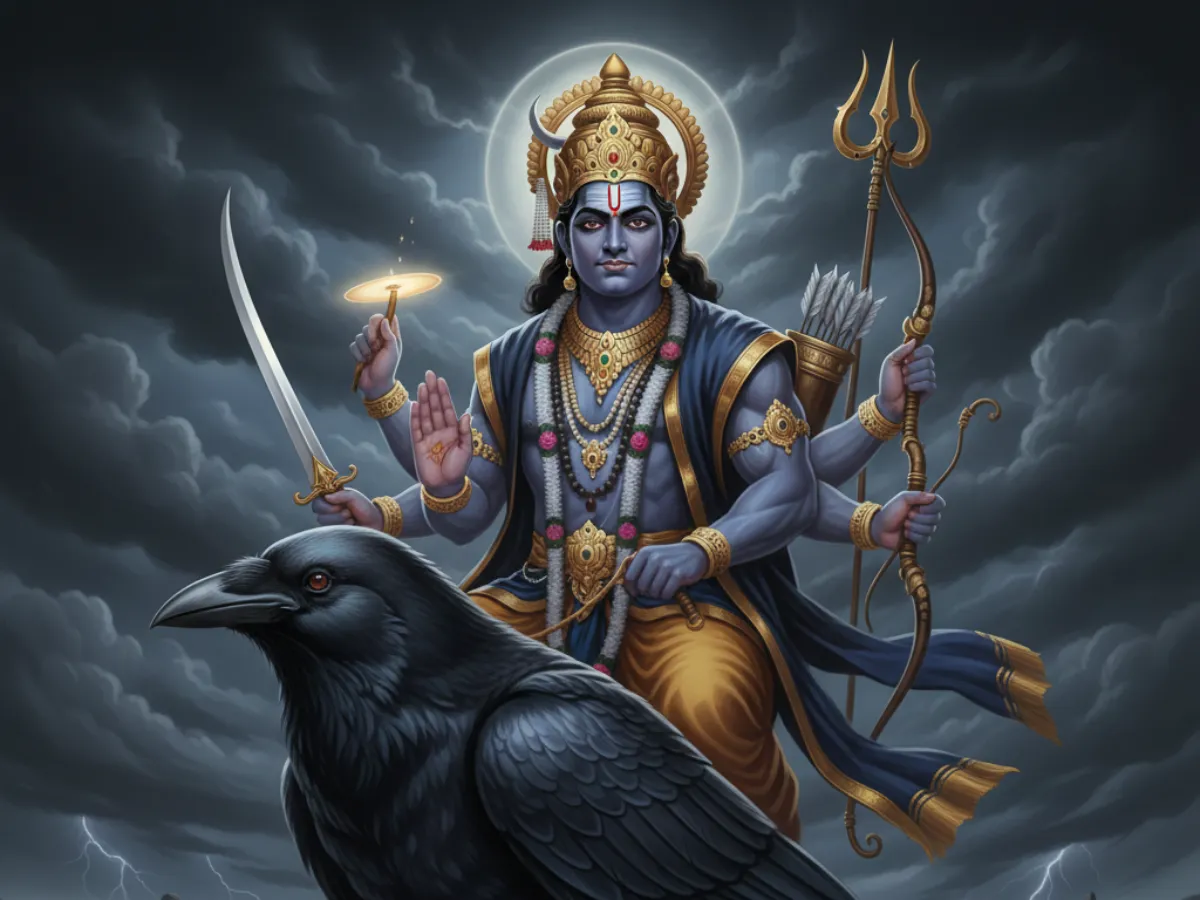
    We meditate upon Lord Shani, the slow moving one, the wise and just, whose flag bears the crow and whose hand wields the sword of discipline. May he guide our actions and steady our minds.

    Benefits:

    The Shani Gayatri has a quiet power to dissolve fear, anxiety, and karmic burdens. It teaches patience, that all things, good or bad, come in their time. People who chant it regularly often notice calmer minds, fewer obstacles, and a deeper sense of emotional balance.

    Because that’s Shani’s real gift, not sudden miracles, but peace in the waiting.

    The Aura of Shani Dev

    Shani Dev stands apart in the Hindu pantheon. Dark, still, and resolute, he sits on his throne, his gaze heavy yet just. His vehicle, the crow, sees everything ordinary eyes overlook.

    He doesn’t rush. He tests. He teaches. And above all, he raises those who stay honest through difficulty.

    Think of him as the quiet examiner of life’s school. Fail once, he’ll retest you, but pass, and you earn wisdom that no one can take away.

    When you chant his mantras, you’re not asking for escape, you’re asking for courage, for discipline, for the strength to endure and grow.

    A Few Simple Ways to Honor Shani Dev

    • Chant on Saturdays, especially during twilight, facing west.
    • Offer sesame oil, black cloth, or black til (sesame seeds), they please him.
    • Feed crows or the poor, one act of kindness counts more than a thousand chants.
    • Keep thoughts and speech pure; he listens beyond words.
    • Above all, never speak in anger while invoking him. Shani Dev hears truth, not volume.

    A Closing Reflection

    Shani Dev isn’t a lord you flatter. He’s one you respect. He watches over those who keep walking even when the road is hard, those who do the right thing even when no one sees.

    So when you whisper his mantra, “Om Sham Shanaishcharaya Namah…”, don’t chant out of fear. Chant with honesty. Because Shani doesn’t punish the sincere; he shapes them into something unbreakable.

    And that, truly, is his greatest blessing.

    Recommended Mantras:

    Surya Mantra , Maha Kaal Bhairav Beej Mantra

    Uncover the secrets of the Shanidev Mantra at Tirth.com for peace and planetary harmony.

  • Garuda Mantra

    Garuda Mantra

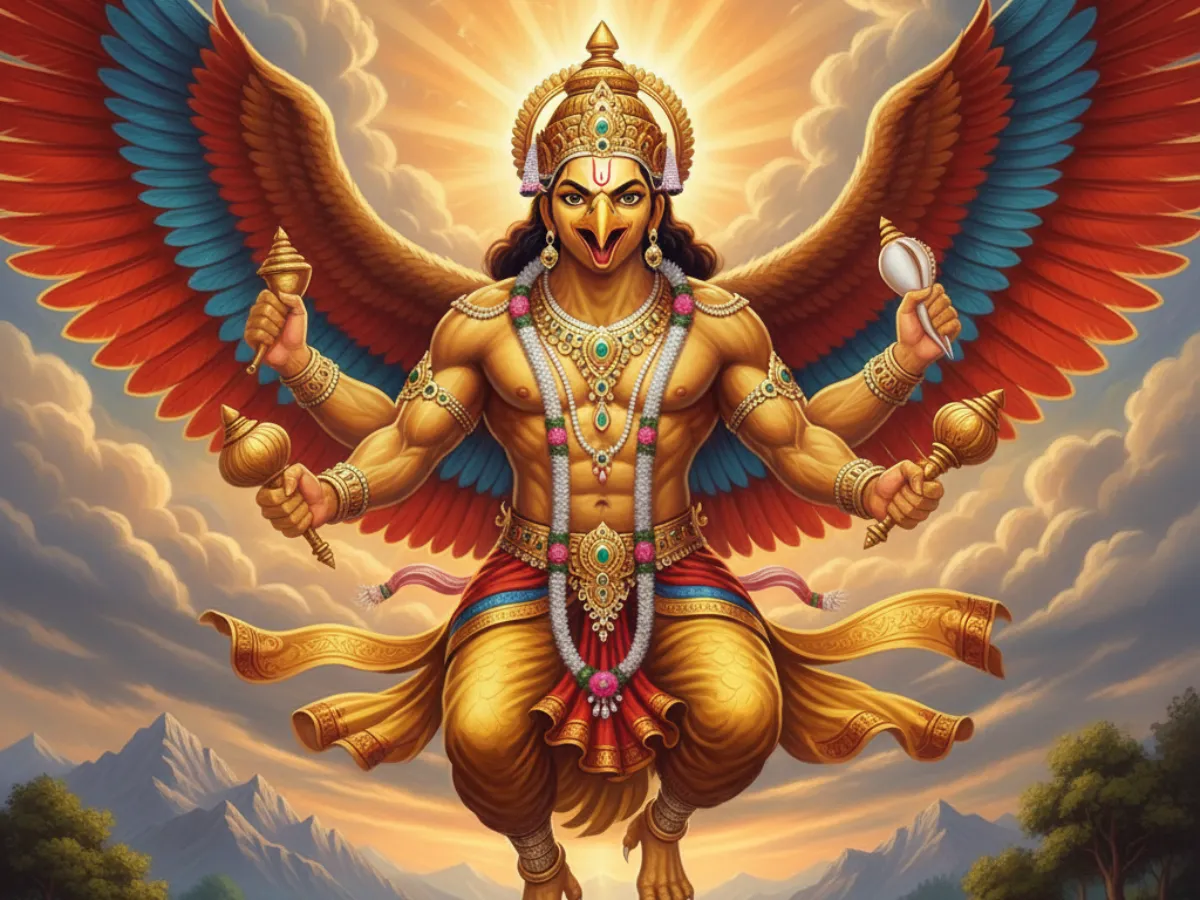
    There’s something powerful about the name Garuda it almost vibrates in the chest when you say it. The divine eagle, the King of Birds, the one who soars between earth and heaven carrying Lord Vishnu Garuda is not just a mythic being. He’s the embodiment of courage, freedom, and protection against all that binds or frightens us.

    Chanting the Garuda Mantra calls upon that fearless energy the strength to rise above venom, both literal and emotional. It’s believed to sweep away fear, black magic, poverty, and all forms of suffocating negativity.

    It’s not a mild chant; it’s one that carries the wind in it.

    Mantra to Remove Poverty

    “Om Joom Sah”

    They say this is one of Garuda’s most potent seed mantras. It works not just on outward poverty, but inner scarcity the fear of never having enough. If someone chants this mantra with faith for six months straight (daily, without fail), ancient belief holds that obstacles begin to fade, finances stabilize, and luck steadies its course.

    But the mantra doesn’t just fill pockets it clears the kind of misfortune that keeps a person stuck. In other words, it makes space for abundance.

    Sanjeevani Mantra

    “Yakshi Om Um Swaha”

    This one is mentioned in the Garuda Purana itself one of the most mysterious, sacred scriptures in all of Hinduism. It’s called the Sanjeevani Mantra, named for its life restoring property. The texts say a master who perfects this mantra can channel healing and happiness into others’ lives.

    But and this is very important it is never to be practiced casually. It must be learned under a guided teacher, a spiritual master who understands its weight. Used correctly, it becomes a tool for compassion. Used wrongly, it risks imbalance.

    Garuda Gayatri Mantra

    “Om Pakshirajaya Vidmahe Pakshidevaya Dhimahi Tanno Pakshih Prachodayat”

    This mantra pays homage to Garuda as Pakshiraja, the Lord of the Skies. Chanting it, devotees seek his protection from poison, psychic disturbance, and dark planetary influences.

    It’s particularly powerful for those haunted by negative energy, delays, or debts, anything that feels entangling. Garuda’s wings are said to tear through that darkness and let light pour back in.

    Garuda Gayatri for Blessings

    Om Tatpurushaya Vidmahe, Suvarnapakshaya Dhimahi, Tanno Garudah Prachodayat

    “O golden winged Garuda, bless me with wisdom, prosperity, and calmness of spirit. Lift me above my troubles.”

    This is a gentler invocation one meant not to battle, but to bless. It’s chanted for peace, balance, and victory over one’s personal storms. The golden feathers represent illumination: divine understanding shining through confusion.

    Vishnu Ekadashi Mantra

    Vishnurekadashi Ganga Tulsivipradhevanah, Asare Durgasansare Shatpadi Muktidayini.

    This mantra connects Garuda and Vishnu directly Garuda being the vehicle, the heart, the messenger who moves between grace and earth. Chanting it at dawn, after bathing, while offering tulsi to Lord Vishnu, clears the fog of sorrow and brings strength to carry out one’s duties with devotion.

    The key idea here is simple but profound: to rise in faith, we must first remember who carries us.

    Who Is Garuda Really?

    In most stories, Garuda is described as the mighty eagle, divine mount of Lord Vishnu, sworn enemy of serpents but symbolically, he’s so much more.

    Garuda represents victory over fear. Serpents symbolize bondage poison, deceit, things that pull us downward. Garuda’s triumph over them is the soul’s triumph over ignorance.

    The scriptures say he’s the one who carries liberated souls to Vishnu Lok the realm of truth and light. And even here, in this world, his energy dissolves toxins mental, emotional, and spiritual.

    When you chant his name, it’s like calling wind through clouds clearing heaviness, bringing movement.

    Why the Garuda Mantra Matters

    Our ancestors never separated the spiritual from the practical. They chanted Garuda’s mantras to remove illness, fear, delay, or misfortune and it worked, because it realigned the heart with courage.

    Regular chanting is said to:

    • Remove fear of snakes (real and symbolic)
    • Remedy snakebite and poison, both physical and metaphoric
    • Block dark energies, black magic, and psychic disturbances
    • Balance afflictions caused by Rahu and Ketu
    • Protect from Kaal Sarp Dosh (the coiling of destiny around misfortune)
    • Restore confidence, independence, and self belief
    • Clear financial burdens
    • Erase stubborn karmic delays

    It’s a protector’s prayer meant for those who need strength more than comfort.

    A Few Simple Rules Before You Begin

    Because Garuda’s energy is fierce, his mantras deserve respect and care.

    • Keep your body and surroundings clean.
    • Sit in a peaceful place, mind steady, breath even.
    • Avoid tamasic foods (meat, alcohol, stale meals) while practicing.
    • Follow brahmacharya, purity in thoughts and actions, during your sadhana.
    • Always pronounce the words clearly. It’s not about speed; it’s about vibration.

    And perhaps most importantly: never chant with anger or malice in your heart.

    Garuda does not answer those who call in hate. He answers those who seek clarity and courage.

    A Closing Thought

    In Hindu lore, even the strongest gods rely on their vahanas their vehicles, their companions. For Vishnu, that’s Garuda: the messenger between heaven and earth. He represents the part of us that can rise above attachment, above poison the spirit that refuses to crawl.

    So, when you chant “Om Pakshirajaya Vidmahe…”, imagine yourself rising too wings wide, heart fearless, eyes filled with light.

    As an old verse says:

    “Where Garuda flies, no darkness stays.”

    Visit Tirth.com to learn the benefits of the Garuda Mantra and protect your spiritual journey.

    Recommended Mantras:

    Surya Mantra , Maha Kaal Bhairav Beej Mantra

  • Brahma Mantra

    Brahma Mantra

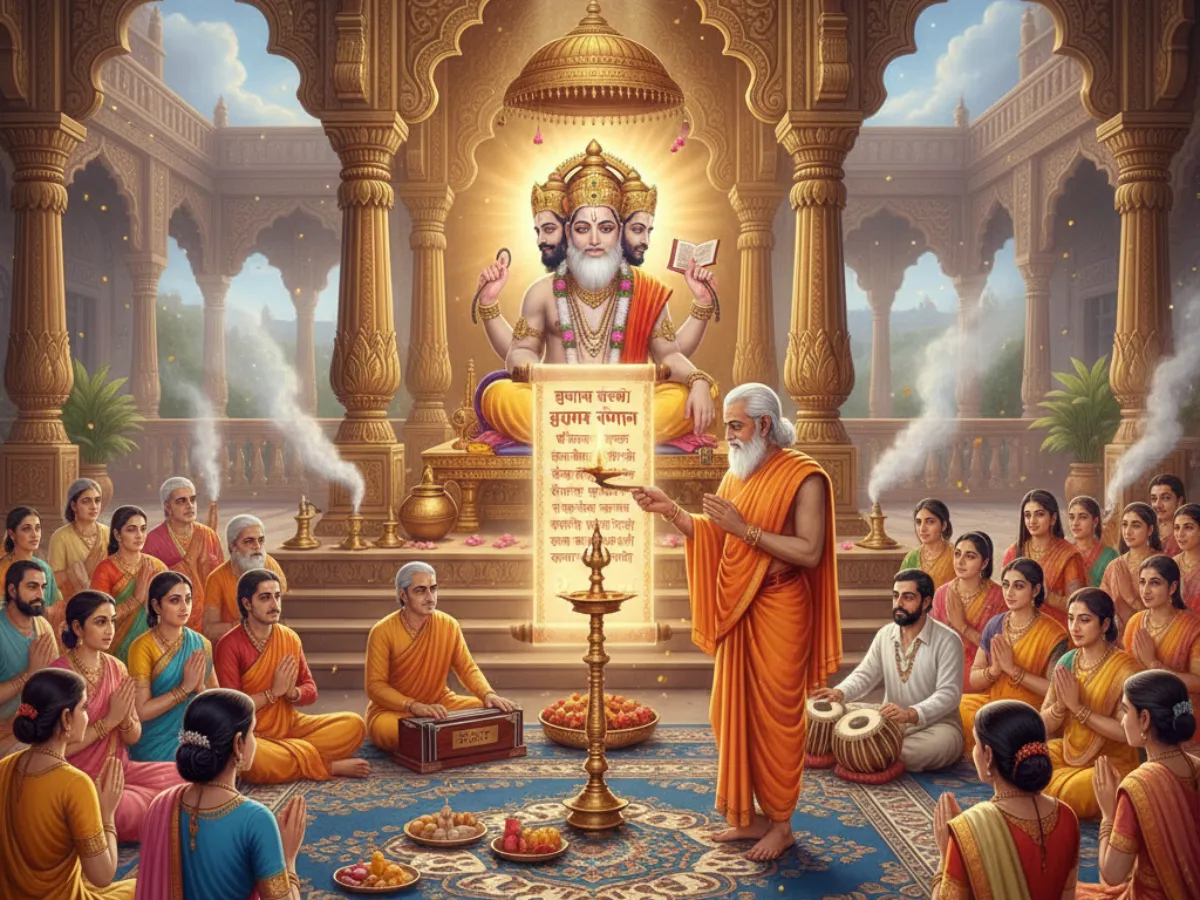
    There’s a quiet kind of reverence in calling upon Lord Brahma the first among the Trimurti, the one from whom everything begins: knowledge, thought, creation itself. Chanting the Brahma Mantra feels like opening a door inside the mind the part that understands, learns, and creates without fear or confusion.

    When you seek inspiration, wisdom, or clarity when your heart wants to bring something into being this mantra helps align your will with the creative pulse of the universe.

    Brahma Gayatri Mantras

    “Om Chaturmukhaya Vidmahe Hamsarudhaya Dhimahi Tanno Brahma Prachodayat “

    Meaning

    O Lord Brahma the one with four faces who rides upon the sacred swan grant me awareness, clarity, and wisdom. Help me see the world not through confusion but through understanding.

    “Om Vedatmane Vidmahe Hiranyagarbhaya Dhimahi Tanno Brahma Prachodayat “

    Meaning

    O source of the Vedas, O Golden Womb who holds all existence I bow before you. Fill me with knowledge, guide my voice, and bless me with the courage to create what is true and good.

    Brahma Dhyana Mantra

    “Om Brahmane Namah”

    Meaning

    A simple yet powerful salutation an acknowledgment of the ever present consciousness behind everything. “I bow to Brahma the pure awareness that creates.”

    Brahma Mantra

    “Om Aim Hreem Shreem Kleem Sauh Satchid Ekam Brahmo”

    Meaning and Blessings

    This mantra carries the vibrations of creation and prosperity. It invokes the universal creative energy Sat (existence), Chit (consciousness), and Ekam Brahma (the one source). Chanting it regularly is said to attract abundance, success, inspiration, and honor not as rewards, but as reflections of alignment with cosmic order.

    Guru Mantra

    “Gurur Brahma Gurur Vishnu Gurur Devo Maheshwarah, Guru Sakshat Parabrahma Tasmai Shri Gurave Namah”

    Meaning

    The teacher is creation itself like Brahma who births knowledge. The teacher preserves it like Vishnu protecting truth. The teacher destroys ignorance like Mahesh (Shiva) dissolving illusion. And the Guru, standing before us, is none other than that vast presence we call Parabrahman.

    So we bow not out of duty, but because our hearts know gratitude is the truest form of understanding.

    Brahma Namaskar Mantra

    “Om Namaste Paramam Brahma Namaste Paramatmane Nirgunaya Namastubhyam Saduyaya Namo Namah”

    Meaning

    O Supreme Creator, beyond form yet pervading all forms I salute you. I bow to the universal Self, to the One who transcends qualities but manifests as creation.

    This mantra isn’t just a greeting; it’s an act of dissolving a way to say, “You are in me, I am in You.”

    The Story of Lord Brahma

    Every origin story begins here. Brahma is known as the creator the architect of the universe and all its living beings. With his four faces, he is said to have composed the four Vedas the eternal rhythms of truth that govern all existence.

    But once upon a divine time, Brahma was said to have five heads. And like all cosmic lessons, his story carries a reminder hidden in its folds.

    After creating the world, Brahma brought forth a radiant being named Shatarupa a form of feminine energy meant to further creation. Yet, as she moved, Brahma’s attention faltered. To follow her, he grew new heads, one in each direction until there were five.

    Seeing this imbalance, Shatarupa prayed to Lord Shiva for help. Shiva appeared as Bhairava fierce and uncompromising and severed Brahma’s fifth head, stripping away ego and desire in one stroke.

    It’s said that in that instant, Brahma understood. His vision returned to purity creation for creation’s sake, not for possession.

    The story isn’t shame or punishment it’s teaching. That even the Creator must master his desires before mastering creation.

    The Blessings of Brahma’s Mantras

    Reciting these mantras isn’t about chasing heaven or fortune it’s about tuning your mind to creation’s frequency. Still, with regular chanting and pure intention, people often see blessings unfold naturally:

    • A sharp mind and growing wisdom
    • Prosperity in business or creative work
    • Recognition and respect in one’s field
    • The ability to manifest ideas into form
    • Emotional balance and spiritual clarity
    • Fulfillment of inner and outer desires
    • A path lit toward heavenly grace after life

    But always remember Brahma’s grace flows best through those who use knowledge with humility.

    Simple Rituals and Rules for Chanting Brahma Mantras

    A few gentle disciplines keep your practice strong and sincere:

    • Take a bath before chanting, start clean in both body and intention.
    • Face east (never south) while reciting.
    • Avoid anger, heavy thoughts, or comparisons; the mind must stay calm.
    • Keep away from tamasic foods, things that dull clarity or heighten restlessness.
    • Maintain celibacy when practicing daily mantra sadhana to steady energy.
    • For best effect, chant during Brahma Muhurta, that quiet hour before sunrise when the mind is most receptive.

    A Closing Thought

    If Vishnu is preservation and Shiva is transformation, then Brahma is that first spark the breath before the word. The whisper that becomes the universe.

    So when you chant to him, you’re not asking some distant deity for boons. You’re awakening the creative divine within yourself that part of you that imagines, builds, writes, paints, teaches, gives.

    As one old monk once said,

    “Brahma is not far. He sits behind your thoughts gently waiting for you to remember.”

    Read about the sacred Brahma Mantra on Tirth.com and awaken your inner consciousness.

    Recommended Mantras:

    Surya Mantra , Maha Kaal Bhairav Beej Mantra

  • Prithvi Mantra

    Prithvi Mantra

    There’s something beautifully humbling about remembering the ground beneath our feet that quiet, patient energy that holds everything in place. The Prithvi Mantra is a prayer to Bhumi Devi, Mother Earth herself. It’s not just about seeking blessings; it’s a way to say thank you for food, for shelter, for life itself.

    When you chant it with sincerity, it connects you back to the roots literally and spiritually grounding your energy and reminding you where you belong.

    Powerful Prithvi Mantras

    “Om Prithvidevyai Vidmahe Sahasramoortyai Dhimahi Tanno Prithvi Prachodayat “

    Meaning:

    O Divine Mother Earth, embodiment of endless forms, we bow to you. Please accept our reverence and bless us with your strength and steadiness.

    “Om Prithvidaevyai Vidmahe Dharabhurtaye Dhimahi Tannah Prithvi Prachodayat “

    Meaning:

    O sacred Earth, mighty foundation of all, end our suffering and grant us peace. Help us live in harmony with your rhythm.

    “Om Samudra Vasane Devi Parvatastan Mandite | Vishnupatnimu Namastubhyaam Paadspresh Kshamasvame “

    Meaning:

    O Goddess Earth, robed in the oceans, crowned by mountains consort of Lord Vishnu forgive me for stepping upon your body each day.

    Understanding the Spirit of the Prithvi Mantra

    The word Prithvi itself means “the vast one” and in Sanatan Dharma, Earth is not just an element; she’s living, aware, and nurturing like a mother. In the Rigveda, she’s paired with Dyauṣpitr, the Sky Father, together called Dyavaprithvi. From their union come all things Agni (Fire), Indra (Rain), and Ushas (Dawn).

    The Prithvi Gayatri Mantra is considered one of the most sacred ways to honor the Earth. Every good thing in life food, crops, homes, the very ground we build upon begins here. So it makes sense that before every new beginning from planting seeds to laying down a foundation stone people bow to Prithvi Devi first.

    It’s simple, really: without honoring the one who supports us, nothing we create can last.

    Why the Earth Is Called Mother

    In the old traditions, the first act upon waking isn’t grabbing your phone it’s touching the Earth. People stretch out a palm to the floor, whisper a prayer, and touch their forehead an ancient way of greeting the Mother whose body we walk on.

    Our ancestors understood balance. They knew that everything we take our food, our clothes, our medicines comes from her, and that taking without gratitude leads to imbalance, both in body and in the world.

    That’s what this mantra restores sammilan, harmony. A remembering.

    Benefits of Chanting the Prithvi Mantra

    It’s not just a ritual; it’s a rhythm. Over time, regular chanting calms the mind, anchors your thoughts, and pulls you back from the noise of anxiety.

    People believe that:

    • Before any ritual, reciting the Prithvi mantra ensures success and removes sudden obstacles.
    • Farmers pray to her before sowing crops, her blessings bring healthy harvests and prosperity.
    • Builders worship her before laying a foundation, to bless the land and ensure stability.
    • Her mantra washes away arrogance, replacing pride with patience and humility.
    • Regular chanting improves focus, confidence, and balance of mind.
    • It’s also said to relieve physical pain and long term illness, aligning the body with natural energy.

    Simply put: it helps you feel more rooted less shaky, more whole.

    How to Recite the Prithvi Mantra

    Take it slow. This is not a loud or showy prayer it’s meant to be done calmly, quietly, from the heart.

    • Start with a bath and wear clean, comfortable clothes.
    • Clean the space where you’ll chant, let it feel sacred.
    • Before starting, seat idols or images of Gauri, Ganesh, and the Navagrahas (nine planets).
    • Place a Kalash (water pot) before you, invoke Mother Earth into it.
    • Light a lamp and incense, offer five fruits, Panchamrit, and Panchmeva.
    • Offer a piece of clothing, a small ornament, or even a flower as a token of love.
    • Speak your prayer. Tell her what you’re grateful for, or what you need help with.
    • Begin chanting the Prithvi Mantra slowly, feeling every word settle into your breath.

    Don’t rush. It’s not a performance it’s a conversation.

    Things to Avoid While Chanting

    A few small disciplines make a big difference:

    • Always bathe before starting; it’s a gesture of respect.
    • Eat light or chant on an empty stomach.
    • Avoid tamasic food (like meat or alcohol) during the period of chanting.
    • Keep your intentions clean, no anger, jealousy, or resentment.
    • Don’t harm plants, animals, or any living being while under this practice.
    • Maintain celibacy (brahmacharya) during dedicated chanting.
    • Pronounce each word clearly. Let the sound itself do the work.
    • And don’t sit on a chair, sit on the ground. That’s where the connection happens, skin to soil.

    A Final Thought

    When you touch the earth, you’re touching eternity. Every breath we take has passed through a leaf, every meal grown from her soil. We forget that sometimes. The Prithvi Mantra is just a gentle way of remembering to walk softly, to stay grateful, to live like children who still remember their mother’s touch.

    So next time you wake up, maybe place your hand on the floor before standing. Whisper softly “Om Prithvi Devi Namostute.”

    And for that moment, you’ll feel her heartbeat under yours.

    Explore the Prithvi Mantra and its ancient wisdom on Tirth.com

    Recommended Mantras:

    Surya Mantra , Maha Kaal Bhairav Beej Mantra ,Nandikeshwar Mantras

  • Nandi Mantra

    Nandi Mantra

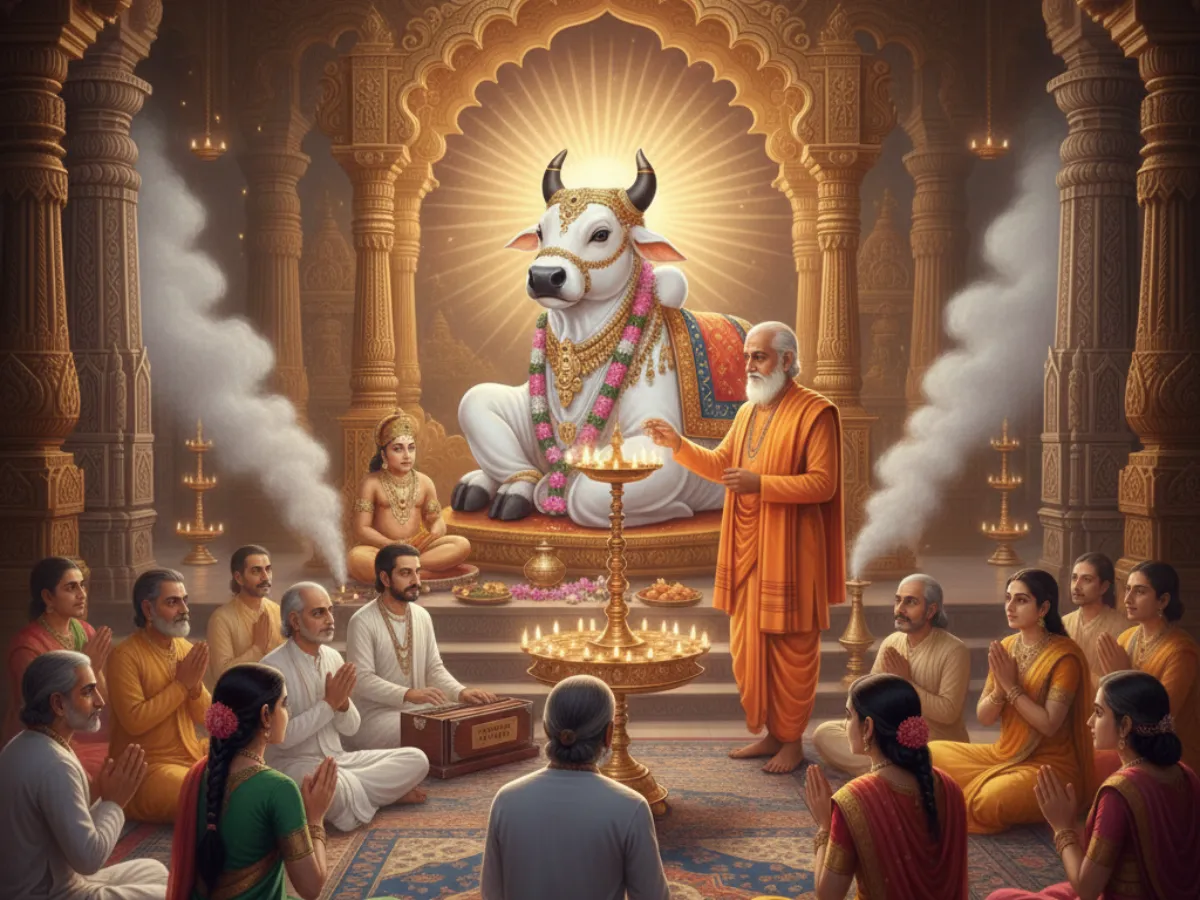
    You know, there’s something quietly grounding about chanting to Nandi. People often look past him focus straight on the Shivling but Nandi is the first one who sees, the first one who listens. The Nandi Pooja Mantra calls his name not just for strength and discipline, but for that pure devotion, the kind that never wavers, no matter what storms through life.

    When you chant it sincerely, you’re basically saying: “Let me stand steady in my faith. Let me face my path with courage. Keep my heart clean, and my resolve unshakable.”

    Nandikeshwar Mantras

    “Om Tatpurushaya Vidmahe, Nandikeshwaraya Dhimahi, Tanno Vrishabhah Prachodayat.”

    Meaning:

    O great Nandikeshwar, remover of suffering and protector of the devoted I bow before you. Grant me the strength to overcome my hardships and keep walking toward truth.

    “Om Tatpurushaya Vidmahe Chakratundaya Dhimahi, Tanno Nandi Prachodayat.”

    Meaning:

    I meditate upon Lord Nandi, whose wisdom is fierce and guiding. May he illuminate my path and give clarity to my mind.

    “Om Shivvahanaya Vidmahe Tundaya Dhimahi, Tanno Nandi Prachodayat.”

    Meaning:

    O Nandi, beloved of Lord Shiva and his most loyal servant bless me. Remove my suffering and fill my life with devotion and peace.

    “Bhavesham Bhaveshanam Eedyam Suresham Vibhum Vishwanatham Bhavani Samardram Shrachchandra Gaatram Sudha Poorna Netram Bhaje Nandikeshwar Daridraartinasham.”

    Meaning:

    I worship Nandikeshwar, the destroyer of sorrow. His body glows like moonlight, his eyes flow with compassion. He uplifts the poor and protects the humble.

    “Himadrau Nivaasam Sphuratchandra Chudam Vibhootim Dadhanam Maha Neelakantham Prabhum Digbhujam Shool Tangkayudhadhyam Bhaje Nandikeshwar Daridraartinasham.”

    Meaning:

    I bow to Nandi radiant as the Himalayan moon, carrying sacred ash upon his body, blue throated, wielding the trident and sword. May his blessings wash away my troubles and guide me to peace.

    The Spirit of the Nandi Pooja

    People sometimes forget that Nandi isn’t just Shiva’s gatekeeper he’s the bridge. He’s the one through whom prayers pass. They say that when you whisper your wish into Nandi’s ear at the temple, he carries your words straight to Mahadev himself.

    In the old stories, when poison (Halahal) spilled onto Earth during the churning of the ocean, it was Nandi who licked that drop away so that no life would be harmed. Since then, he’s remembered not only as Shiva’s mount but as the embodiment of loyalty, strength, and service.

    Nandi isn’t just a bull, though that’s how he appears. He’s a mind disciplined, steady, devoted the essence of dharma in motion. And in many Shaiva traditions, he’s the guru of great souls like Patanjali, Tirumular, and Vyagrapad. His wisdom is what anchors the path of yoga and meditation.

    That’s why in every temple of Shiva, you’ll find Nandi sitting before the sanctum, facing the Shivling directly alert, unwavering, listening. That stillness? That’s devotion made stone.

    The Story of Nandi and Lord Shiva

    A long time ago, there lived a sage named Shilad a man so pure that even the winds slowed near him. But one day, a worry entered his heart: he had no child, and he feared his lineage would end with him. So he performed deep penance to please Lord Shiva, asking for a son who would be immortal and always under Shiva’s grace.

    Time passed, and one morning Shilad found a baby in his field a child glowing with divine energy. A voice echoed in the air: “This is your son, Nandi.”

    Nandi grew into a boy filled with faith. But when two wandering sages visited and blessed Shilad for long life, they paused and said nothing to Nandi. Concerned, Shilad asked why and was told that the boy’s life was short.

    Nandi didn’t flinch. He smiled at his father and said, “If Lord Shiva gave me life, he will sustain it too.”

    Then, with steady resolve, he began his penance meditating, chanting, surrendering completely. Pleased beyond measure, Shiva appeared before him, radiant and fierce, and said, “You are mine, Nandi. From this day forth, you will dwell with me, as my mount, my gatekeeper, my devotee eternal.”

    From that moment, Nandi became the symbol of devotion itself the one who listens to every prayer that calls upon Lord Shiva’s name.

    Benefits of Chanting the Nandikeshwar Mantra

    Those who chant Nandi’s mantras with sincerity say the changes go beyond the visible. They bring discipline to the daily rhythm of life, faith to the uncertain heart, and strength where weakness once sat.

    • Fulfills heartfelt desires
    • Removes difficulties, obstacles, and unseen blockages
    • Clears negativity and restless thoughts
    • Brings success in work, progress in career and business
    • Balances the effects of difficult planetary influences
    • Brings peace, happiness, and prosperity at home
    • Helps those longing for children
    • Protects from envy and ill wishing
    • Deepens devotion to Lord Shiva, especially when paired with chanting the Shiv Chalisa

    Basically, chanting to Nandi isn’t about asking for miracles; it’s about asking for steadfastness to keep holding faith when things get rough.

    Things to Keep in Mind During the Chant

    A few traditions matter. Not because they’re strict, but because they ground your intention.

    • Always bathe before chanting; start clean in body and heart.
    • Avoid blowing the conch while chanting, it’s said to disturb Nandi’s meditative energy.
    • Never offer Tulsi leaves or Ketaki flowers to Lord Shiva during this practice.
    • Skip sindoor, turmeric, black sesame, or kumkum, these are not meant for Shiva’s rituals.
    • Keep your focus gentle but firm. Don’t chant for show; chant to connect.
    • And above all, chant with love. Because faith, when it’s simple, is more powerful than any ritual done by habit.

    A Quiet Reflection

    When you look at Nandi that stone figure sitting patient and watchful before the Lord remember what he truly represents: loyalty, purity, and attention so deep that even silence becomes prayer.

    He doesn’t speak. He listens. He doesn’t move. He trusts. Maybe that’s the secret of real devotion not to beg endlessly, but to sit steady, heart open, and know that your prayer has already been heard.

    Recommended Mantras:

    Surya Mantra , Maha Kaal Bhairav Beej Mantra