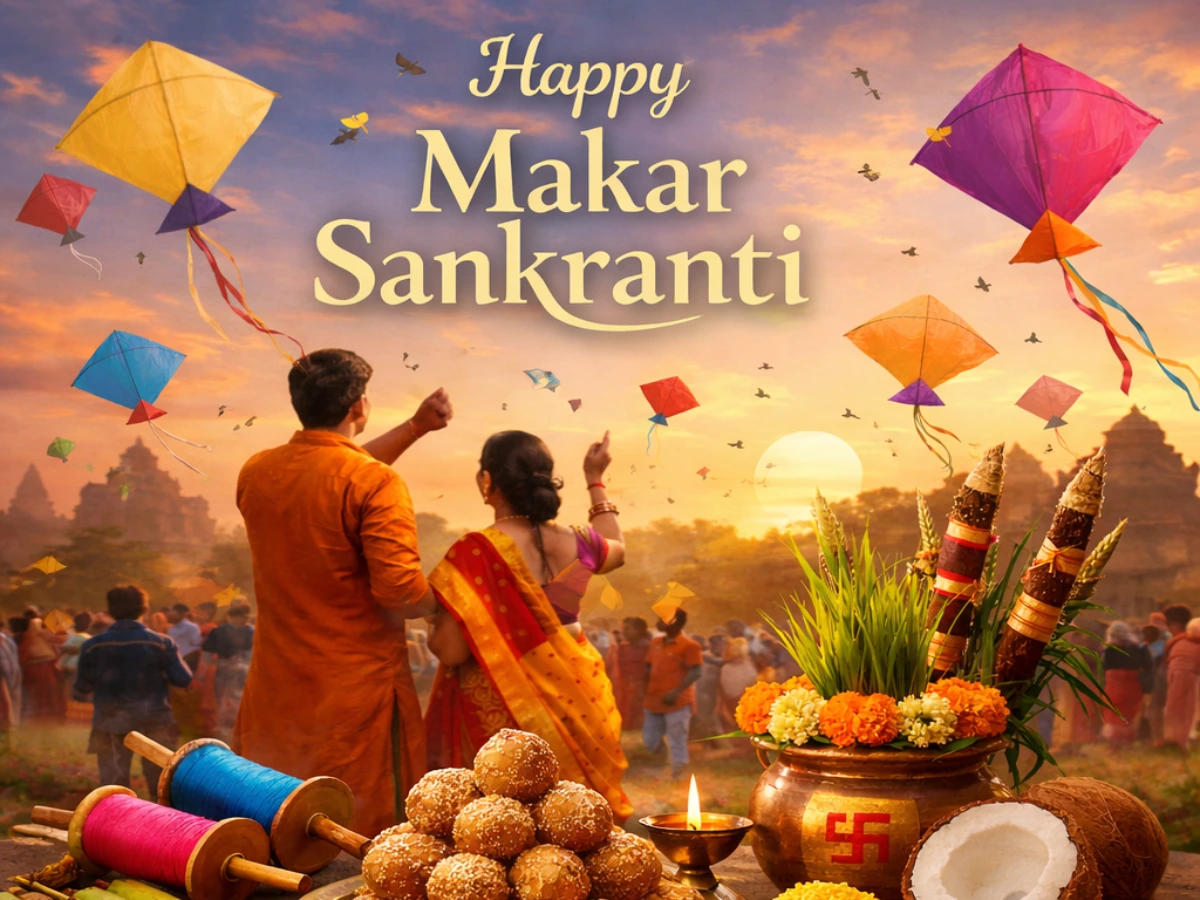
Makar Sankranti Festival is one of the most important and widely celebrated festivals in India. Observed every year around January 14, it marks the transition of the Sun into the zodiac sign Makara (Capricorn). This celestial movement is believed to bring longer days, warmth, prosperity, and spiritual positivity.
Unlike many Hindu festivals that follow the lunar calendar, Makar Sankranti follows the solar calendar, which is why its date remains almost the same every year. The festival signifies the end of winter and the beginning of the harvest season across many parts of India.
Families celebrate the day with prayers, kite flying, charity, festive foods, and community gatherings. It is also considered an auspicious time to take holy dips in sacred rivers like the Ganga, Yamuna, and Godavari.
The spiritual essence of the Makar Sankranti Festival reflects gratitude toward nature, the Sun God, and the agricultural abundance that sustains life.
The Meaning and Spiritual Significance of Makar Sankranti
The name Makar Sankranti has a deep astrological and spiritual meaning.
- Makar refers to the zodiac sign Capricorn.
- Sankranti means transition or movement of the Sun from one zodiac sign to another.
On this day, the Sun enters Capricorn, marking the beginning of Uttarayan, the six-month period when the Sun moves northward.
Why Uttarayan is Considered Auspicious
In Hindu traditions, Uttarayan is believed to be a time when positive energy increases on Earth. It is considered favorable for:
- Spiritual practices
- Religious pilgrimages
- Charity and donations
- Starting new ventures
Many people visit sacred temples and pilgrimage sites during this time to seek blessings.
If you are planning temple visits in 2026, you can check detailed darshan timings for popular shrines such as Kedarnath Temple Timings 2026 and Badrinath Temple Timings 2026 Opening Date & Darshan before planning your trip.
Mythological Stories Behind Makar Sankranti Festival
The Makar Sankranti Festival is linked to several fascinating stories in Hindu mythology.
1. Lord Surya and Lord Shani
According to Hindu beliefs, Lord Surya (Sun God) visits his son Shani (Saturn) on this day. Since Shani rules Capricorn, this meeting symbolizes harmony and reconciliation between father and son.
This story reminds devotees about the importance of forgiveness, family unity, and peace.
2. Bhishma Pitamah and the Mahabharata
In the epic Mahabharata, Bhishma Pitamah chose to leave his mortal body during Uttarayan, believing it to be the most auspicious time for attaining spiritual liberation.
This belief has made Makar Sankranti a sacred period for spiritual growth and prayer.
3. Lord Vishnu’s Victory Over Evil
Another legend states that on this day Lord Vishnu defeated the demons and buried them under a mountain, symbolizing the victory of good over evil.
This myth represents renewal, positivity, and the triumph of righteousness.
How Makar Sankranti Festival Is Celebrated Across India
One of the most fascinating aspects of the Makar Sankranti Festival is that it is celebrated in different forms across India, yet the spirit remains the same.
Common Rituals Followed Nationwide
Across the country, people celebrate the festival through traditions such as:
- Offering water to the Sun God
- Taking holy river baths
- Donating food and clothes to the needy
- Preparing sweets made from sesame and jaggery
- Flying colorful kites
Pilgrims also visit famous temples during this period. For instance, many devotees explore sacred Jyotirlinga temples such as Mahakaleshwar Temple or the iconic Shree Somnath Jyotirlinga Temple as part of their spiritual journey.
Regional Names of Makar Sankranti in India
The Makar Sankranti Festival is celebrated under different names across various states.
| Region | Festival Name |
|---|---|
| Gujarat | Uttarayan |
| Punjab | Lohri |
| Tamil Nadu | Pongal |
| Assam | Magh Bihu |
| Uttar Pradesh & Bihar | Khichdi |
| West Bengal | Poush Sankranti |
Each celebration highlights the local culture, food, and traditions of the region.
Kite Flying: The Most Exciting Tradition
One of the most recognizable traditions of the Makar Sankranti Festival is kite flying.
Cities like Ahmedabad, Jaipur, and Delhi organize large kite festivals where thousands of colorful kites fill the sky.
Why Kite Flying Became a Tradition
Several reasons explain the popularity of kite flying:
- Spending time in sunlight during winter helps the body absorb Vitamin D.
- Kite flying encourages community bonding and friendly competition.
- It symbolizes freedom, happiness, and celebration.
The International Kite Festival in Gujarat attracts visitors from across the world.
Traditional Foods Prepared During Makar Sankranti
Food plays an important role in the Makar Sankranti Festival.
Most dishes prepared during the festival include sesame seeds (til) and jaggery (gud).
Popular Festive Dishes
Some traditional foods include:
- Til Laddoos
- Gajak
- Chikki
- Khichdi
- Puran Poli
- Sweet Pongal
- Tilgul sweets
These ingredients are believed to generate warmth in the body during winter.
A famous saying associated with the festival in Maharashtra is:
“Til-gul ghya, god god bola.”
It means “Eat sesame sweets and speak sweet words.”
Importance of Charity on Makar Sankranti
Charity is a central part of the festival.
Many devotees believe that donating food, clothes, or money on this day brings spiritual merit.
Common donations include:
- Sesame seeds
- Blankets
- Food grains
- Jaggery
- Warm clothes
People also offer prayers in temples. If you plan temple visits during this season, knowing the darshan schedules can help, such as Kashi Vishwanath Temple Timings 2026 or Mahakaleshwar Temple Timings.
Environmental Awareness During the Festival
While celebrating the Makar Sankranti Festival, many communities are also promoting eco-friendly practices.
Some initiatives include:
- Using biodegradable kites
- Avoiding plastic strings that harm birds
- Organizing bird rescue campaigns
These efforts help ensure that the festival remains joyful and environmentally responsible.
Frequently Asked Questions About Makar Sankranti Festival
1. Why is Makar Sankranti celebrated?
Makar Sankranti celebrates the Sun’s transition into Capricorn and marks the beginning of the harvest season and the Uttarayan period.
2. Is Makar Sankranti celebrated on the same date every year?
Yes. Since it follows the solar calendar, the festival usually falls on January 14 or 15 each year.
3. Why are sesame seeds and jaggery used in the festival?
They are believed to provide warmth during winter and symbolize sweetness and harmony in relationships.
4. Why do people take holy dips during Makar Sankranti?
Bathing in sacred rivers is believed to cleanse sins and bring spiritual blessings.
5. Which Indian states celebrate Makar Sankranti differently?
The festival is celebrated as Lohri, Pongal, Magh Bihu, and Uttarayan depending on the region.
6. Is Makar Sankranti related to harvest festivals?
Yes. It is essentially a harvest festival that celebrates agricultural abundance and the Sun’s energy.
Conclusion
The Makar Sankranti Festival beautifully combines astronomy, spirituality, culture, and agriculture. It celebrates the Sun’s journey, the harvest season, and the spirit of gratitude toward nature.
From kite-filled skies in Gujarat to bonfires in Punjab and Pongal celebrations in Tamil Nadu, the festival unites people across India in joy and positivity.
It also reminds us that festivals are not just about celebration but about community, gratitude, and spiritual reflection.
And if you enjoy learning about sacred traditions, temples, and pilgrimage journeys across India, you might like exploring more spiritual guides and temple information on Tirth.com. It’s a helpful place to discover temple histories, darshan timings, and travel insights for many of India’s most revered pilgrimage sites.
Leave a Reply