Some cities announce themselves loudly.
Varanasi does not.
You do not arrive in Kashi. You drift into it. The smell of incense mixes with river air, bells ring somewhere behind you, someone brushes past whispering Ram Ram, and before you realise it, you are already part of the rhythm.
When people search for Varanasi sightseeing places, they usually expect a neat list. Ten places. Fifteen places. Tick and move on. But Varanasi has never worked like that.
Sightseeing here is not about seeing. It is about pausing, watching, standing still while life moves around you in ways that feel both ancient and very present.
So instead of rushing you through names, this guide walks with you slowly through officially recognised and deeply sacred Varanasi sightseeing places. The ones pilgrims return to again and again. The ones locals do not really visit because they are simply there, like breath.
Varanasi Sightseeing Places Along the Sacred Ganga Ghats
If Varanasi has a spine, it is the riverfront. Everything eventually leads you back to the Ganga.
Dashashwamedh Ghat The Heart of Varanasi Sightseeing
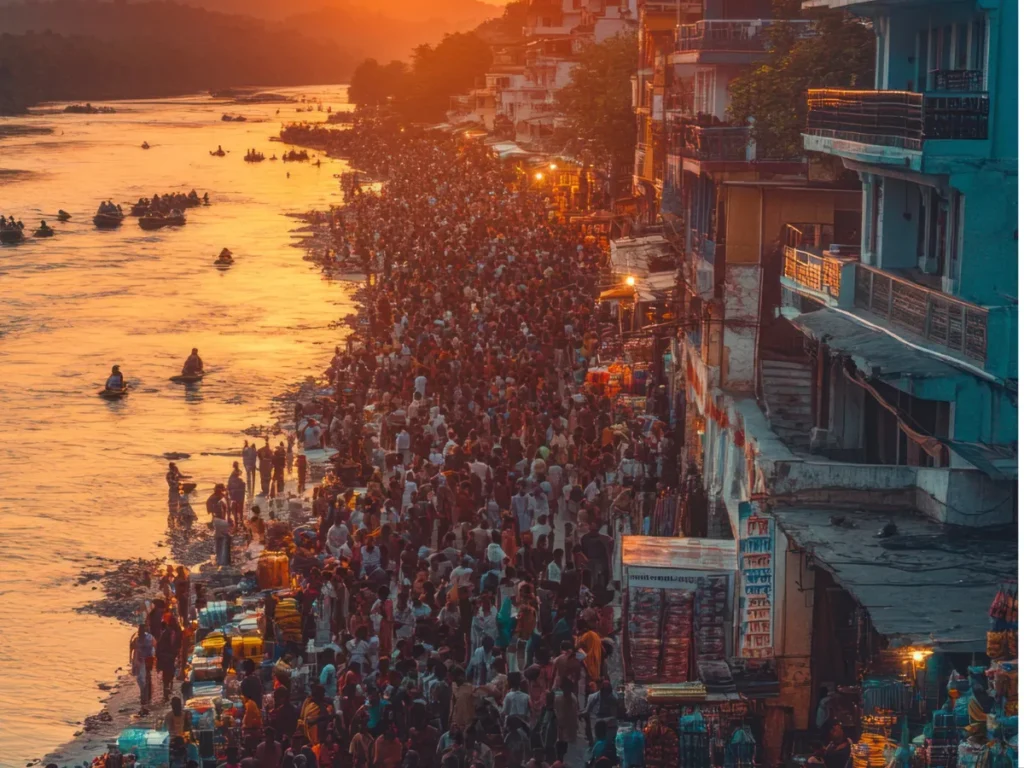
If you spend even one full day in Varanasi, you will end up at Dashashwamedh Ghat, probably more than once.
It is always busy. Sometimes overwhelming. Boats bobbing, priests calling instructions, pilgrims pressing for space, cameras flashing, bells clanging. And yet, somehow, it works.
Officially, Dashashwamedh is recognised as the most prominent and high footfall ghat in the city. Practically, it is the emotional centre of sightseeing in Varanasi.
In the evening, when the Ganga Aarti begins, the noise slowly turns focused. Almost disciplined. People do not talk much. They watch. Some with folded hands. Some wiping tears they did not expect.
Dashashwamedh is loud on the outside and quiet where it matters.
Assi Ghat Sunrise and Spiritual Beginnings
If Dashashwamedh is where the city gathers, Assi Ghat is where it exhales.
Early morning here feels different. Fewer crowds. Softer light. The river looks calmer, like it has not yet decided what kind of day it will be.
Assi Ghat sits at the confluence of the Assi River and the Ganga and is officially associated with Subah e Banaras and morning aarti traditions. Beyond official descriptions, Assi is about beginnings.
People stretch quietly. A sadhu stares at the water. A few travellers sip chai, unsure whether to speak or just observe.
For anyone planning local sightseeing in Varanasi, Assi Ghat belongs early in the day. You walk slower after being here.
Manikarnika Ghat Where Faith Meets Final Truth
Manikarnika Ghat is not comfortable. It is not meant to be.
Officially recognised as one of Hinduism’s holiest cremation grounds, rituals happen here day and night without pause. Life ends constantly, and yet life around it keeps going.
Visitors often do not know where to look or where not to. If you go, go quietly. Do not treat it as a spectacle. This ghat is not a photo stop on a Varanasi sightseeing places list.
It is a reminder of impermanence, belief, and why Kashi matters. Redevelopment may change structures, but the essence never shifts. Death here is not feared. It is accepted.
Temple Centric Sightseeing in Varanasi
Temples in Varanasi are not isolated monuments. They are stitched into daily life.
Shri Kashi Vishwanath Temple The Spiritual Core
You feel it before you see it. Narrowing lanes. Security checks. The murmur of mantras.
Shri Kashi Vishwanath is not just another temple on a sightseeing route. For many pilgrims, it is the reason they came.
The official schedule clearly lists darshan and aarti timings, including the early morning Mangla Aarti. People wake before dawn for it. Some do not sleep at all.
Standing in line, you realise this is not tourism. It is surrender.
Being close to Dashashwamedh Ghat, the temple naturally anchors sightseeing in Varanasi. Temple first. River next.
Other Major Temples in Varanasi Sightseeing Places List
Beyond Kashi Vishwanath, several other temples quietly shape the spiritual map of the city.
Kaal Bhairav, where permission is believed to be granted.
Sankat Mochan, where troubles are laid down gently.
Durga Temple, powerful and steady.
The New Vishwanath Temple inside BHU, spacious and calm.
These are not add ons. They are chapters. You do not have to see them all. You only need to visit the ones that call you.
Sankat Mochan Hanuman Temple A Devotee Landmark
Sankat Mochan feels personal.
Officially recognised as a major Hanuman temple, it is known for quiet devotion and cultural gatherings like the Sankat Mochan Bhajan Sandhya.
People come with specific prayers. Career worries. Health concerns. Family hopes. They do not announce them. They stand. Sometimes for a long time.
For families, Sankat Mochan becomes an important stop in local sightseeing in Varanasi because it feels grounded and familiar.
Sarnath Extending Varanasi Sightseeing Beyond Hindu Circuits
A short drive away, the energy shifts completely.
Why Sarnath Belongs in Varanasi Sightseeing Places
Government tourism portals consistently place Sarnath alongside Varanasi. Once you reach it, the reason is clear.
The noise fades. The pace slows. Trees replace lanes.
Sarnath is where Buddha gave his first sermon. That calm confidence still fills the air. Including Sarnath in Varanasi sightseeing places is not about contrast. It is about completeness.
Key Sarnath Sightseeing Sites
Dhamek Stupa stands tall and steady.
Chaukhandi Stupa marks arrival.
The Sarnath Museum quietly holds centuries of history.
The museum is closed on Fridays, an important detail when planning your day. Sarnath works best as a half day visit with no rush.
Heritage and Cultural Sightseeing in Varanasi
Faith here has many expressions.
Ramnagar Fort Living Royal Heritage
Across the river, Ramnagar Fort watches the city from a distance.
Officially described as an eighteenth century fort built by the Banaras royal family, it adds a reflective layer to Varanasi sightseeing places.
The museum feels old fashioned, but that is the charm. You sense continuity. Kashi as a spiritual, political, and cultural centre.
Bharat Kala Bhavan at BHU Art and Knowledge
Inside Banaras Hindu University, Bharat Kala Bhavan stands quietly.
Founded in 1920, it is never crowded like ghats or temples. That is the point.
For travellers who want to understand Varanasi beyond rituals, this museum adds depth through art, education, and history.
How to Plan Local Sightseeing in Varanasi Thoughtfully
You cannot cover Varanasi. But you can move through it with intention.
Morning at Assi Ghat.
Temple darshan mid day.
Sarnath or a museum in the afternoon.
Dashashwamedh Ghat in the evening.
This rhythm respects both the city and your energy.
Practical Tips for Sightseeing in Varanasi
Follow official timings.
Respect silence where silence is needed.
Avoid cameras at cremation ghats.
Check museum closure days.
Walk whenever possible. The lanes teach more than maps.
Why Explore Varanasi Sightseeing Places with Tirth.com
Varanasi does not need hype. It needs understanding.
At Tirth.com, sightseeing is built around pilgrims first, not just places. Official information combined with lived rhythm, crowd flow, sacred timing, and respect.
Whether you come seeking darshan, peace, answers, or perspective, Varanasi gives something back. Often quietly. Often later.
That is why people return.
Leave a Reply