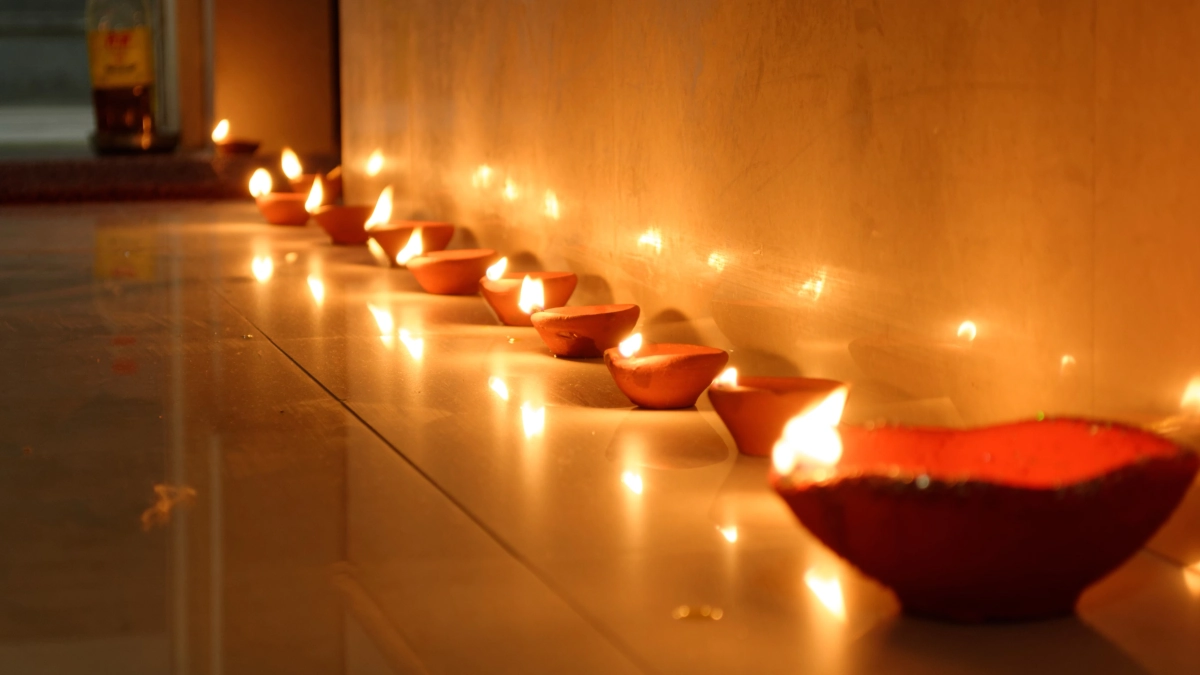
The significance of lighting a lamp in Hindu worship comes from three places, each with its own source. An Upanishad prayer asks to be led from darkness to light, the Bhagavad Gita compares a steady mind to a lamp that does not flicker, and in arti the lit lamp is waved before the deity.
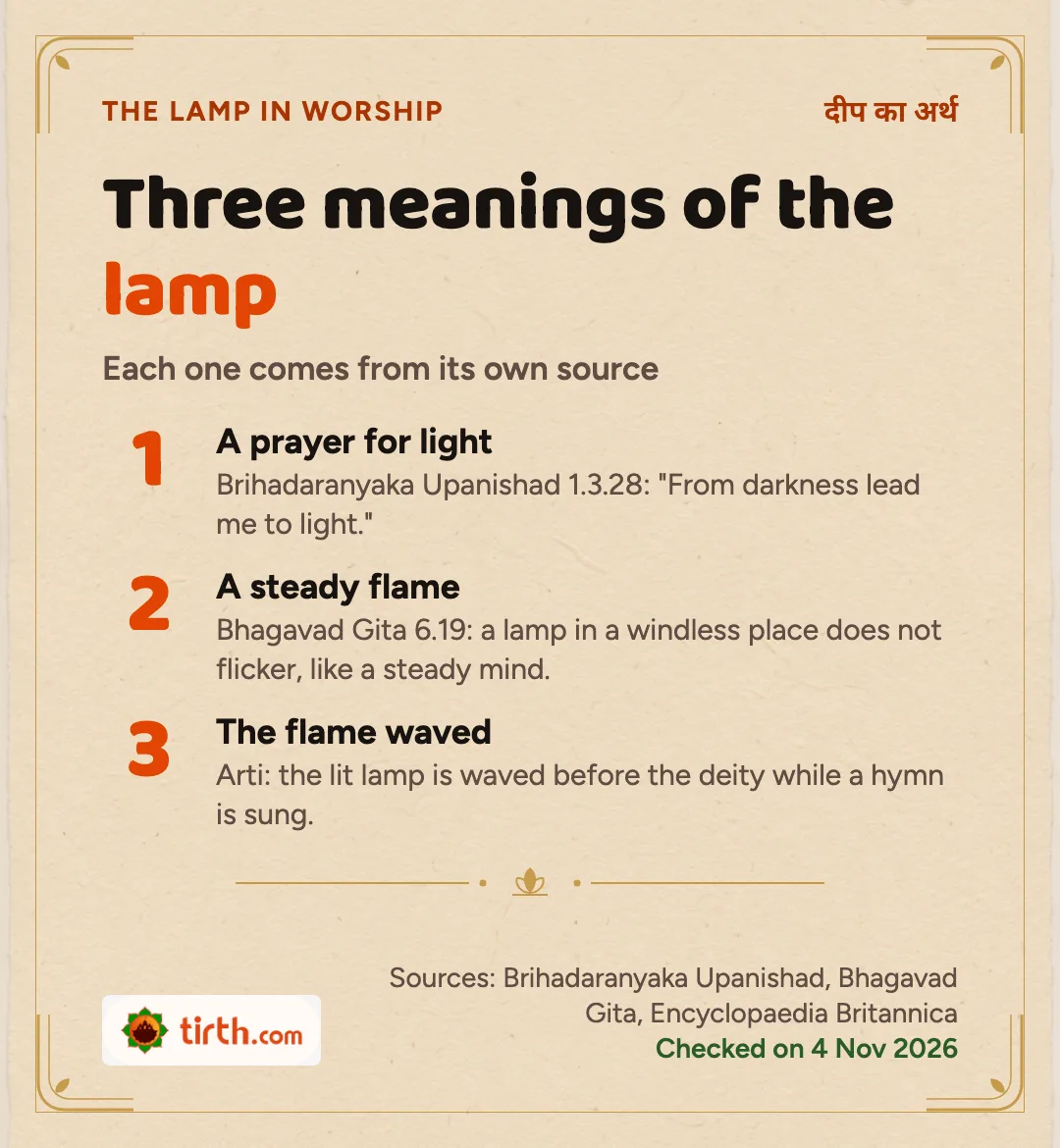
Families will set rows of diyas along their doorsteps for Diwali on Sunday, 8 November 2026.
Yet when Bhagwan Ram’s aerial car came down at Nandigrama, Bharat had the streets of Ayodhya lined with raised flags, the houses decorated and the royal road strewn with flowers, and the sarga of the Valmiki Ramayana that describes that welcome mentions no lamps at all.
What tamaso ma jyotir gamaya asks for
The prayer for light is in the Brihadaranyaka Upanishad, numbered 1.3.28 and known as the Pavamana Mantra. This is its middle line.
tamaso ma jyotir gamaya
Swami Madhavananda’s English translation gives it as “From darkness lead me to light”. Olivelle’s version adds two small words and reads “From the darkness lead me to the light”. The request is the same.
The prayer names no oil lamp.
The light asked for in the text is knowledge, and the lamp on your puja shelf is one way a household holds that wish where everyone sees it.
Why the Gita compares a steady mind to a lamp out of the wind
The second meaning is about stillness. In the sixth chapter of the Bhagavad Gita, Bhagwan Krishna is telling Arjuna about the disciplined mind in meditation, and in verse 19 he reaches for a lamp to show it.
The verse opens yatha dipo nivata-stho nengate. In plain words (Tirth’s rendering), a lamp kept in a place no wind reaches does not flicker, and the controlled mind of the yogi who practises yoga on the Self is like that flame.
Anyone who has cupped a palm round a diya on a breezy balcony has seen this happen.
One way to read it is that the wind is whatever pulls the mind about, and the flame is the attention that stays put anyway.
The flame you circle before the deity in arti
Arti is the waving of lighted lamps before the image of a deity while a prayer or hymn is sung. Britannica describes it as part of both Hindu and Jain rites and calls it a common feature of both temple and private worship.
The lamp moves clockwise.
Sources do not agree on how many times. Britannica gives three circles, sometimes more, others say seven, and some keep the lamp moving for the whole hymn. The fuel is ghee or camphor, and some accounts add oil.
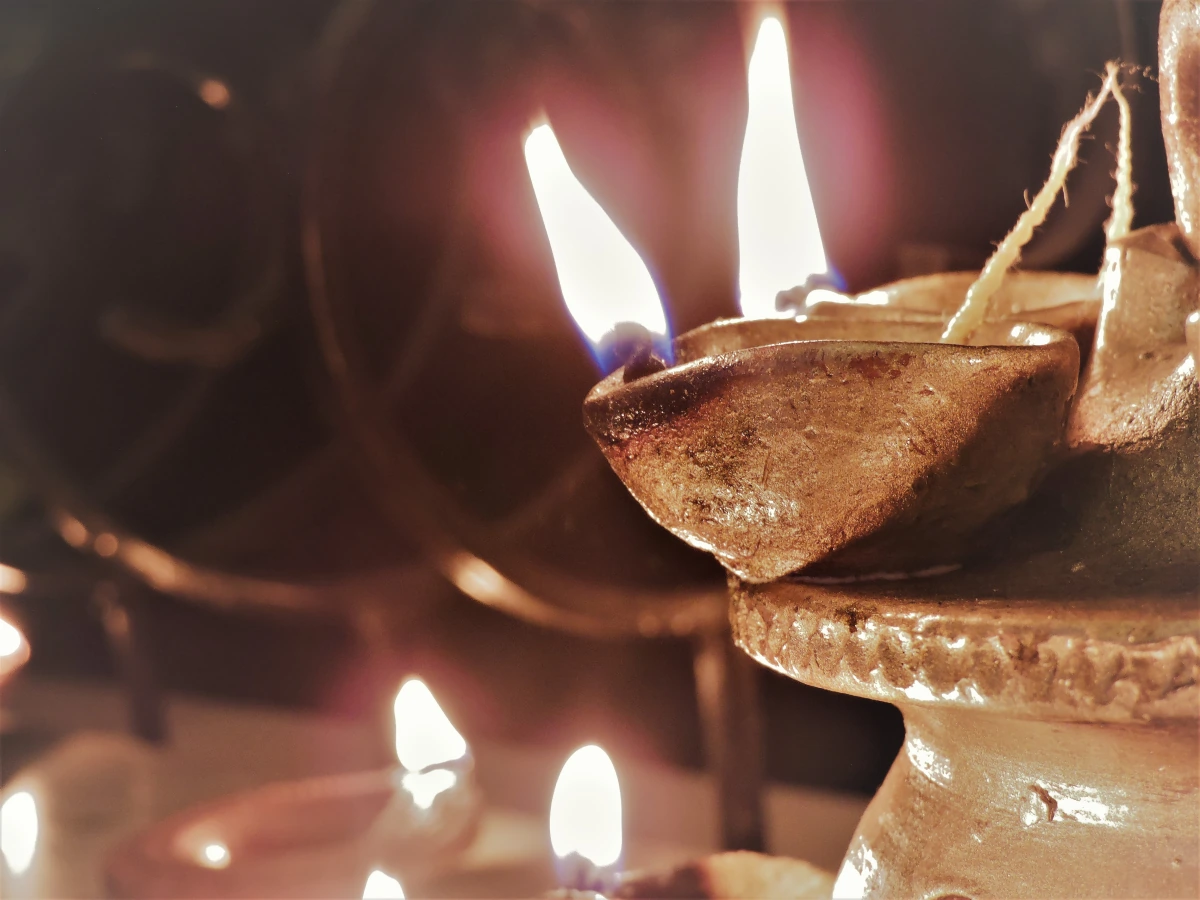
The words sung over that flame are texts of their own. Tirth keeps the Om Jai Jagdish Hare aarti and the Ganesh aarti on their own pages.
Did Ayodhya light diyas for Bhagwan Ram? What Valmiki’s sarga 127 shows
Deepavali, the Sanskrit name behind Diwali, means “row of lights”. Open the Yuddha Kanda at sarga 127, though, and the welcome it describes looks different.
That is the chapter where Bharat greets Bhagwan Ram at Nandigrama after the aerial car lands, and Bharat’s orders for Ayodhya are exact. Flags raised along the streets. Houses decorated. The royal road sprinkled with fragrant colours and strewn with flowers.
There are no lamps in that sarga.
The lit streets of the homecoming come from later tradition, as Tirth’s own Diwali festival guide also says.
Britannica ties the earthenware lamps set outside homes and temples to welcoming Maa Lakshmi, and Diwali night is also the night of Maha Lakshmi Puja. Tirth also has a page of Lakshmi mantras, and the festival as a whole is in what Diwali means.
The Dhanteras lamp that is lit for Yama Dev
The Dhanteras lamp is lit for protection.
On Dhanteras, which fell on Friday, 6 November 2026, many families set a single lamp outside the home after dark, the Yama Deepam, with a prayer to Yama Dev that no one in the family meets an untimely death. It is the same small flame as the others, only set outside the door. Panchangs give different windows for it. Take the time from your family Pandit or from the calendar for your own city, and read more on Dhanteras and the Yama Deepam.
Before you light Sunday’s row of diyas
Which oil and which wick to use is home practice, a question for your family Pandit or Purohit.
Diwali falls on Sunday, 8 November 2026. For the tithi and the evening’s timings for your city, open Diwali 2026 on the Tirth Spiritual Calendar, and for every other festival of the year, the Tirth Spiritual Calendar.
Frequently asked questions
Why do we light a diya in puja?
The lit lamp is a prayer made visible. It asks for light against darkness, as the Brihadaranyaka Upanishad’s prayer does, and it is the flame waved before the deity in arti.
What does the flame of a lamp represent?
In the Bhagavad Gita (6.19), Bhagwan Krishna compares the disciplined mind in meditation to a lamp in a windless place that does not flicker. The steady flame is read as the picture of a steady mind.
Why do we light lamps on Diwali?
Deepavali means “row of lights”, and Britannica ties the lamps to welcoming Maa Lakshmi. The lit streets of Bhagwan Ram’s return come from later tradition, since Valmiki’s Yuddha Kanda sarga 127 describes flags and flowers, with no lamps.
What is the meaning of tamaso ma jyotir gamaya?
Swami Madhavananda translates it “From darkness lead me to light”. It is the middle line of the Pavamana Mantra in the Brihadaranyaka Upanishad, and the light it asks for is knowledge.
What is the difference between a diya and the aarti flame?
A diya is a small earthenware oil lamp. In arti a lit lamp, fed with ghee or camphor, is waved in clockwise circles before the deity while a hymn is sung.
Why is a lamp lit outside the house on Dhanteras?
That lamp is the Yama Deepam, set outside after dark with a prayer to Yama Dev that no one in the family meets an untimely death. Panchangs differ on its time window, so check the calendar for your city.
Continue on Tirth
- Diwali 2026, Tirth Spiritual Calendar
Leave a Reply