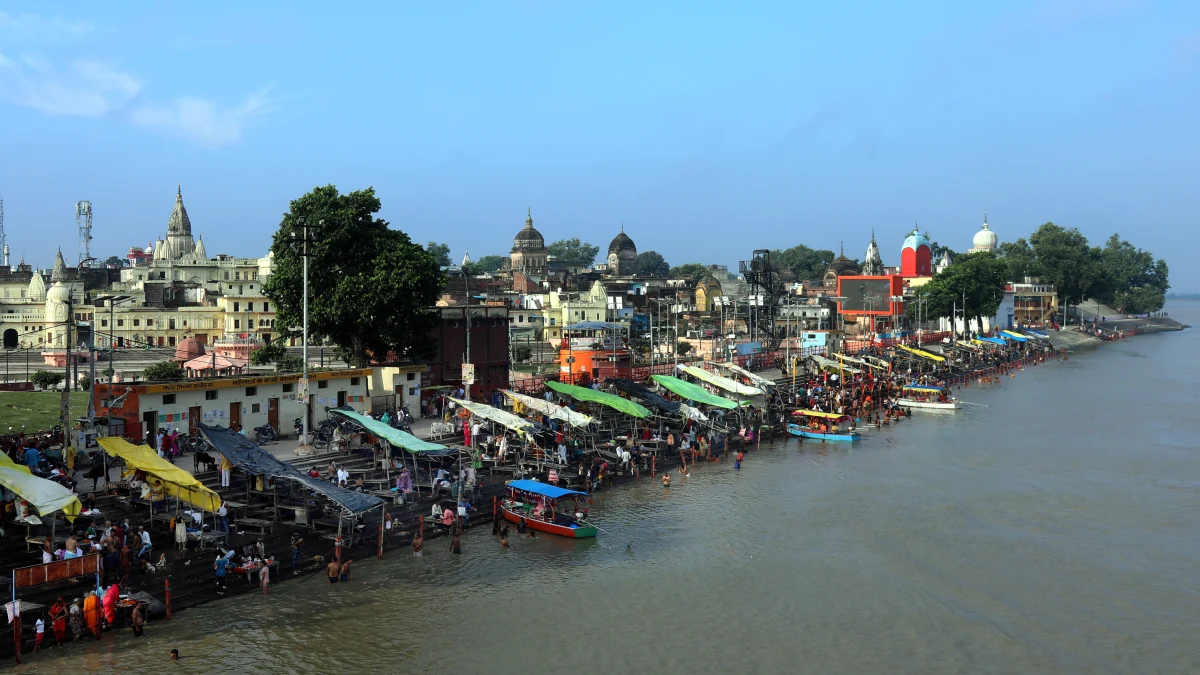
Say Ayodhya to almost anyone and the name they hear back is Bhagwan Ram.
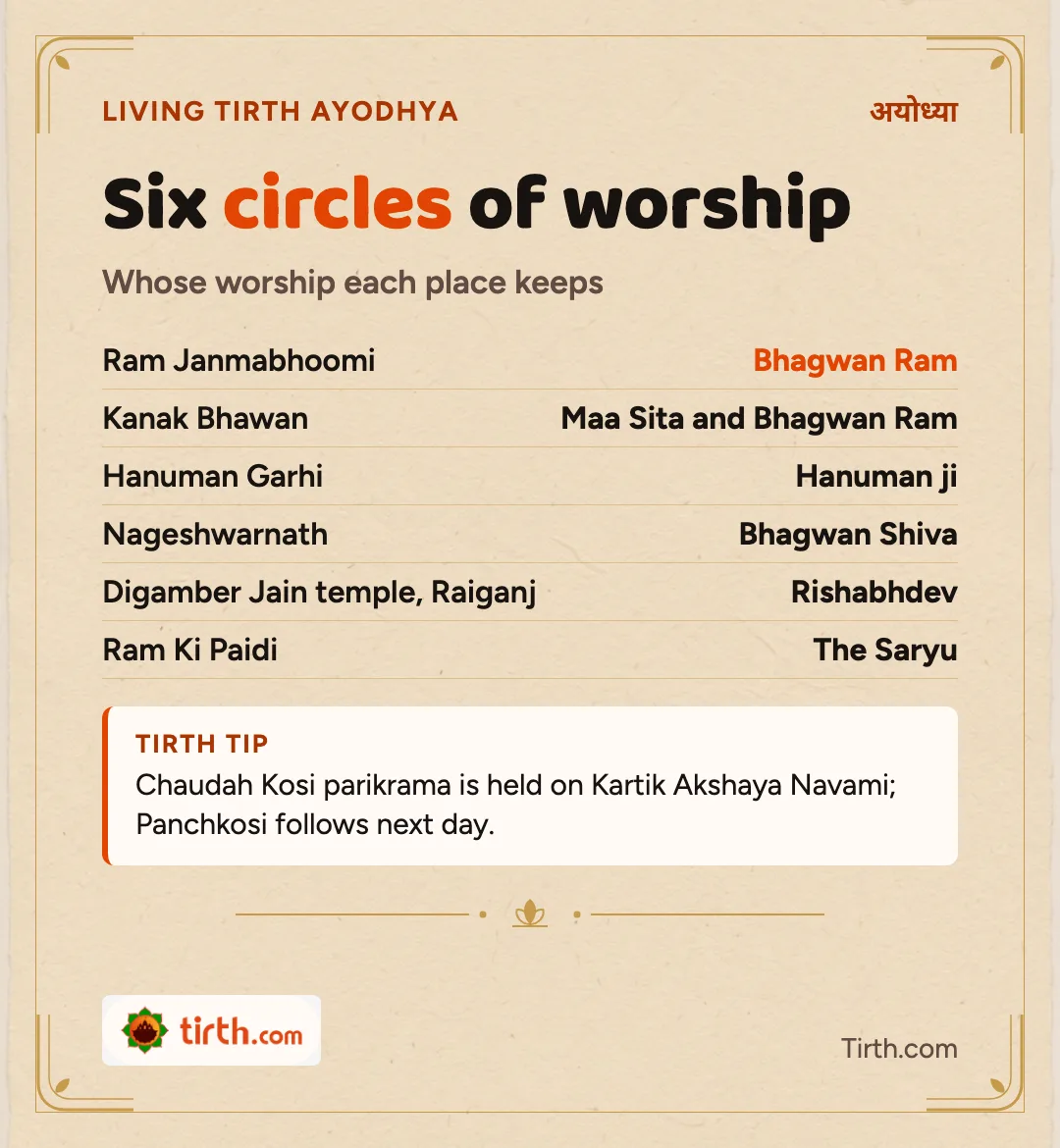
Fair enough. But the living tirth Ayodhya keeps more than one worship going at once, all in the one town. Bhagwan Ram’s is the Shri Ram Janmabhoomi Temple. Kanak Bhawan is where Maa Sita and Bhagwan Ram are worshipped together, Hanuman Garhi belongs to Hanuman ji, Nageshwarnath to Bhagwan Shiva, and Raiganj is where the Jain shrines are.
Different people, different reasons for going. Plus there’s the parikrama, when people walk round the entire town on foot, once a year.
That is what I mean when I call Ayodhya living. Circles of worship, several of them, laid one over the other.
Who does Valmiki name as the founder of Ayodhya?
Manu, according to the Valmiki Ramayana. It says so in sarga 5 (the fifth chapter) of the Bala Kanda. This is the city Valmiki’s Ram is born into, with Dasharatha as its king.
The same sarga then describes the place. Broad royal roads, kept watered. Markets and gates set out in proper order, tall palaces set with jewels, artisans and bards and merchants living there, a deep moat against enemies and mango groves on top of it all.
A pilgrim town on the Saryu is what you find there today, and it keeps its place among the Sapta Puri, the seven sacred cities.
Whose worship does each Ayodhya temple keep?
Put the main places side by side and it becomes clear.
Every row sticks to one named place and to what is said about that place, and goes no further.
| Place in Ayodhya | Whose worship | What goes on there | What it rests on |
|---|---|---|---|
| Shri Ram Janmabhoomi Temple | Bhagwan Ram | Darshan of Bhagwan Ram, on a schedule you should check in the Trust’s current notice | The belief that Bhagwan Ram was born here |
| Kanak Bhawan | Maa Sita and Bhagwan Ram | Worship of the two together, at what is called their private abode | Said to be Rani Kaikeyi’s gift to Maa Sita after her marriage |
| Hanuman Garhi | Hanuman ji | Darshan of Hanuman ji at his shrine | Local legend says Hanuman ji guards Ayodhya |
| Nageshwarnath Temple | Bhagwan Shiva | The centre of Mahashivratri in the city, Shiv Barat procession included | Present building of 1750, commissioned by Naval Rai, a minister under Safdar Jung |
| Digamber Jain temple, Raiganj | Rishabhdev and the Jain Tirthankaras | A 31-foot marble statue of Rishabhdev | Jain belief that five Tirthankaras were born in Ayodhya |
| Ram Ki Paidi | The Saryu | Bathing at the ghats, lit up after dark | A run of ghats along the river |
If you can only linger at one, let it be Kanak Bhawan. The reason is the story behind it.
It is believed that Rani Kaikeyi gave it to Maa Sita as a gift once she had married Bhagwan Ram. The usual way people describe it is as the private abode of Maa Sita and Bhagwan Ram. Their home, basically.
Location wise it’s in Ramkot, north-east of Ram Janmabhoomi. Credit for the present building goes to Vrish Bhanu Kunwari, who rebuilt it.
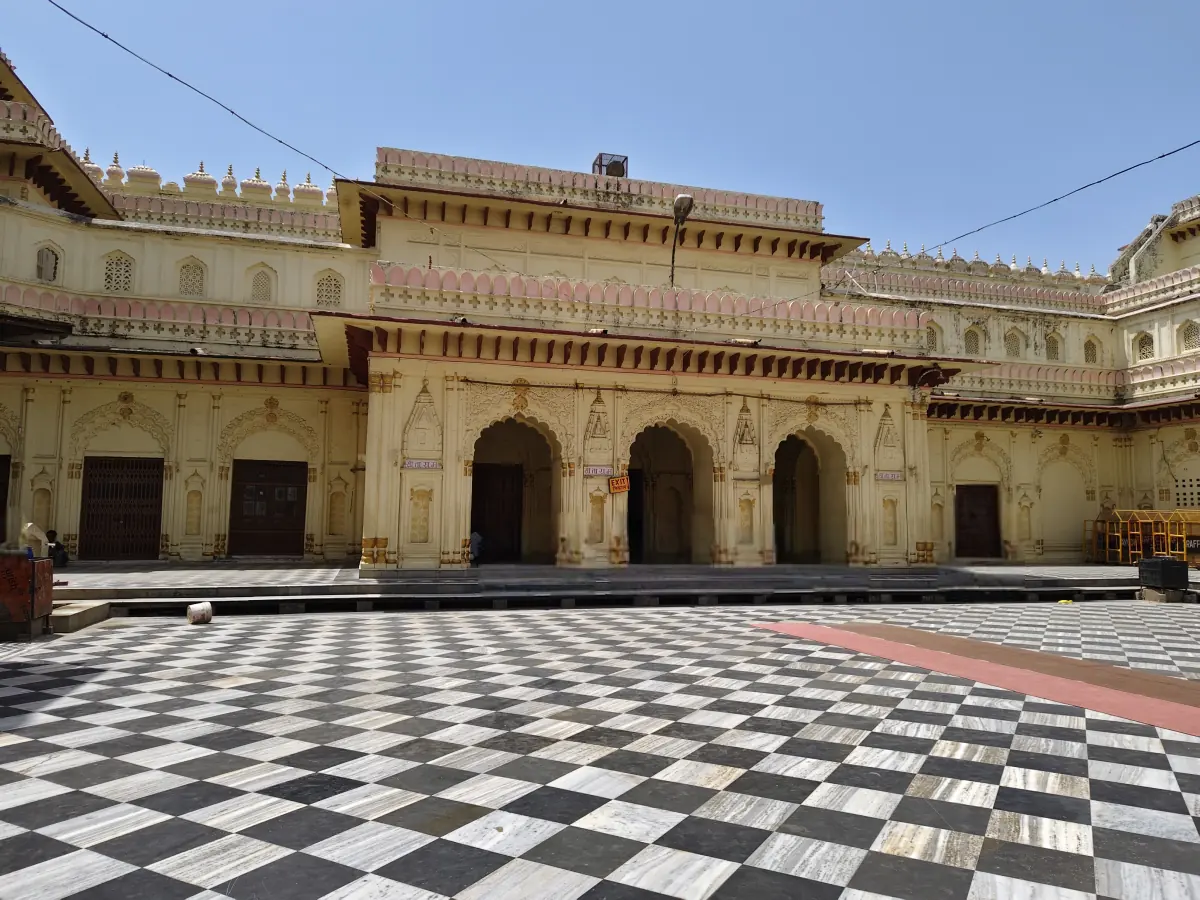
Hanuman Garhi has a legend attached as well. Hanuman ji, as the local legend goes, chose it to safeguard Ayodhya.
The main sanctum has him young. On his mother’s lap, Maa Anjani’s. And it’s about 1 km from Ayodhya railway station, by the district site’s reckoning.
Bhagwan Shiva’s temple in the town is Nageshwarnath, and it stands at Ram Ki Paidi.
Kush, Bhagwan Ram’s son, was bathing in the Saryu when an armlet of his was lost, in the tradition as the district site gives it. The one who found it was a Nag-kanya (a serpent maiden) devoted to Bhagwan Shiva. For her, Kush built the temple.
Of the stories behind these temples I like this one best, since it ties Bhagwan Ram’s own son to a temple of Bhagwan Shiva.
The present building is from 1750. Naval Rai commissioned it, a minister under Safdar Jung. On Mahashivratri the temple is a hub for the city, Shiv Barat procession included.
How the city carries Bhagwan Ram’s name through its days is a separate story, and Ram Naam in Ayodhya tells it.
Why do Jains hold Ayodhya sacred?
Five Tirthankaras, Jain belief holds, were born in Ayodhya. Rishabhanatha, Ajitanatha, Abhinandananatha, Sumatinatha and Anantanatha. Jains have their own reason, then, to call the city holy.
The Digamber Jain temple in Raiganj has a 31-foot marble statue of Rishabhdev.
Then there is Kesari Singh, from the Nawab years, once treasurer to the Nawab of Faizabad. He commissioned five Jain shrines here.
So if you go, make room for Raiganj in your day, and don’t rush it.
When do pilgrims walk around the whole of Ayodhya?
Parikrama is walking around a sacred place (circumambulation, if you want the formal word). Each other circle in this piece sits around a single shrine. This one goes round Ayodhya itself.
On Kartik Akshaya Navami it is the Chaudah Kosi parikrama that goes round, and on the very next day the Panchkosi parikrama follows it, so in that part of the year the town is walked around twice over.
Pilgrims bathe in the Saryu before they set off. Then they walk, chanting Ram naam and singing bhajans along the way.
The Chaudah Kosi muhurat lasts about a day. Just before dawn to just before dawn the next morning, with the Panchkosi starting the day after. Check the exact window before you plan anything. It gets announced afresh each year.
Ram Navami , the day of Bhagwan Ram’s birth, is the year’s other big date here, kept on Chaitra Shukla Navami. In 2027, a Thursday.
Festival dates don’t stay put from one year to the next. Look them up in the Tirth Spiritual Calendar.
Ram Ki Paidi on the Saryu
The ghats at Ram Ki Paidi run along the Saryu, and this is where pilgrims bathe in the river. Nageshwarnath, Bhagwan Shiva’s temple, is on the same stretch. After dark the ghats are lit, and that is when they are worth seeing.
There are now about 350 metres of steps at the ghat, going by reports from October 2025, and a spectator gallery that can seat 18,000 to 20,000 people at a time. Once a year, at Deepotsav, the ghats get a circuit of their own. On 19 October 2025, the eve of Diwali, 2,617,215 lamps were lit along 56 ghats of the Saryu. Ram Ki Paidi among them. Guinness World Records counted it as the largest display of oil lamps.
For what the river means to Ayodhya, read our piece on the Saryu. The town’s early and late hours have pieces of their own, Ayodhya at dawn and evening bhakti in Ayodhya.
Frequently asked questions
Why is Ayodhya called one of the Sapta Puri?
Because it is one of the seven sacred cities that make up the Sapta Puri. Our Sapta Puri yatra guide covers the other six and how to plan a visit to each.
Is Ayodhya holy to Jains too?
Yes. Five Tirthankaras were born here, according to Jain belief. Raiganj’s Digamber Jain temple has a 31-foot marble statue of Rishabhdev, and Kesari Singh, former treasurer to the Nawab of Faizabad, commissioned five Jain shrines in the city.
What is the Chaudah Kosi parikrama?
A walk around Ayodhya, held on Kartik Akshaya Navami. The Panchkosi parikrama comes the day after, and the dates for both are in the Tirth Spiritual Calendar.
Which temples besides Ram Janmabhoomi should I visit?
Kanak Bhawan, to begin with, where Maa Sita and Bhagwan Ram are worshipped together. Hanuman Garhi next for Hanuman ji, then Bhagwan Shiva’s Nageshwarnath Temple. Save some time too for Raiganj and its Digamber Jain temple, and for the ghats at Ram Ki Paidi on the Saryu.
What does Valmiki say Ayodhya looked like?
In the Valmiki Ramayana, Bala Kanda sarga 5 names Manu as the founder and Dasharatha as the king. What it describes is a city of watered royal roads, markets and gates in good order, palaces set with jewels, a deep moat and mango groves.
Continue on Tirth
- Ayodhya destination page, for the city and its temples in one place.
- A day in Ayodhya’s spiritual life, hour by hour through the town.
- Ram Navami in the Tirth Spiritual Calendar, for the date.
- Tirth’s senior-friendly Ayodhya yatra, if you would rather someone else did the arranging.
Leave a Reply